
Casinos That Accept Mastercard in Australia: The Real Payment Guide for 2026
 Available in AU

Most guides to Mastercard casinos stop at a logo and a green tick. Card accepted. Move along. That tells you almost nothing about whether your deposit will clear, what it costs you, or how long you’ll wait to see your winnings again.
The truth is messier and more useful. A casino can list Mastercard on its cashier page and still decline three out of every ten deposits from Australian players. Your own bank might wave a A$50 transaction through on Monday and block an identical one on Wednesday. And the “Mastercard withdrawal” a site promises can mean money back in two hours or money back in five business days, depending on a piece of plumbing nobody advertises.
The section below addresses all of that. Eight offshore operators that accept Mastercard from Australian players, broken down by payment infrastructure rather than bonus spin-counts. The debit-versus-credit distinction that determines whether your transaction works at all. The two withdrawal rails casinos use—one fast, one not—and why most sites never tell you which. Real fees Australian banks charge when you deposit at a foreign merchant. And the legal landscape that explains why every casino covered here holds a Curaçao licence instead of an Australian one.
No fluff. No “generally” or “usually.” The specifics you need to deposit successfully, withdraw efficiently, and understand what you’re paying for the convenience of using a card you already carry.
Best Mastercard Casinos for Australian Players in 2026
Zero locally licensed online casinos exist in Australia. The Interactive Gambling Act prohibits their operation. That leaves offshore operators—casinos licensed in Curaçao, Malta, or Kahnawake—serving Australian players from abroad. Every operator below processes Mastercard debit deposits and runs accounts in AUD. Not all will accept your card every time. Bank filtering ensures that.
Are online casinos that accept Mastercard in Australia legal?
Playing at offshore casinos from Australia occupies a legal grey area. The Interactive Gambling Act makes it illegal for operators to *provide* online casino services to Australians, but does not criminalise individual Australians *using* those services. The law targets supply, not demand. August 2026’s Interactive Gambling Amendment maintained that structure. Enhanced ACMA enforcement commences 1 January 2027, increasing domain-blocking pressure on offshore operators, but player-side penalties remain absent from the statute.
| Operator | License | Withdrawal Speed | Minimum Deposit | Distinguishing Feature |
|---|---|---|---|---|
| Ignition Casino | Anjouan Gaming Board | Crypto 10 min–4 hours, cards 1–5 days | A$20 | Dedicated poker room with Zone Poker and A$3,750 weekly freerolls |
| BitStarz | Curaçao OGL/2024/165/0185 | Crypto 0–1 hours, cards 1–5 days | A$20 | 6,500+ games, founded 2014, ACMA blocklist (requires VPN/mirror) |
| PlayAmo | Curaçao | Crypto under 2 hours, cards 1–5 days | Variable | Ferrari 488 GTB VIP prize at 5,000,000 Comp Points, POLi support |
| HellSpin | Curaçao GLH-OCCHKTW0702282021 | Crypto variable, 12-hour approval | A$25 | Launched 2022, PayID instant deposits (60 seconds) |
| Ricky Casino | Curaçao OGL/2023/174/0082 | Crypto under 4 hours, cards 1–5 days | Variable | Ten-deposit bonus spread, PayID zero-fee deposits |
| SkyCrown | Curaçao | PayID 2–4 hours, crypto variable | A$30 | 6,000–7,000 games, bidirectional PayID support |
| Roo Casino | Offshore (jurisdiction not disclosed) | Variable | Variable | Australian-slang branding, broad crypto support including XRP |
| PlayZilla | Offshore (jurisdiction not disclosed) | Not disclosed | Variable | Minimal public information, lowest bonus (A$150) in set |
Ignition Casino: Poker Room and $3,000 Crypto Bonus
Ignition separates itself through a dedicated poker vertical—Zone Poker fast-fold format, A$3,750 weekly freerolls, guaranteed prize pool tournaments—alongside the usual casino lobby. Operated by Bamboo Media and Arachis Media Ltd under an Anjouan Gaming Board licence, the platform runs 1,000+ games from established studios plus a poker room that no other operator in this shortlist offers. The welcome package splits by deposit method: 300% match up to A$3,000 for cryptocurrency deposits, or 100% up to $1,000 casino plus 100% up to $1,000 poker for card deposits.
Mastercard debit deposits process instantly when approved, subject to 3D Secure authentication and the usual bank filtering. Withdrawals cap at A$4,500 per day. Cryptocurrency withdrawals clear faster than card refunds—standard across offshore operators, not unique to Ignition. The poker-plus-casino combination appeals to Australian players seeking both verticals on one account. Card transactions route through the same payment gateway infrastructure as competitors: instant deposits, multi-day card withdrawals, crypto as the fast-exit method.
BitStarz: 6,500 Games and Hybrid Crypto/Fiat Banking
Founded 2014, BitStarz holds the longest operational history in this shortlist. The platform runs under Curaçao Gaming Authority licence OGL/2024/165/0185 and aggregates 6,500+ games from 50+ providers—largest library here. The welcome package reaches A$10,000 or 5 BTC plus 180 free spins across four deposits at 40x wagering. Email verification releases 20 free spins before any deposit, with winnings capped at A$150 and frozen until a A$20 top-up. Cryptocurrency support spans ten coins including major and mid-cap alts. AUD accounts run without conversion fees. Crypto withdrawals quote 0–1 hours; card and bank transfer withdrawals quote 1–5 business days.
ACMA blocklist inclusion distinguishes BitStarz negatively. As of July 2026, twelve blocked addresses exist—main domain plus numbered mirrors and character-substitution variants. Australian ISPs block these addresses at the request of the ACMA. Login forms may not load for Australian players accessing blocked domains without a VPN or alternate mirror. Enhanced ACMA enforcement commences 1 January 2027, likely expanding the blocklist. BitStarz’s game library size and 2014 founding date position it as the veteran operator in the set, but the access barrier introduced by ACMA blocking creates friction absent from competitors.
PlayAmo: Ferrari VIP Prize and POLi Support
Operated by Dama N.V.—the parent entity also running Ricky Casino—PlayAmo aggregates 3,500+ games from 50+ studios including Pragmatic Play, BGaming, NetEnt, Microgaming, Play’n GO, and Evolution live dealer. Curaçao Gaming Control Board licence applies, though the specific licence number was not disclosed in public-facing materials. The welcome package offers 150% match up to A$1,500 plus 150 free spins. Payment methods span Visa, Mastercard, bank transfer, POLi (Australian bank transfer instant payment method, not universally available at offshore operators), e-wallets including MiFinity, prepaid vouchers via Neosurf, and six cryptocurrencies. AUD accounts process without conversion fees. Crypto withdrawals clear under 2 hours post-KYC; card withdrawals follow the standard 1–5 business day refund timeline.
The VIP programme delivers a Ferrari 488 GTB at Godlike level for 5,000,000 Comp Points—a physically delivered supercar as the documented top-tier prize. Lower VIP tiers distribute cash rewards from €50 at Superstar (1x wagering) through €10,000 at Royal (1x wagering). POLi support distinguishes PlayAmo from operators lacking direct Australian bank transfer integration. Dama N.V. ownership suggests corporate infrastructure shared with Ricky Casino, though front-end branding and bonus structures differ.
HellSpin: 2022 Launch with PayID Integration
Launched 2022, HellSpin represents the newest-operator category alongside SkyCrown. Gaming Services Provider N.V. operates the platform under Curaçao Gaming Authority licence GLH-OCCHKTW0702282021 (issued 2021 per licence code). Additional licensing claims under Estonian Tax and Customs Board and Kahnawake Gaming Commission appear in promotional materials but lack independent public verification. The game library spans 3,000+ titles covering themed slots, classic tables, video poker, progressives, and live dealer. The welcome bonus offers 150% match up to A$450 plus 100 free spins on Wild Walker, with A$25 minimum deposit and 40x wagering applied to bonus amount only. An alternative Highroller path reaches A$3,000.
PayID instant deposit support—funds credited in under 60 seconds—distinguishes HellSpin from older operators without Australian payment method integration. Withdrawal approval times quote 12 hours, competitive with faster operators in the shortlist. Cryptocurrency emphasis (Bitcoin, Ethereum, USDT, Litecoin, Dogecoin) aligns with 2022 market entry timing. The A$450 standard welcome bonus sits below competitors offering A$1,500–A$8,000 spreads, positioning HellSpin as a lower-bonus, faster-approval operator rather than a high-value package platform.
Ricky Casino: Ten-Deposit Bonus and Zero-Fee PayID
Ricky Casino operates under Dama N.V. according to some sources and Novatrix SRL according to others—affiliate source inconsistency suggesting possible operational restructuring or multiple operational entities. Curaçao Gaming Control Board licence OGL/2023/174/0082 applies (2023 issue date per licence code), with dual licensing claims under Comoros AOFA (ALSI-202508056-FI2) and New Brunswick Tobique unverified in public materials. Game library size remains undisclosed but described as “large” and “deep slot-first lobby.” The welcome package spreads across ten deposits—longest structure in this shortlist—totalling A$7,500 plus 550 free spins. First deposit matches 100% up to A$500 plus 100 free spins.
Payment methods span PayID (instant deposits with zero fees prominently marketed), POLi, BPAY, Neosurf, Visa, Mastercard, Skrill, Neteller, Apple Pay, Google Pay, and five cryptocurrencies. AUD accounts process without conversion fees. Crypto withdrawals clear under 4 hours; card withdrawals follow the 1–5 business day standard. PayID zero-fee deposit positioning targets Australian players directly, matching HellSpin’s local-payment-method integration. The ten-deposit bonus spread distinguishes Ricky from competitors capping at four deposits, though the total A$7,500 bonus value sits mid-tier rather than market-leading.
SkyCrown: 7,000 Games and Bidirectional PayID
Launched 2022, SkyCrown operates under a Curaçao licence (specific licence number not publicly disclosed). Game library ranges 6,000–7,000 titles per source—count variation suggests promotional differences or affiliate-specific figures. The welcome package quotes up to A$4,000 plus 400 free spins across four deposits on some sources, up to A$8,000 plus 400 free spins on others. Discrepancy indicates promotional variation rather than core offering change. Payment methods include PayID (deposits instant, withdrawals 2–4 hours quoted), Apple Pay, Visa, Mastercard, Neosurf, and multiple cryptocurrencies. AUD accounts process without conversion fees. Minimum deposit and withdrawal sits at A$30. The SkyRocket VIP programme runs ten tiers, structure mirroring competitor programmes.
Bidirectional PayID support—deposits instant, withdrawals 2–4 hours—distinguishes SkyCrown from operators offering PayID deposits only. Most offshore casinos accept PayID for inbound transfers but lack integration for outbound PayID withdrawals, forcing players toward crypto or card refunds. SkyCrown’s PayID withdrawal support positions it as an Australian-focused platform alongside HellSpin and Ricky. Game library size rivals BitStarz. Welcome bonus size (A$4,000–A$8,000 depending on source) reaches or exceeds top-tier competitor offers. A$30 minimum sits slightly above HellSpin’s A$25 but remains low-threshold.
Roo Casino: Kangaroo Branding and Broad Crypto Support
Roo Casino targets Australian players through slang branding—”Roo” referencing kangaroo—and AUD-first account structure. Licence jurisdiction and specific licence number remain undisclosed in public-facing materials, indicating offshore operation (assumed Curaçao-based per market patterns but unconfirmed). Game library described as “large pokies catalogue” without quantified title count. The welcome package reaches A$3,500 plus 200 free spins across three deposits. Payment methods span Visa, Mastercard, Wire Transfer, Skrill, Neteller, Bitcoin, Apple Pay, Google Pay, and extended crypto support including Ripple (XRP), Tether (USDT), Litecoin, and Ethereum. AUD accounts process without conversion fees. Withdrawal timeframes remain undisclosed in reviewed materials.
Australian-slang branding signals deliberate market targeting. Apple Pay and Google Pay support enables tokenised card payments via digital wallets. Cryptocurrency range includes Ripple—less common than Bitcoin/Ethereum/USDT across competitor sets—suggesting mid-range rather than exhaustive crypto support. A$3,500 welcome bonus sits mid-tier in this shortlist. Public information availability trails Ignition, BitStarz, PlayAmo, and Ricky—fewer disclosed specifics on withdrawal processing, KYC requirements, and operational structure compared to more transparent competitors.
PlayZilla: Minimal Information Available
PlayZilla operates under undisclosed licence jurisdiction and legal entity. Public-facing materials reviewed across affiliate networks and promotional pages provided minimal operational specifics. Game library size remains unquantified. The welcome bonus offers 100% match up to $150—lowest figure in this shortlist by substantial margin (next-lowest: HellSpin A$450). Payment methods include AUD support, cards (Visa, Mastercard), bank transfers, e-wallets, and crypto, with specific method details undisclosed. Withdrawal timeframes not published. Mobile access inferred browser-based (no app mentioned).
Transparency deficit distinguishes PlayZilla negatively. Least-disclosed operator profile in the shortlist. The $150 welcome bonus signals smaller operator scale or conservative bonus strategy compared to competitors offering A$1,500–A$8,000 packages. Association with misleading affiliate marketing—false claims of a “2026 IGA amendment permitting instant Mastercard deposits within regulated online casino platforms”—raises credibility concerns. No such amendment exists; the IGA prohibition on online casino services remained intact through August 2026. Information scarcity prevents substantive assessment of payment infrastructure, withdrawal reliability, or operational legitimacy relative to better-documented competitors.
Debit vs. Credit Mastercard: Why One Works and the Other Doesn’t
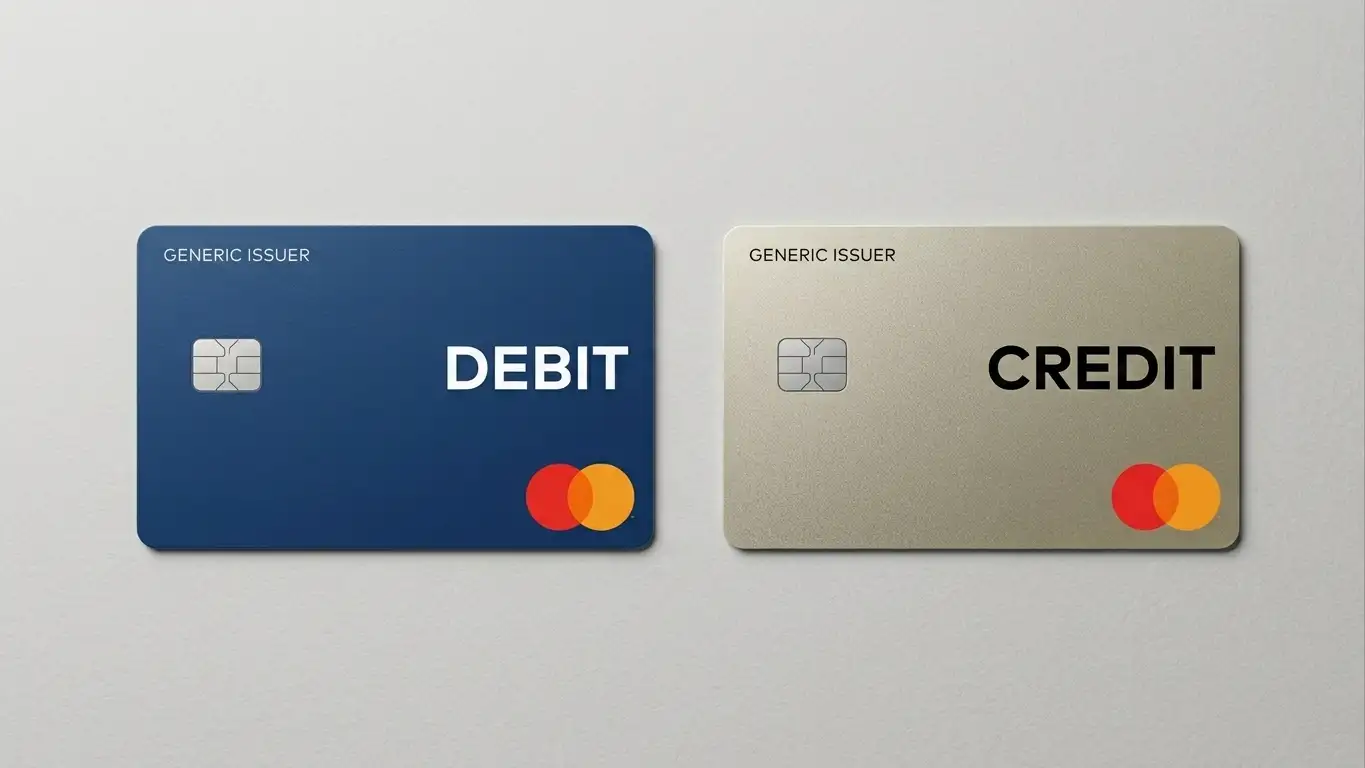
Mastercard issues four product types: debit cards, credit cards, prepaid cards, and tokenised credentials in digital wallets. Card product type determines transaction approval outcome at offshore casinos more reliably than any other single factor. Debit Mastercard deposits from Australian players generally clear when bank filtering permits. Credit Mastercard deposits fail nearly universally.
Why Credit Cards Fail at Australian Online Casinos
Australian credit card issuers prohibit gambling transactions as industry practice, not IGA mandate. When a credit Mastercard deposit reaches an offshore casino merchant, the issuing bank codes it as a cash advance rather than a standard purchase. Cash advances trigger immediate interest accrual—no interest-free period applies—and incur cash advance fees, typically 2–3% of transaction value. This coding occurs regardless of cardholder intent or merchant category visibility. The transaction either declines outright or, if approved, arrives with fees and interest attached from the moment it posts.
This prohibition emerged post-2019 as an industry-wide responsible gambling response. By 2026, success rates for credit Mastercard deposits to offshore casinos from Australian issuers approach zero. Banks apply filtering at the transaction-approval stage, declining gambling-merchant transactions before they clear. The restriction applies specifically to gambling merchant category codes, not to all international or high-risk merchants. Credit cards continue functioning for other offshore purchases. Gambling represents a carved-out prohibition.
How Debit Cards Bypass the Restrictions
Debit Mastercard draws directly from your bank account balance rather than extending credit. No cash advance coding applies. No interest accrues. Australian banks filter debit card gambling transactions through the same MCC 7995 screening that applies to credit cards, but the prohibition intensity differs. Debit cards face probabilistic filtering rather than blanket rejection. A debit Mastercard deposit to an offshore casino might succeed, or it might decline, with outcomes varying unpredictably even for identical transactions from the same card to the same merchant days apart.
Card product type is identified by BIN—Bank Identification Number, the first 6–8 digits of the card number. Payment gateways query BIN databases in real-time during transaction processing to determine product type and apply appropriate rules. The debit-versus-credit distinction operates invisibly to the cardholder. You enter the same details either way. The outcome diverges at the bank’s approval engine.
Prepaid Mastercards and Digital Wallets (Apple Pay, Google Pay)
Prepaid Mastercards—cards preloaded with funds, detached from a bank account—face variable acceptance at offshore casinos. Some operators block prepaid cards to prevent bonus abuse (players cycling through prepaid cards to claim multiple welcome bonuses under different identities). Other operators accept them. Success depends on operator policy and BIN database classification. Expect lower approval rates than debit cards, higher than credit cards.
Digital wallets tokenising Mastercard—Apple Pay, Google Pay, Samsung Pay—inherit the product type of the underlying card. An Apple Pay transaction backed by a debit Mastercard behaves as a debit transaction. An Apple Pay transaction backed by a credit Mastercard inherits the credit card prohibition. Tokenisation improves security by substituting card details with unique transaction identifiers, but it does not alter product-type classification or bypass issuer filtering. Roo Casino, Ricky Casino, and SkyCrown confirm Apple Pay and Google Pay support. Expect the same approval variability as direct card entry.
Can I use my Mastercard credit card at Australian online casinos?
No, not reliably. Australian credit card issuers code gambling deposits as cash advances, triggering immediate interest and fees, with most transactions declined outright before approval. By 2026 the practice approaches universal among Australian issuers. Debit Mastercard deposits face filtering but generally clear when bank algorithms permit. Prepaid Mastercards and digital wallets inherit the product type of the underlying card.
How Mastercard Deposits Work at Offshore Casinos
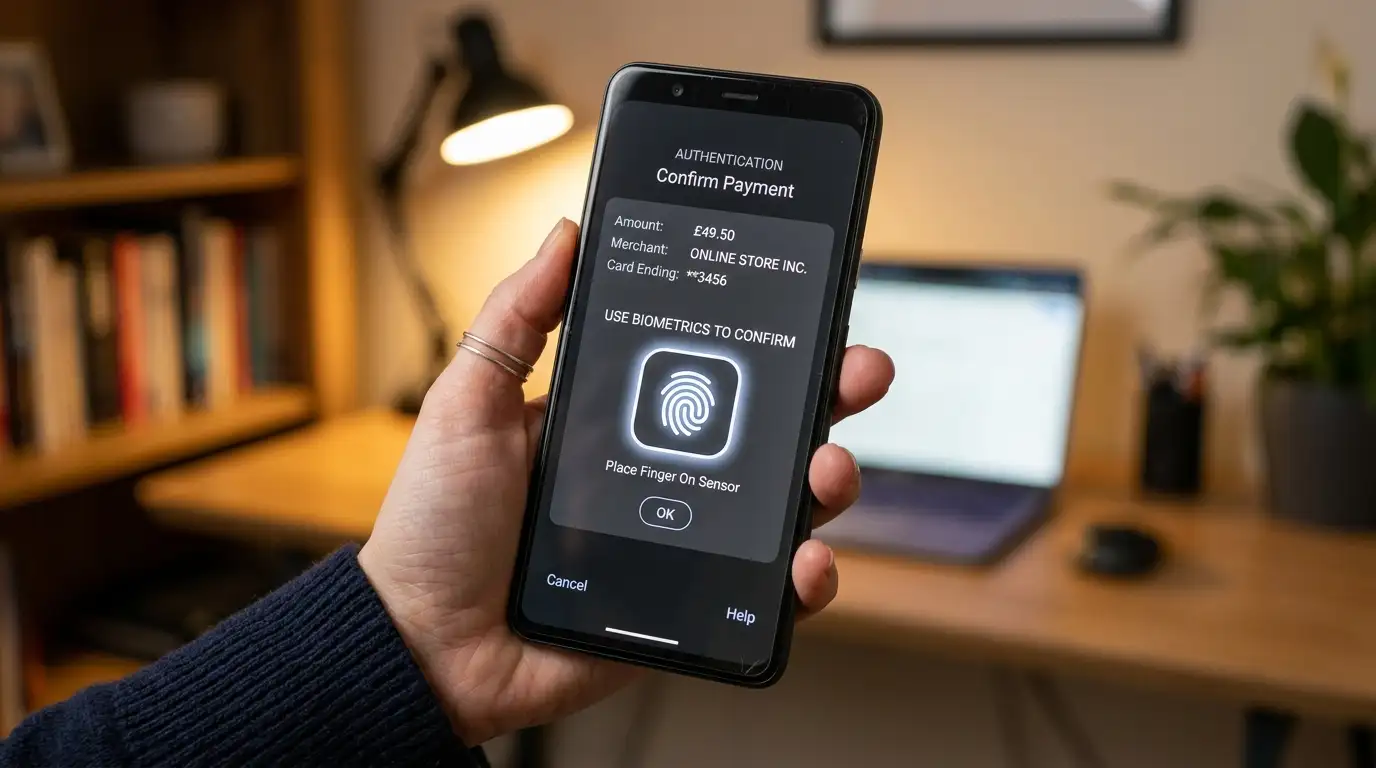
A Mastercard deposit at an offshore casino flows through four layers: your card details, the payment gateway, your bank’s authorisation engine, and the casino’s balance update. Each layer introduces a potential failure point. Understanding the sequence explains why identical transactions produce different outcomes.
Step-by-Step Deposit Process
You enter your card number, expiry date, and CVC into the casino cashier. The casino’s payment gateway—a third-party processor handling card transactions for the operator—receives these details and tokenises them, replacing your actual card number with a unique transaction identifier to reduce fraud exposure. The gateway queries the BIN database to determine card product type (debit, credit, prepaid) and applies initial filtering rules. If the card type passes gateway-level checks, the transaction routes to your issuing bank’s authorisation system.
Your bank receives a transaction request tagged with merchant category code MCC 7995—the universal code for gambling transactions. The bank’s real-time risk algorithm evaluates the request against multiple signals: card product type, cardholder transaction history, merchant risk profile, geographic location, transaction amount, and time-of-day patterns. This evaluation completes in milliseconds. The algorithm returns one of three outcomes: approve, decline, or request additional authentication. If additional authentication is required, 3D Secure triggers.
3D Secure redirects you to your bank’s verification page (version 1.x) or displays an in-app biometric or one-time code prompt (version 2.x). You authenticate the transaction. The bank re-evaluates with authentication confirmed and issues a final approve or decline. If approved, funds transfer from your account to the payment gateway’s merchant account, then from the gateway to the casino’s balance system. Your casino account updates within seconds to minutes. If declined, the transaction fails and no funds move.
3D Secure Authentication Explained
3D Secure is a cardholder identity verification layer inserted between payment gateway and bank authorisation. Two versions coexist in 2026. 3D Secure 1.x—the older standard—redirects you to a separate bank webpage where you enter a password or respond to a security question. 3D Secure 2.x—the current standard—integrates biometric authentication (fingerprint, face recognition) or one-time codes directly into the payment flow without a full redirect. Version 2.x reduces friction and completes faster.
Operator support for 3D Secure 2.x varies. Most offshore casinos integrated the standard between 2020 and 2023, but cashier pages rarely disclose which version runs in their payment gateway. You discover it during your first deposit. The authentication prompt either redirects you out-of-site (version 1.x) or displays inline (version 2.x). Both versions achieve the same security outcome—verifying the cardholder initiates the transaction—but version 2.x feels seamless where version 1.x feels clunky.
3D Secure authentication reduces fraud but does not override bank filtering. A bank can authenticate your identity and still decline the transaction if its risk algorithm flags the merchant category, transaction size, or other signals. Authentication confirms *who* you are. It does not confirm the bank *permits* this transaction type.
Why Banks Decline Casino Deposits (MCC Codes and Risk Filtering)
Roughly 30–40% of card transactions at gambling merchants fail, compared to 5–10% in general e-commerce. That gap is deliberate. Australian banks treat gambling merchant category code MCC 7995 as elevated-risk by default, applying real-time screening independent of cardholder account balance or manual gambling-block settings. The filtering is probabilistic, not deterministic. Same card, same casino, same amount—one deposit succeeds on Monday, an identical one declines on Wednesday.
Issuer risk algorithms evaluate transactions in real-time, weighing dozens of signals. Merchant category code sits at the top. MCC 7995 flags the transaction as gambling before any other analysis begins. Geographic merchant location factors in—offshore merchants outside Australia trigger additional scrutiny. Transaction velocity matters—multiple rapid deposits within a short window increase decline probability. Cardholder transaction history influences the outcome—if your recent pattern shows frequent small transactions, a sudden large one may decline even if funds exist. Time of day and day of week feed the algorithm—transactions during off-peak hours face marginally higher decline rates.
Banks layer automated filtering atop cardholder-initiated gambling blocks. Westpac, St.George, ANZ, and NAB offer opt-in gambling block features allowing cardholders to request that gambling transactions be declined for their card. These blocks sit in addition to automated risk filtering, not in place of it. A cardholder who never activated a gambling block still faces the 30–40% decline rate inherent to MCC 7995 transactions. Activating the block pushes the decline rate toward 100%. The automated filtering operates continuously, independent of opt-in settings.
Casinos cannot hide or change their merchant category code. MCC assignment occurs at the merchant account level, determined by the payment processor and card networks based on business type. A casino attempting to route deposits through an alternate MCC—general merchandise, digital goods—commits fraud detectable by card networks. Such attempts trigger merchant account termination.
Why does my bank decline Mastercard deposits to casinos even though I have money in my account?
Account balance does not determine approval. Banks apply real-time risk filtering to gambling merchant category code MCC 7995 transactions independent of available funds. Roughly 30–40% of gambling merchant transactions fail by design, compared to 5–10% in general e-commerce. The filtering is probabilistic—same card, same casino, identical transaction, outcomes vary unpredictably. Geographic merchant location (offshore), transaction velocity (multiple rapid deposits), cardholder history, and time-of-day patterns all feed the bank’s risk algorithm. A decline does not mean insufficient funds. It means the algorithm flagged this specific transaction as elevated-risk.
What is 3D Secure and why does it appear when I deposit with Mastercard?
3D Secure verifies you authorised the transaction by redirecting you to your bank’s authentication page or prompting biometric/code verification inline. Two versions exist: 3D Secure 1.x (older, separate redirect) and 3D Secure 2.x (current, inline biometric or one-time code). The prompt reduces fraud by confirming cardholder identity. Authentication does not override bank filtering—a bank can verify your identity and still decline a gambling merchant transaction if its risk algorithm flags the merchant category or other signals.
Mastercard Withdrawal Options and Processing Times
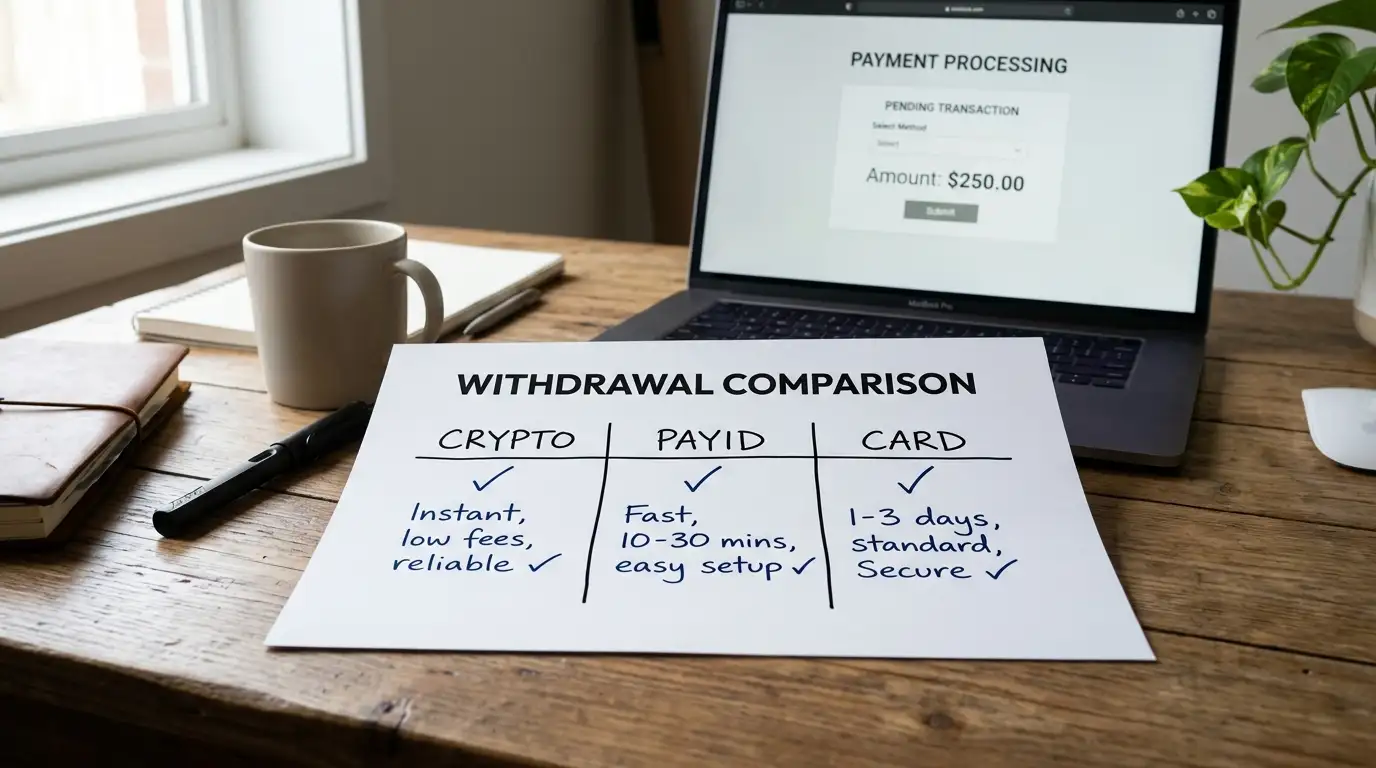
Deposits arrive instantly. Withdrawals take days or hours, depending on infrastructure you never see advertised. Two withdrawal rails exist for Mastercard: Mastercard Send and standard refunds. The first delivers money in 30 minutes to 2 hours. The second takes 1–5 business days. Most offshore casinos use the second and never tell you.
Mastercard Send vs. Standard Refunds (The Two Withdrawal Rails)
Mastercard Send is a push-to-card payment rail enabling real-time fund transfers directly to a cardholder’s Mastercard. When a casino integrates Mastercard Send via API, withdrawals process as push transactions—the casino initiates a transfer, Mastercard routes it to your issuing bank, funds arrive in 30 minutes to 2 hours. This infrastructure requires explicit integration effort from the casino’s payment processor. Not all offshore operators invest in it.
Standard refunds reverse the original deposit transaction. The casino processes a refund request, which queues through the same card network settlement infrastructure that handles purchases. Refunds take 1–5 business days—the same timeline as disputing a retail charge—because they follow the same processing path. Standard refunds require no special integration beyond basic card acceptance. Every casino accepting Mastercard deposits can issue refunds. Most do.
The cashier text “Mastercard withdrawal” can mean either rail. Casinos rarely disclose which. Withdrawal processing time quotes hint at the answer: a casino quoting “30 minutes to 2 hours” likely integrated Mastercard Send; a casino quoting “1–5 business days” definitely uses standard refunds. When no timeframe appears, assume standard refunds. Push-to-card integration is the exception, not the default.
None of the eight operators here explicitly disclosed Mastercard Send support in reviewed materials. Ignition, BitStarz, PlayAmo, and Ricky quote crypto withdrawals under 4 hours and card withdrawals at 1–5 business days, indicating standard refund rails for cards. SkyCrown quotes PayID withdrawals at 2–4 hours but lists no comparable Mastercard timeframe, suggesting PayID as the fast-withdrawal method and cards relegated to the slow rail. HellSpin quotes 12-hour approval times without specifying withdrawal-method breakdowns. Roo Casino and PlayZilla provided no withdrawal timeframes.
Why Crypto and PayID Beat Mastercard for Withdrawals
Cryptocurrency and PayID withdrawals bypass card network settlement delays entirely. A Bitcoin withdrawal processes directly from the casino’s wallet to your wallet, settling on-chain within 10–60 minutes depending on network congestion and fee tier. PayID withdrawals use Australia’s New Payments Platform, settling within 60 seconds to 4 hours depending on operator integration quality. Both methods avoid the 1–5 business day card refund queue.
Every operator here prioritises crypto as the fast-withdrawal method. BitStarz: crypto 0–1 hours, cards 1–5 days. PlayAmo: crypto under 2 hours, cards 1–5 days. Ricky: crypto under 4 hours, cards 1–5 days. The pattern repeats across the market. Offshore casinos position cryptocurrency as the solution to slow card withdrawals rather than investing in Mastercard Send integration. PayID adoption among Australian-focused operators—HellSpin, Ricky, SkyCrown—provides a second fast-exit option for players unwilling to manage crypto wallets.
Card withdrawals function as the fallback option for players who deposited via Mastercard and prefer withdrawing to the same method. Processing takes days. Operators tolerate this because most players exit via crypto or PayID instead. The card refund rail remains available but unoptimised.
Realistic Timeframes by Payment Method
Cryptocurrency withdrawals clear in 10 minutes to 4 hours once the casino approves the request. Approval delays—KYC verification, manual withdrawal review—add 12–48 hours before the withdrawal enters processing. Post-approval on-chain settlement completes within an hour for Bitcoin and Ethereum on standard fee tiers, under 10 minutes for USDT on Tron (TRC-20). First-time withdrawals trigger KYC requirements at every operator here: proof of identity, proof of address, sometimes proof of card ownership. Subsequent withdrawals from the same verified account skip KYC and process immediately post-approval.
PayID withdrawals quote 2–4 hours at SkyCrown, under 60 seconds at faster operators tested in the Australian market per independent player reports. Operator integration quality determines speed. HellSpin and Ricky offer PayID deposits and imply bidirectional support without published withdrawal timeframes. Instant PayID deposits became standard across Australian-facing offshore casinos in 2024–2025; withdrawal integration lags behind but accelerates.
Mastercard withdrawals via standard refunds settle in 1–5 business days. “Business days” excludes weekends and public holidays. A withdrawal requested Friday afternoon may not arrive until the following Wednesday. The timeline begins *after* the casino approves the withdrawal, not when you submit the request. Add 12–48 hours for first-withdrawal KYC processing. Total time-to-funds: 2–7 calendar days typical, longer if KYC delays or weekend timing intervenes.
E-wallet withdrawals (Skrill, Neteller, MiFinity where supported) settle in 0–24 hours post-approval. Faster than card refunds, slower than crypto and PayID. Limited operator support among Australian-focused platforms reduces relevance—Ricky lists Skrill and Neteller, most others omit e-wallets or list them without prominence.
How long do Mastercard withdrawals take from online casinos in Australia?
One to five business days via standard refund processing—the method most offshore casinos use. A small number of operators integrate Mastercard Send, delivering funds in 30 minutes to 2 hours, but this remains rare. Cryptocurrency withdrawals (Bitcoin, Ethereum, USDT) clear in 10 minutes to 4 hours post-approval. PayID withdrawals settle in 60 seconds to 4 hours depending on operator integration. First-time withdrawals add 12–48 hours for KYC verification (proof of identity, proof of address, sometimes proof of card ownership) before processing begins.
Why do some casinos not offer Mastercard withdrawals even though they accept Mastercard deposits?
Standard refunds require the casino to hold your original deposit transaction reference. If you deposited via Mastercard then request withdrawal to a different Mastercard (or the original card expired), the refund cannot process—transaction references mismatch. Some casinos restrict card withdrawals to the exact card used for deposit. Others block card withdrawals entirely, forcing players toward crypto or e-wallet exits to avoid refund-mismatch complications. Mastercard Send integration eliminates this restriction by pushing funds to any nominated Mastercard, but few offshore operators invest in the API integration required.
Fees, Limits, and the Hidden Cost of Foreign Currency Processing

Casinos advertise “zero fees” on Mastercard deposits. Your bank statement tells a different story. Most offshore operators process card transactions through foreign-currency merchants—EUR, USD, or GBP-denominated merchant accounts—triggering foreign transaction fees your issuing bank charges. These fees compound silently across repeated deposits.
Foreign Transaction Fees Explained (The 2–5.5% You Didn’t Know About)
When you deposit A$100 at an offshore casino and the merchant processes in EUR, two fees apply. Mastercard’s network applies a currency conversion margin—typically 1–2.5% above the interbank exchange rate—to convert AUD to EUR at the point of transaction. Your issuing bank then adds its own foreign transaction fee—typically 1–3% of the transaction value—as a separate charge. These fees stack. Total cost: 2–5.5% per deposit.
A A$100 deposit costs you A$102–A$105.50 in actual bank deductions. Over ten deposits, that’s A$20–A$55 in cumulative fees. Twenty deposits: A$40–A$110. The fees appear as separate line items on your bank statement or absorb into the exchange rate difference, depending on how your bank structures foreign transaction disclosures. Many Australian cardholders miss them entirely, attributing balance discrepancies to rounding or exchange rate fluctuations rather than systematised fee extraction.
AUD merchant processing eliminates foreign transaction fees. When a casino processes your Mastercard deposit through an AUD-denominated merchant account, no currency conversion occurs. Your bank treats the transaction as a domestic AUD purchase. Mastercard’s network FX margin does not apply. Your issuing bank’s foreign transaction fee does not trigger. You pay exactly A$100 for a A$100 deposit.
AUD merchant processing remains rare at offshore casinos. Curaçao-licensed operators typically route card transactions through European or Caribbean merchant processors denominated in EUR or USD. Malta-licensed operators often use EUR merchants. Kahnawake-licensed operators default to USD. The operational cost and compliance complexity of maintaining AUD merchant accounts deters most offshore operators from integrating them. PayID adoption addresses the problem differently—PayID transfers bypass card networks entirely, settling as AUD bank-to-bank transfers with no currency conversion and no card network fees.
Minimum and Maximum Deposit Limits
Minimum deposits range A$20–A$30 across operators here. Ignition and BitStarz: A$20. HellSpin: A$25. SkyCrown: A$30. Ricky, PlayAmo, Roo Casino, and PlayZilla list variable or undisclosed minimums. A$20–A$30 floors position these platforms as accessible to casual players and low-stakes depositors. Higher minimums—A$50, A$100—appear at some offshore casinos targeting high-rollers but remain absent from this shortlist.
Maximum deposit limits vary by operator policy, payment method, and account status. Single-transaction maximums typically range A$1,000–A$5,000 for card deposits at standard account tiers. VIP accounts unlock higher limits. Daily and monthly cumulative deposit caps layer atop per-transaction limits. Specific figures remain undisclosed in public-facing materials for most operators reviewed. Ignition specifies a A$4,500 daily withdrawal cap, implying deposit caps exist at comparable or higher levels. Exact limits surface during account registration or first deposit attempt.
Withdrawal minimums mirror deposit floors—A$20–A$30 typical. Withdrawal maximums constrain more tightly than deposit maximums. Ignition: A$4,500 per day. Standard-tier accounts at other operators often cap daily withdrawals at A$1,500–A$3,000, with monthly maximums ranging A$10,000–A$50,000. High-roller and VIP accounts negotiate higher limits. Progressive withdrawal structures incentivise players toward VIP tier progression—higher deposit frequency and larger balances unlock faster processing and increased caps.
How to Check if a Casino Processes in AUD
Your bank statement discloses merchant currency. After your first deposit clears, check the transaction descriptor. If the line item shows “AUD” or lists the exact deposit amount you entered with no conversion notation, the merchant processed in AUD. If the descriptor shows “EUR,” “USD,” “GBP,” or any non-AUD currency code, foreign transaction fees applied. If your statement lists two separate lines—the deposit amount plus a smaller “foreign transaction fee” or “international transaction fee”—you paid the 1–3% issuer surcharge in addition to Mastercard’s 1–2.5% network margin.
Some Australian banks bundle foreign transaction fees into the exchange rate rather than listing them separately. Your statement shows a single AUD deduction slightly higher than the deposit amount you authorised. The difference—typically 2–5.5% as calculated above—represents combined Mastercard network margin and issuer foreign transaction fee. Exact breakdowns vary by issuer. Commonwealth Bank, Westpac, ANZ, and NAB publish foreign transaction fee schedules in their card product disclosure statements, typically 3% for standard credit and debit Mastercard products, lower (1–2%) for premium cards, zero for select travel-focused cards.
Casino cashier pages rarely disclose merchant processing currency. Operator terms and conditions occasionally bury merchant currency details in payment-method fine print. Reliable verification occurs post-transaction via bank statement review. First deposit functions as a test transaction. If foreign transaction fees appear, expect them on every subsequent card deposit to that operator. Switching to PayID or cryptocurrency for future deposits avoids the fees.
Are there fees for using Mastercard at offshore casinos?
Casinos typically charge no direct fees. Your bank charges foreign transaction fees when the casino processes through a foreign-currency merchant (EUR, USD, GBP). Mastercard applies a 1–2.5% network FX margin; your issuing bank adds a 1–3% foreign transaction fee. Combined cost: 2–5.5% per deposit. AUD merchant processing eliminates these fees but remains rare at offshore operators. PayID and cryptocurrency deposits bypass card networks entirely, incurring no foreign transaction fees regardless of merchant currency.
The Legal Reality: Online Casinos in Australia in 2026
No Australian-licensed online casinos exist. None can be licensed. The Interactive Gambling Act prohibits their operation. That legal reality shapes every operator recommendation here and every deposit you make.
Why There Are No Australian-Licensed Online Casinos
The Interactive Gambling Act 2001 prohibits the provision of online casino services—pokies, table games, live dealer—to persons physically located in Australia. The prohibition applies to operators, not players. It makes it illegal for any entity to *offer* online casino services to Australians, but does not criminalise individual Australians *using* offshore services. The distinction matters. Players face no criminal liability. Operators face prosecution if they target the Australian market while operating domestically or violate the advertising restrictions applying to offshore operators.
The ACMA—Australian Communications and Media Authority—enforces the IGA. The ACMA does not issue online casino licenses. No domestic license exists. No pathway exists to obtain one. State and territory gambling regulators license land-based casinos, sports betting operators, and lottery services. None license online casino operators. The federal prohibition supersedes any state-level licensing framework that might otherwise permit it. Online casino operation in Australia is structurally impossible under current law.
The Interactive Gambling Act and the 2026 Amendment
The Interactive Gambling Amendment (Gambling Reform) Act 2026 passed into law on 26 August 2026 as Act No. 72, 2026. The amendment maintained the existing prohibition on online casino services. No carve-out emerged for regulated domestic operators. No licensing framework appeared. The structure established in 2001 persists unchanged: operators cannot legally provide online casino services to Australians; individual Australians using offshore services operate in a legal grey area with no player-side penalties codified.
Enhanced enforcement measures commence 1 January 2027. The 2026 amendment strengthened ACMA powers to block unlicensed offshore operators and require internet service providers to restrict access to listed domains. The ACMA blocklist—a public register of domains the regulator instructs ISPs to block—expands under the new framework. BitStarz already appears on the list as of July 2026 with twelve blocked addresses. Expect additional operators to face blocking as enforcement ramps up post-1 January 2027.
The amendment did not legalise, regulate, or license online casinos. Claims appearing in affiliate marketing materials—statements that a “2026 IGA amendment permits instant Mastercard deposits within regulated online casino platforms”—are false. No such provision exists in the amendment text. The prohibition remains absolute. Enhanced enforcement targeting offshore operators increases rather than decreases. Players continue accessing offshore casinos in a grey area, but the regulatory pressure on operators intensifies.
ACMA Enforcement and Domain Blocking
ACMA enforcement operates through ISP-level domain blocking. When the ACMA identifies an offshore operator serving Australian players in violation of the IGA, it adds the operator’s domain to the blocklist and instructs Australian ISPs—Telstra, Optus, TPG, Vodafone—to prevent DNS resolution for those domains. Users attempting to access a blocked domain receive an error message or redirect. The login form never loads. Access requires a VPN or alternate mirror domain.
As of mid-2026, the ACMA blocklist includes operators such as Lucky Mate, Vegastars, Wombet, Cosmobet, Fortune Play, Fortunica, Rolletto, Velobet, and twelve addresses tied to BitStarz (main domain plus numbered mirrors and character-substitution variants such as swapping the letter “i” for the digit “1”). The list grows over time. Enhanced enforcement commencing 1 January 2027 likely accelerates blocklist expansion. Operators respond by launching alternate domains—numbered mirrors, alternate TLDs, character-variant domains—attempting to stay ahead of blocking cycles.
Domain blocking creates access friction but does not eliminate offshore casino availability. VPN usage bypasses ISP-level blocks by routing traffic through servers outside Australia, making the user appear to originate from a different jurisdiction. Alternate mirror domains continue functioning until the ACMA identifies and blocks them. The blocklist operates as a whack-a-mole mechanism rather than a comprehensive barrier. Players willing to use a VPN or monitor operator social channels for current mirror domains retain access. Players unwilling to work around blocks lose access when their preferred operator lands on the list.
What This Means for Players Using Offshore Casinos
Individual players face no criminal liability under the IGA. The law targets operators, not consumers. No Australian player has been prosecuted for using an offshore casino. That legal status persists under the 2026 amendment. Enhanced enforcement increases domain-blocking pressure on operators, potentially reducing the number of accessible offshore platforms, but does not introduce player-side penalties.
Using an offshore casino means operating outside Australian consumer protection frameworks. Curaçao-licensed operators—the majority of the shortlist below—answer to Curaçao Gaming Control Board regulations, not Australian law. Disputes over withheld withdrawals, bonus term violations, or account closures fall outside ACMA jurisdiction. Australian consumer protection laws do not apply. You rely on the operator’s licence jurisdiction and, pragmatically, the operator’s reputation incentive to maintain player satisfaction. Operators with long market presence and transparent operational structure—Ignition (since pre-2016), BitStarz (since 2014), PlayAmo (pre-2020)—demonstrate survival through reputation rather than regulatory mandate. Newer operators (HellSpin, SkyCrown launched 2022) lack that track record.
Banking relationships with offshore casinos trigger the transaction filtering detailed earlier. Australian banks apply MCC 7995 screening regardless of the legality of player-side participation. The bank’s risk algorithm treats offshore gambling transactions as elevated-risk whether the IGA criminalises player conduct or not. Filtering intensity does not map to legal status. It maps to merchant category and bank policy. Players experience 30–40% decline rates and foreign transaction fees independent of the legal grey area surrounding offshore casino use.
The grey area persists indefinitely absent legislative change. No political momentum exists toward legalising domestic online casinos. The 2026 amendment reinforced prohibition rather than opening pathways toward regulation. Players using offshore casinos operate in a space the law neither explicitly permits nor penalises, accessing operators the law prohibits from serving them, with enforcement targeting operators rather than users. That structure remains unchanged through 2026 and beyond foreseeable legislative action.
Bonuses, Pokies, and What to Expect at Mastercard Casinos
Welcome bonuses at offshore casinos follow a consistent structure: deposit match percentages, maximum bonus caps, wagering requirements, and game weighting restrictions. Payment method affects eligibility. Mastercard deposits trigger lower bonus offers than cryptocurrency deposits at some operators. Game libraries span thousands of titles. Live dealer tables run 24/7. What distinguishes one operator from another comes down to specifics rather than categories.
Welcome Bonuses and Mastercard Eligibility
Ignition splits its welcome package by deposit method: 300% match up to A$3,000 for cryptocurrency, or 100% up to $1,000 casino plus 100% up to $1,000 poker for card deposits. The crypto bonus reaches three times the card bonus cap. Wagering requirements apply to bonus amounts at 40x typical, though Ignition’s specific terms were not disclosed in reviewed materials. BitStarz offers up to A$10,000 or 5 BTC plus 180 free spins across four deposits at 40x wagering, with no disclosed distinction between card and crypto deposit eligibility. PlayAmo provides 150% up to A$1,500 plus 150 free spins without payment-method segmentation noted. HellSpin delivers 150% up to A$450 plus 100 free spins with A$25 minimum deposit and 40x wagering applied to bonus amount only.
Ricky Casino spreads its bonus across ten deposits totalling A$7,500 plus 550 free spins—longest bonus structure in this shortlist. First deposit matches 100% up to A$500 plus 100 free spins. Subsequent deposits unlock additional match tiers. SkyCrown quotes up to A$4,000–A$8,000 plus 400 free spins across four deposits depending on source, suggesting promotional variation. Roo Casino offers A$3,500 plus 200 free spins across three deposits. PlayZilla provides 100% up to $150—lowest bonus in the set by substantial margin.
Payment method affects bonus eligibility more at some operators than others. Ignition explicitly penalises card deposits with a 3x lower bonus cap. Other operators apply uniform bonus structures regardless of deposit method, or failed to disclose distinctions in public-facing materials. Cryptocurrency deposits generally unlock higher bonuses and faster processing across the offshore market. The pattern reflects operator preference for crypto—lower transaction fees, irreversible payments, no chargeback risk—rather than regulatory mandate or technical necessity.
Wagering requirements convert bonus funds into withdrawable cash. A A$100 deposit with a 100% match bonus yields A$200 in your account: A$100 real money, A$100 bonus money. At 40x wagering, you must wager A$4,000 (40 times the A$100 bonus amount) before the bonus converts to withdrawable funds. Game weighting determines how much each wager contributes toward the requirement. Slots typically contribute 100%—a A$10 spin counts as A$10 wagered. Table games contribute 10–20%—a A$10 blackjack hand counts as A$1–A$2 wagered. Live dealer games often contribute 0–10%. Specific weighting varies by operator. Terms and conditions bury the details.
Bonus expiry timelines cap how long you have to clear wagering requirements. Thirty days typical, though some operators allow 60–90 days. Failing to clear wagering within the expiry window forfeits the bonus and any winnings derived from it. Maximum bet limits apply during wagering—typically A$5–A$10 per spin or hand. Exceeding the maximum bet forfeits the bonus and winnings. Restricted games cannot be played with bonus funds, or contribute 0% toward wagering if played. Progressive jackpot slots commonly appear on restricted lists.
Pokies Libraries and Live Dealer Games
BitStarz aggregates 6,500+ games from 50+ providers—largest library in this shortlist. SkyCrown runs 6,000–7,000 games depending on source. PlayAmo offers 3,500+ titles. HellSpin spans 3,000+ games. Ignition lists 1,000+ games plus a dedicated poker room. Roo Casino, Ricky Casino, and PlayZilla describe “large” libraries without quantified counts. Provider rosters overlap substantially: Pragmatic Play, BGaming, NetEnt, Microgaming, Play’n GO, Evolution live dealer appear across multiple operators. Studio variety matters less than raw title count—6,000 games from 50 providers delivers more selection than 1,000 games from 10 providers, even if the top 100 most-played titles appear in both libraries.
Pokies dominate game libraries. Slots, video slots, cluster-pay slots, Megaways slots—terminology varies but the format remains consistent. Reels, paylines or cluster mechanics, bonus features, free spins rounds, Wild and Scatter symbols. RTP percentages range 94–98% typical, disclosed in game info screens or provider documentation. Variance levels (low, medium, high) determine payout frequency and size. High-variance slots pay infrequently but deliver larger wins when they hit. Low-variance slots pay frequently but in smaller amounts. Game selection spans themes, mechanics, and studios rather than differentiating by RTP or variance.
Live dealer tables run 24/7 via Evolution Gaming, Ezugi, Pragmatic Live, or other providers. Blackjack, roulette, baccarat, poker variants, game shows (Crazy Time, Monopoly Live, Dream Catcher). Dealers operate from studios in Malta, Latvia, Romania, Georgia, or other jurisdictions, streaming video to players in real-time. Bet limits range from micro-stakes tables (A$1 minimum) to VIP tables (A$10,000+ maximum). Table availability fluctuates based on player demand and studio operating hours, though major operators maintain 24/7 coverage across time zones.
Table games—RNG-based blackjack, roulette, baccarat, poker—appear in smaller numbers than slots but provide alternatives for players preferring skill-based or lower-variance formats. Video poker occupies a middle ground: RNG-based like slots, strategy-driven like table games, optimal-play RTP often exceeding 99% for Jacks or Better and Deuces Wild variants. Specialty games (scratch cards, keno, bingo, virtual sports) fill out the long tail of game libraries, contributing little to overall play volume but rounding out the offering.
New Casinos vs. Established Operators
HellSpin and SkyCrown launched 2022, representing the newest-operator category in this shortlist. Ricky Casino’s 2023 Curaçao licence issue date suggests post-2020 launch, though exact founding year remains undisclosed. BitStarz founded 2014 holds the longest operational history. Ignition traces lineage to pre-2016 poker-room operations before rebranding. PlayAmo operated pre-2020 as an established brand. Roo Casino’s founding date remains undisclosed but affiliate materials reference it as a known brand in the Australian market, suggesting multi-year operation. PlayZilla’s founding date and operational history remain undisclosed.
New casinos offer modern platform design, faster payment integration (PayID support at HellSpin and SkyCrown reflects 2022 launch timing), and aggressive welcome bonuses to attract initial player bases. Established operators offer operational track records, proven withdrawal reliability, and brand recognition reducing perceived risk. A 2014-founded operator surviving to 2026 demonstrates business continuity. A 2022-founded operator provides two years of market presence—insufficient to assess long-term reliability but sufficient to verify short-term payout behaviour.
Operational longevity does not guarantee ethical behaviour—long-established operators can and do engage in bonus-term disputes, withdrawal delays, and opaque practices. Short operational history does not indicate unreliability—new operators can meet industry standards from launch. Longevity functions as one signal among many. BitStarz’s ACMA blocklist inclusion demonstrates that established operators face regulatory pressure regardless of founding date. PlayZilla’s transparency deficit matters more than its undisclosed age.
Do I need to verify my identity to withdraw winnings deposited with Mastercard?
Yes. First-time withdrawals trigger KYC verification at every operator here. Requirements include proof of identity (government-issued photo ID—passport, driver’s licence), proof of address (utility bill, bank statement dated within 90 days), and sometimes proof of card ownership (photo of the Mastercard used for deposit, showing first six and last four digits with middle digits obscured). Verification processing takes 12–48 hours typical. Subsequent withdrawals from the same verified account bypass KYC unless the operator flags unusual activity or regulatory requirements mandate re-verification. KYC applies regardless of deposit method—Mastercard, PayID, crypto—though card deposits sometimes trigger proof-of-card-ownership requests absent from crypto-only accounts.
Mastercard Alternatives: PayID, Crypto, and Other Payment Methods

Mastercard works for deposits when bank filtering permits. Withdrawals take days. Fees compound silently. Alternatives exist that avoid all three problems. PayID settles instantly in both directions. Cryptocurrency bypasses banks entirely. Each method trades Mastercard’s familiarity for advantages Mastercard cannot match.
PayID for Instant Deposits and Withdrawals
PayID uses Australia’s New Payments Platform to enable real-time bank-to-bank transfers identified by email address or phone number instead of BSB and account number. You link your PayID to your bank account once during setup. Deposits to a casino accepting PayID transfer directly from your account to the casino’s account, settling in under 60 seconds. No card network. No currency conversion. No foreign transaction fees. Funds appear in your casino balance before you close the banking app.
HellSpin, Ricky Casino, and SkyCrown confirm PayID support for deposits. SkyCrown explicitly quotes PayID withdrawals at 2–4 hours, confirming bidirectional integration. HellSpin and Ricky list PayID on their payment pages without published withdrawal timeframes, suggesting deposit-only integration or undisclosed withdrawal support. PayID deposits became standard across Australian-facing offshore casinos in 2024–2025. Withdrawal integration lags but accelerates. Operators targeting Australian players invest in PayID because it solves the problems Mastercard introduces: instant settlement, zero fees, no bank filtering tied to gambling merchant codes.
PayID withdrawals—where supported—clear faster than card refunds by design. The casino initiates a PayID transfer to your nominated identifier (email or phone linked to your bank account). Funds settle via NPP within minutes to hours rather than days. First-withdrawal KYC requirements still apply. Post-KYC, PayID functions as the fastest non-crypto withdrawal method available to Australian players. Operators without bidirectional PayID support force players toward cryptocurrency or card refunds for withdrawals, limiting PayID to the deposit side only.
Cryptocurrency: The Fastest Withdrawal Method
Bitcoin, Ethereum, Litecoin, USDT, Dogecoin—every operator in this shortlist accepts cryptocurrency deposits. Most prioritise crypto as the fast-withdrawal method. BitStarz: crypto 0–1 hours. PlayAmo: crypto under 2 hours. Ricky: crypto under 4 hours. Ignition quotes crypto processing in the same 10-minute to 4-hour range. Cryptocurrency withdrawals bypass card network settlement delays and bank intermediaries. The casino sends funds from its wallet to your wallet. Blockchain settlement completes within minutes to an hour depending on network congestion and fee tier.
USDT on Tron (TRC-20) settles fastest—under 10 minutes typical, often under 5 minutes. Bitcoin and Ethereum on standard fee tiers settle within 30–60 minutes. Litecoin and Dogecoin settle slightly faster than Bitcoin. Transaction fees vary by coin and network congestion. Bitcoin fees range $1–$10 per transaction depending on urgency and block space demand. USDT on TRC-20 costs under $1. Ethereum fees fluctuate $2–$50 depending on network congestion, making it expensive during peak-usage periods. Operators absorb or pass through blockchain fees depending on their policies.
Cryptocurrency requires wallet management—securing private keys, understanding blockchain addresses, verifying transaction confirmations. That friction deters casual players unfamiliar with crypto infrastructure. For players comfortable managing wallets, crypto delivers the fastest deposit-to-withdrawal cycle available: instant deposits (confirmation within minutes), multi-hour withdrawals post-approval, no currency conversion, no bank filtering, no foreign transaction fees. The learning curve pays off in speed and cost savings for regular players.
Visa, E-Wallets, and Bank Transfers
Visa functions identically to Mastercard: debit cards generally work, credit cards face near-universal rejection, deposits process instantly subject to bank filtering, withdrawals take 1–5 business days via standard refunds. Foreign transaction fees apply when merchants process in foreign currency. Switching from Mastercard to Visa changes card network but not transaction mechanics. Players experiencing Mastercard declines sometimes find Visa clears, or vice versa, due to issuer-specific filtering algorithms, but success patterns vary unpredictably.
E-wallets—Skrill, Neteller, MiFinity—intermediary payment accounts funded via bank transfer or card, then used to deposit at casinos. Ricky Casino lists Skrill and Neteller. Other operators in this shortlist omit e-wallets or list them without prominence. E-wallet deposits settle instantly. Withdrawals settle in 0–24 hours, faster than card refunds but slower than crypto and PayID. E-wallets charge fees on deposits (1–3% typical), currency conversion (2–4% typical), and sometimes withdrawals. Fee structures vary by provider. E-wallet adoption among Australian players remains low compared to PayID—PayID delivers comparable speed without account setup friction or fees.
Bank transfers—direct bank-to-bank transfers via BSB and account number—settle slower than PayID (1–3 business days for deposits, 3–7 business days for withdrawals) and require manual entry of banking details rather than PayID’s email/phone identifier convenience. POLi—an instant bank transfer method available in Australia—accelerates the process, settling deposits within minutes. PlayAmo confirms POLi support. Other operators rarely integrate POLi, limiting availability. Bank wire transfers remain the slowest payment method across all options, used primarily for high-value transactions exceeding card and e-wallet limits.
| Payment Method | Deposit Speed | Withdrawal Speed | Fees | Best For |
|---|---|---|---|---|
| Mastercard Debit | Instant (subject to bank filtering) | 1–5 business days | Foreign transaction fees 2–5.5% per deposit at foreign-currency merchants | Players preferring card convenience, accepting multi-day withdrawals |
| PayID | Under 60 seconds | 60 seconds–4 hours (where supported) | Zero | Australian players prioritising speed and zero fees, both directions |
| Cryptocurrency (BTC, ETH, USDT) | 10–60 minutes (blockchain confirmation) | 10 minutes–4 hours post-approval | Blockchain fees $0.50–$10 per transaction | Players comfortable with wallets, prioritising fastest withdrawals |
| Visa Debit | Instant (subject to bank filtering) | 1–5 business days | Foreign transaction fees 2–5.5% per deposit at foreign-currency merchants | Same as Mastercard; try when Mastercard declines |
| E-Wallets (Skrill, Neteller) | Instant | 0–24 hours | Deposit fees 1–3%, conversion fees 2–4% | Limited relevance; PayID and crypto superior for Australian players |
| Bank Transfer / POLi | POLi instant; standard transfer 1–3 days | 3–7 business days | Zero for POLi, variable for wire transfers | High-value transactions or players avoiding cards and crypto |
Is PayID faster than Mastercard for casino deposits in Australia?
Yes. PayID deposits settle in under 60 seconds via Australia’s New Payments Platform, clearing as instant bank-to-bank AUD transfers. Mastercard deposits settle instantly when approved, but face 30–40% decline rates from bank filtering of gambling merchant code MCC 7995. PayID bypasses card network filtering entirely. For withdrawals, PayID clears in 60 seconds to 4 hours where supported (SkyCrown confirms 2–4 hours), compared to Mastercard’s 1–5 business days via standard refunds. PayID delivers speed, zero fees, and no filtering—superior to Mastercard in all three dimensions.
Can I use Apple Pay or Google Pay with my Mastercard at Australian online casinos?
Yes, where supported. Roo Casino, Ricky Casino, and SkyCrown confirm Apple Pay and Google Pay acceptance. Digital wallets tokenise your Mastercard, replacing card details with unique transaction identifiers to improve security. The underlying card product type (debit vs. credit) determines approval outcome. An Apple Pay transaction backed by a debit Mastercard behaves as a debit transaction. An Apple Pay transaction backed by a credit Mastercard inherits the credit card prohibition and will likely decline. Tokenisation secures the transaction but does not bypass issuer filtering or alter foreign transaction fee application.
Responsible Gambling and Self-Exclusion Tools
Offshore casinos operate outside Australian consumer protection frameworks, but most operators here offer deposit limits, session timers, self-exclusion options, and links to gambling support services. These tools function as harm-reduction mechanisms rather than regulatory mandates. Their effectiveness depends on player initiative and operator enforcement.
Deposit limits cap how much you can deposit within a specified period—daily, weekly, or monthly. You set the limit in your account settings. The system blocks deposits exceeding the cap until the period resets. Some operators enforce limits immediately; others apply a 24–48 hour delay before changes take effect, preventing impulsive limit increases during losing sessions. Session timers remind you how long you’ve played and prompt breaks at set intervals. Reality checks—pop-ups displaying session duration and net win/loss—interrupt play to surface awareness. Self-exclusion locks your account for a period you specify (30 days, 6 months, 12 months, permanent), blocking login and promotional communications.
BetStop—Australia’s National Self-Exclusion Register—covers licensed Australian betting and lottery services but does not extend to offshore casinos. Registering with BetStop blocks access to locally licensed operators only. Offshore operators operate outside BetStop’s scope. Self-exclusion at offshore casinos requires individual account-level requests per operator. No centralised register exists covering international platforms. A player excluding from Ignition remains able to access BitStarz, PlayAmo, and others unless they self-exclude from each individually.
Gambling support services operate independently of offshore casinos. Gambling Help Online provides 24/7 phone, chat, and email support at 1800 858 858 or gamblinghelponline.org.au. Lifeline offers crisis support at 13 11 14. Financial counselling services assist with gambling-related debt. State-level services—Gambler’s Help in Victoria, Gambling Help NSW, Problem Gambling Support Services in other jurisdictions—deliver face-to-face counselling, support groups, and treatment programmes. Offshore casino account settings typically link to these services in responsible gambling sections, though enforcement of self-exclusion and limit adherence remains operator-dependent.
Mobile access—browser-based on iPhone and Android without app downloads—maintains availability across devices. No download requirement removes a friction point but simultaneously removes a deliberate barrier prompting second thought before accessing a casino. The convenience that makes mobile gambling accessible also makes it frictionless. Desktop-only access forces a conscious choice to sit down and play. Mobile access allows play anywhere, anytime. That flexibility suits casual players and proves hazardous for players struggling with impulse control. Responsible gambling tools exist on mobile platforms as they do on desktop, but the psychological distance—opening a browser tab versus launching a dedicated app versus sitting at a computer—shrinks progressively, reducing natural pauses between impulse and action.
Offshore operators answering to Curaçao, Malta, or Kahnawake regulators implement harm-reduction tools to varying standards. Licensing jurisdictions impose responsible gambling requirements, but enforcement intensity and audit rigour differ from Australian consumer protection frameworks. A player experiencing gambling harm at an offshore casino navigates self-exclusion and support access outside the structured pathways available for locally licensed operators. That gap matters. The convenience offshore casinos deliver—no Australian licensing restrictions, broader game libraries, higher bonuses—comes at the cost of reduced regulatory oversight and consumer recourse. Responsible gambling becomes the player’s responsibility more completely than it would at a locally regulated operator, because the external safeguards and enforcement mechanisms are weaker.
Casino Deposit Methods Australia 2026 — Full Comparison
Content created by the «ReelBank» team