
$20 Minimum Deposit Pokies Australia 2026: Which Offshore Sites Actually Work
 Available in AU
Twenty dollars won’t buy much in Melbourne these days. A couple of pints, maybe. A pizza if you’re lucky. In the world of online pokies, though, that same twenty is the entry ticket to a surprisingly large playground—or a surprisingly fast exit, depending on where you drop it.
The Australian offshore pokies market converged on $20 as the de facto minimum deposit around 2024, replacing the earlier $10–$15 thresholds that payment processors killed off with rising fees. For players, $20 sits in the sweet spot: low enough to test the waters without committing rent money, high enough to trigger most welcome bonuses and cover a decent session if you pick the right volatility.
But here’s what the glossy landing pages won’t tell you upfront. That $20 deposit comes with a tangle of withdrawal minimums, wagering requirements that require a calculator to decode, and the uncomfortable reality that every operator accepting Australian players in 2026 is offshore—licensed in Curaçao, operating outside Australian jurisdiction, and offering zero consumer-protection recourse if things go sideways. The Interactive Gambling Act 2001 prohibits locally-licensed online casino services, full stop. The 2026 amendments tightened advertising rules and gave ACMA sharper enforcement teeth, but they did not lift the casino ban. If you want to play real-money pokies online from Australia, you’re dealing with international operators who answer to a Caribbean licensing body, not ACMA.
The ranking below strips the marketing gloss. We’re walking through the ten offshore casinos that accept $20 deposits from Australian players in 2026, what you actually get for that stake, and where the catches hide. Expect worked calculations on bonus-term turnover, honest breakdowns of withdrawal traps, and the regulatory enforcement reality nobody wants to discuss in detail. If you’re here to find out whether $20 is worth the spin, you’re in the right place.
Why $20 Became the Floor for Australian Pokies in 2026
The $20 minimum didn’t emerge by accident or player preference. It’s payment-processing economics dressed up as operator generosity.
Payment processors charge offshore casinos 2.5–4% plus a fixed fee of $0.30–$0.50 per card transaction. On a $10 deposit, that fixed fee alone eats 3–5% before the player sees a cent. On a $20 deposit, the fixed fee drops to 1.5–2.5% of the transaction—economically viable for the operator, especially when they’re also trying to fund a 100% welcome bonus on top. PayID deposits (bank-to-bank transfers via Australia’s NPP real-time rail) cost operators less—around 1.5–3% gateway fees with no fixed component—but the floor remains $20 because that’s where bonus economics and player expectations intersect.
The shift happened industry-wide between 2022 and 2024. Operators who’d been running $10 minimums found themselves squeezed: cover the processing fees and the bonus match, and there’s no margin left. Raise the minimum to $50, and you lose the casual players who just want a modest session without a three-figure commitment. $20 became the Goldilocks threshold. Players tolerate it as “a couple of drinks” money. Operators can fund a meaningful bonus without bleeding on transaction costs.
PayID’s rise accelerated the convergence. Before PayID adoption surged in 2023–2024, Australian players relied on cards (high decline rates for offshore gambling merchants), Neosurf vouchers (bought at retail, clunky), or e-wallets (extra signup friction). PayID is instant, free for the player, and lower-cost for the operator than cards. That infrastructure shift made $20 deposits economically sustainable at scale across the offshore market. The older $10 minimums withered because the unit economics didn’t work once payment gateways raised their fees in 2023.
So when an offshore casino says “$20 minimum deposit,” they’re not being generous. They’re running the math. Below $20, they lose money on every transaction after covering fees and bonuses. Above $20, they lose casual players. It’s the floor, not the ceiling.
What’s the difference between a $20 deposit and a $20 minimum deposit casino?
There isn’t one. The phrases mean the same thing: the operator won’t process a deposit smaller than twenty dollars. Marketing sites sometimes treat “$20 deposit pokies” and “$20 minimum deposit pokies” as distinct categories to create the illusion of variety, but it’s semantic padding. The minimum is the floor. You can deposit more, but you can’t go lower.
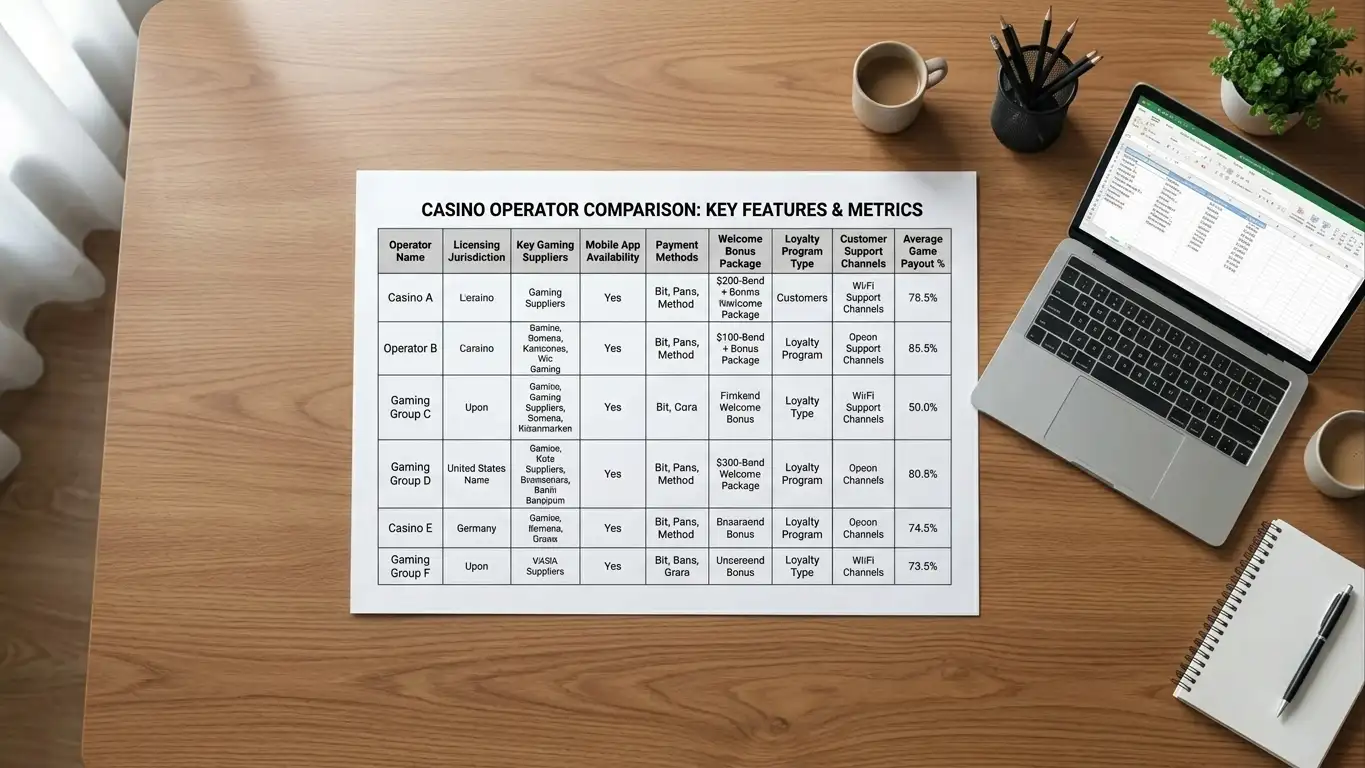
The Top 10 Offshore Casinos Accepting $20 from Australian Players
Every operator below is offshore, Curaçao-licensed, and operates outside Australian regulatory jurisdiction. None hold ACMA approval or state licenses. The Interactive Gambling Act prohibits offering online casino services to Australian residents, so these brands accept the legal risk and target Australians anyway. Players are not penalised under Australian law for using offshore casinos, but there’s zero consumer-protection recourse if an operator stalls a withdrawal or disappears.
The ranking prioritizes payout reliability (track record, parent-company size, withdrawal-minimum friction), payment-method support (PayID, crypto, processing speed), and bonus-term honesty. Game-library size matters less than whether the operator actually pays out when you win.
| Operator | License | Min Deposit | Min Withdrawal | Withdrawal Speed | Distinguishing Feature |
|---|---|---|---|---|---|
| Joe Fortune | Curaçao 8048/JAZ2016-083 | $20 | $10 | Bitcoin 1–2 hours | Lowest withdrawal minimum in cohort |
| PlayAmo | Curaçao OGL/2023/174/0082 | $20 | $20 | Crypto/e-wallet 0–24 hours | No withdrawal gap, 8-year track record |
| Ricky Casino | Curaçao OGL/2023/174/0082 | $20 | $20 | PayID instant, crypto <1 hour | Rare PayID withdrawals |
| Bizzo Casino | Curaçao OGL/2023/174/0082 | $20 | $20 | Crypto 0–1 hour | Mobile-first design, Dama N.V. |
| Sky Crown Casino | Curaçao OGL/2023/174/0082 | $20 | $20 | Crypto <1 hour | Crypto-focused, sub-hour payouts |
| National Casino | Curaçao (specific number undisclosed) | $20 | $20 | Crypto 0–24 hours | Highest bonus cap ($500), 30-day expiry |
| King Billy Casino | Curaçao 8048/JAZ | $20 | $30 | Crypto 0–1 hour, e-wallet 1–3 hours | Loyalty program, 21-day bonus expiry |
| Fair Go Casino | Curaçao (Deckmedia) | $20 | $20 | Bitcoin 1–3 hours | RTG-exclusive, Australian-themed, 30x wagering |
| Fastpay Casino | Curaçao (Altacore N.V.) | $20 | $30 | Crypto/e-wallet <30 minutes | Fastest payouts, $10 withdrawal gap |
| Red Stag Casino | Curaçao (Deckmedia) | $20 | $50 | Bitcoin 1–3 hours | RTG-exclusive, $30 withdrawal gap |
PlayAmo: Established Dama Brand with $20 Min Withdrawal
PlayAmo launched in 2016 under Dama N.V., a Curaçao-registered operator managing a portfolio of 20+ casino brands under a single eGaming master license (OGL/2023/174/0082). That license number appears across PlayAmo, Bizzo, Sky Crown, Ricky, and several others—they’re corporate siblings, not independent operators. Dama N.V. has been operating in the Australian offshore market long enough to have a reputation: they pay out, they process KYC within 24 hours, and their game library (5,000+ titles from NetEnt, Microgaming, Play’n GO, Pragmatic Play, Evolution live dealer) is vetted tier-1 stuff with published RTP and third-party RNG certification.
The $20 minimum deposit gets you into the full library with no restricted games. The welcome bonus is 100% up to $200 plus 100 free spins, with 40x wagering on the combined deposit and bonus, a $5 max bet during wagering, and a 7-day expiry. That 7-day window is tight compared to King Billy’s 21 days or National Casino’s 30 days—if you claim the bonus, you’re under pressure to clear $1,600 in turnover (assuming you deposit $20 and get the $20 match) inside a week, or you forfeit the bonus and any winnings tied to it. Most $20 depositors skip the bonus entirely and play their deposit clean, because clearing 40x at modest stakes is a grind that ends near-zero more often than not.
Payment methods include PayID (instant deposits, no casino fee, funds appear in 1–2 minutes), Neosurf, Skrill, Neteller, Visa, Mastercard, Bitcoin, Ethereum, and Litecoin. Withdrawals process fastest via crypto and e-wallets (0–24 hours after KYC approval), slower via cards and bank wire (3–5 business days). The minimum withdrawal is $20, matching the deposit minimum—no gap. That matters: if you deposit $20, hit $25 in a lucky session, you can cash out immediately. Fastpay and King Billy force you to grind to $30, Red Stag to $50. PlayAmo lets you leave with whatever you’ve won above twenty.
The catch is the 7-day bonus expiry and the KYC requirement before first withdrawal (driver’s license or passport photo, plus a recent utility bill or bank statement). KYC at PlayAmo usually clears in 12–24 hours if you upload legible documents; user reports suggest the process is faster here than at National Casino (24–48 hours) but not instant like the withdrawal itself.
King Billy Casino: Longer Bonus Expiry, $30 Withdrawal Floor
King Billy operates at kingbillycasino.com under Direx N.V., a Curaçao operator managing 15+ casino brands. The site launched in 2017 and leans hard into a medieval-royalty theme (crowns, thrones, loyalty titles like “Duke” and “King”), which is either charming or silly depending on your tolerance for theming. What matters more is the 21-day bonus expiry and the $30 minimum withdrawal.
The game library sits around 4,000 titles from 50+ providers: NetEnt, Microgaming, Play’n GO, Pragmatic Play, Yggdrasil, and others. Minimum deposit is $20. The welcome bonus runs across four deposits, totaling up to $2,500 plus 250 free spins. The first deposit gets you 100% up to $200 plus 100 spins, with 30x wagering on deposit plus bonus. That’s lower than PlayAmo’s 40x, and the 21-day expiry gives you three weeks to clear turnover instead of PlayAmo’s seven days. If you’re a slow grinder, King Billy’s terms are friendlier.
Payment methods: PayID (instant deposits), Neosurf, Visa, Mastercard, Bitcoin, Ethereum, Litecoin. Withdrawals via crypto process in 0–1 hour, e-wallets in 1–3 hours, cards in 3–5 business days. The friction point is the $30 minimum withdrawal. Deposit $20, win $25, and you’re stuck. You can’t cash out until you grind that balance to $30, deposit another $10 to cross the threshold, or forfeit the $25. For a $20 depositor, that $10 gap is proportionally large—it’s half your starting stake. Joe Fortune’s $10 minimum withdrawal ($10 below your $20 deposit) eliminates this trap entirely. King Billy’s $30 floor creates it.
The loyalty program (“King’s Treasure”) accumulates comp points on every real-money wager, redeemable for cash, free spins, and physical rewards (a rarity among offshore operators—most stop at digital perks). Customer support is 24/7 live chat, and user reports consistently rate it as responsive, especially for withdrawal-status queries. If you value a longer bonus-expiry window and don’t mind the $30 withdrawal floor, King Billy works. If you’re depositing $20 and hoping to cash out $25–$28 from a small win, the minimum becomes a trap.
National Casino: Higher Bonus Cap, Longer Expiry
National Casino launched in 2020 under TechSolutions (CY) Group Limited, a Cyprus-registered company operating multiple casino brands. It’s younger than PlayAmo (2016) or King Billy (2017), so the track record is shorter—four years operating versus eight or seven. The Curaçao eGaming license is listed in the terms but the specific number isn’t prominently displayed, which is common for newer brands still building visibility. The game library is competitive at 5,000+ titles from 50+ providers, matching PlayAmo’s range.
The minimum deposit is $20. The welcome bonus is 100% up to $500 plus 150 free spins on the first deposit, with 40x wagering on the bonus amount and a 30-day expiry. That $500 cap is the highest in this cohort (most top out at $200–$250), but the 40x wagering means clearing a $500 bonus requires $20,000 in total turnover. At $0.50 per spin, that’s 40,000 spins. At 96% RTP, the expected balance after clearing wagering is near-zero or negative. The bonus looks attractive in the headline but the math is brutal. The 30-day expiry is the longest offered here, reducing forfeiture pressure if you’re a casual player who only spins a few times per week.
Payment methods: PayID (instant), Neosurf, Visa, Mastercard, Bitcoin, Ethereum, Tether. The minimum withdrawal is $20, matching the deposit minimum. Withdrawal processing times are crypto 0–24 hours, e-wallets 24 hours, cards 3–5 days. User reports mention KYC processing is slower at National Casino than at PlayAmo or King Billy—24 to 48 hours is typical, sometimes stretching to 72 hours if documents need re-upload. Once KYC clears, crypto withdrawals land quickly, but the identity-verification bottleneck is tighter here.
National Casino suits players who want a high bonus cap and aren’t in a rush to withdraw. The 30-day expiry and $20 withdrawal minimum (no gap) are player-friendly. The slower KYC and shorter operating history are the tradeoffs. If you’re depositing $20 for a test session and plan to cash out $30–$50 within 48 hours, the KYC delay might frustrate. If you’re depositing larger amounts ($100+) and grinding over weeks, the delay matters less.
Bizzo Casino: Mobile-First Dama Brand
Bizzo launched in 2021 under Dama N.V. (the same parent company as PlayAmo, Sky Crown, and Ricky Casino), operating under the Curaçao master license OGL/2023/174/0082. It’s explicitly marketed as a mobile-first brand—the site design prioritizes phone and tablet UI, with larger tap targets, simplified navigation, and a streamlined cashier. There’s no dedicated native app, but the browser-based mobile experience works smoothly on iOS and Android.
The game library is 4,500+ titles, slightly smaller than PlayAmo’s 5,000+ but still covering NetEnt, Pragmatic Play, Microgaming, Play’n GO, Evolution live dealer, and others. Minimum deposit is $20. The welcome bonus is 100% up to $200 plus 100 free spins, with 40x wagering on deposit plus bonus and a 7-day expiry—identical terms to PlayAmo. That’s not surprising given they share a parent company and likely share bonus-term templates across the portfolio.
Payment methods: PayID (instant), Neosurf, Visa, Mastercard, Bitcoin, Ethereum. Minimum withdrawal is $20, matching the deposit minimum. Withdrawal times are crypto 0–1 hour, e-wallets 1–24 hours, cards 3–5 business days. The operational reliability mirrors PlayAmo’s: same parent company, same license, same payout infrastructure. If PlayAmo pays out reliably (it does, based on eight years of operation), Bizzo should match that standard.
The mobile-first design is the differentiator here. If you’re playing primarily on your phone during commutes or downtime, Bizzo’s UI is less cluttered and more thumb-friendly than PlayAmo’s desktop-first layout scaled down to mobile. The game library is slightly smaller, the bonus terms are identical, and the payout speed is the same. Choose Bizzo if mobile UX is a priority; choose PlayAmo if you want the larger library and don’t care about interface polish.
Fair Go Casino: RTG-Exclusive, Australian-Themed
Fair Go relaunched in 2026 under Deckmedia N.V., a Curaçao operator also running Red Stag Casino. The brand name plays on the Australian “fair go” idiom, and the marketing is explicitly Aussie-themed: kangaroo graphics, AUD-first currency display, Australian slang in promo copy. The current iteration has been operating for less than a year, though an earlier Fair Go brand ran from 2017 to 2023 under different ownership. The track record starts fresh in 2026.
The game library is RealTime Gaming (RTG) exclusive—around 200 pokies, all from RTG. No NetEnt, no Pragmatic Play, no Microgaming. That’s a significant departure from the multi-provider casinos dominating the ranking. RTG pokies have a reputation in the Australian market for high volatility and large maximum-win potential (titles like Achilles, Cash Bandits, and Megasaur offer 50,000x+ max wins), but they’re also older design, less polished visuals, and a narrower variety of mechanics compared to modern NetEnt or Pragmatic titles.
Minimum deposit is $20. The welcome bonus is 100% up to $200, with 30x wagering on deposit plus bonus. That’s the lowest wagering requirement in this cohort—PlayAmo, Bizzo, Sky Crown, and National Casino all sit at 40x; King Billy and Ricky at 35x. Clearing 30x at $0.50 per spin on a $20 deposit with a $20 bonus ($40 total balance) means $1,200 in turnover, or 2,400 spins. At 96% RTP, your expected balance after clearing is around $8–$12, not zero. The lower wagering makes the bonus more clearable if you’re willing to grind.
Payment methods: PayID (instant), Neosurf, Bitcoin, Visa, POLi (bank transfer). Minimum withdrawal is $20. Withdrawal times are Bitcoin 1–3 hours, Neosurf voucher 24–48 hours, bank wire 5–7 business days. Bitcoin is the fastest route; bank wire is slow and clunky.
Fair Go works if you like RTG pokies and prefer Australian-themed branding. The lower wagering requirement (30x vs. 35x–40x elsewhere) is a tangible advantage. The RTG-exclusive library is the tradeoff—you’re locked into one provider’s catalogue, and it’s smaller and older than the multi-provider libraries at PlayAmo or National Casino. If you’ve never played RTG titles, test them in demo mode before depositing, because the gameplay feel is noticeably different from NetEnt or Pragmatic pokies.
Joe Fortune: Lowest Withdrawal Minimum at $10
Joe Fortune operates at joefortune.com under ACS Services N.V., holding Curaçao eGaming license 8048/JAZ2016-083. It launched in 2017 and explicitly targets the Australian market with AUD accounts, Australian-themed branding, and Australian-focused customer support hours. The game library is RTG-exclusive at 200+ pokies, identical in structure to Fair Go (same provider, similar library size, both Curaçao-licensed under different corporate parents).
Minimum deposit is $20. The welcome bonus is 125% up to $250 on the first deposit, with 35x wagering on deposit plus bonus. That 125% match is higher than the standard 100% most competitors offer, but the 35x wagering is steeper than Fair Go’s 30x and friendlier than PlayAmo’s 40x. Depositing $20 and getting a 125% match gives you $45 total balance ($20 + $25 bonus). At 35x wagering, you need to turn over $1,575, or 3,150 spins at $0.50 each. At 96% RTP, your expected balance after clearing is near-zero.
Payment methods: PayID (instant), Bitcoin, POLi, Neosurf, bank transfer. The minimum withdrawal is $10—the lowest in this entire cohort. That’s the standout feature. Deposit $20, win $15, and you can cash out $25 immediately. Every other operator here forces you to at least match your deposit ($20 minimum withdrawal) or exceed it ($30 at King Billy and Fastpay, $50 at Red Stag). Joe Fortune lets you leave with whatever you’ve won above ten dollars.
Withdrawal times are Bitcoin 1–2 hours (the fastest crypto payout in this cohort, per user reports), bank wire 5–7 business days. If you’re using Bitcoin, Joe Fortune consistently processes withdrawals faster than competitors. The catch is the RTG-exclusive library—same limitation as Fair Go. If you prefer multi-provider variety (NetEnt, Pragmatic, Microgaming all in one place), Joe Fortune’s 200-pokie catalogue feels narrow. If you value the $10 withdrawal minimum and fast Bitcoin payouts more than library breadth, this is the top pick.
Red Stag Casino: Highest Bonus, Highest Withdrawal Minimum
Red Stag launched in 2015 under Deckmedia N.V. (the same parent as Fair Go), making it the oldest operator in this cohort by launch year. The Curaçao license is held under Deckmedia’s umbrella. The game library is RTG-exclusive at 200+ titles, mirroring Fair Go and Joe Fortune. Red Stag markets itself with American Old West theming (saloons, cowboy imagery, poker-table aesthetics), which is incongruous for an Australian-focused guide but the site accepts Australian players and processes AUD.
Minimum deposit is $20. The welcome bonus is spread across 10 deposits, totaling up to $2,500. The first deposit gets a 275% match up to $550, with 30x wagering on deposit plus bonus. That 275% match is the highest first-deposit percentage in this cohort—deposit $20, get a $55 bonus, start with $75 total balance. At 30x wagering, you need to turn over $2,250 (30 × $75), or 4,500 spins at $0.50 each. The math is steep, but the 30x multiplier is lower than PlayAmo’s 40x or Joe Fortune’s 35x.
Payment methods: PayID, Bitcoin, Neosurf, Visa, Mastercard. The minimum withdrawal is $50—the highest in this cohort and a significant friction point. Deposit $20, win $30, and you’re stuck. You need to grind your balance to $50, deposit another $30 to cross the threshold, or forfeit the $30. That $30 gap above your $20 deposit is larger than your starting stake. For a $20 depositor, Red Stag’s withdrawal floor is a trap unless you’re willing to grind or top up.
Withdrawal times are Bitcoin 1–3 hours, e-wallets 24 hours, cards 5–7 days. Red Stag is known for VIP customer service (dedicated account managers for regular players, priority KYC processing for VIP tiers), but that’s a benefit for higher-stakes players depositing hundreds or thousands, not $20 depositors. The $50 withdrawal minimum makes Red Stag unsuitable for modest-stake players unless you’re confident you’ll hit a win large enough to clear the threshold in one session.
The nine-year track record (since 2015) is the longest operating history in this cohort, which signals operational stability. The $50 withdrawal floor and RTG-exclusive library are the tradeoffs. If you’re depositing $100+ and chasing the 275% first-deposit bonus, Red Stag works. If you’re depositing $20 for a test session, the withdrawal minimum will likely frustrate.
Sky Crown Casino: Crypto-Focused, Under-1-Hour Payouts
Sky Crown launched in 2022 under Dama N.V. (the same parent as PlayAmo, Bizzo, and Ricky), operating under Curaçao license OGL/2023/174/0082. It markets heavily on crypto-payment support and fast withdrawals, positioning itself as the choice for players who prefer Bitcoin, Ethereum, Litecoin, and Tether over traditional banking methods.
The game library is 5,000+ titles from 50+ providers, matching PlayAmo’s range. Minimum deposit is $20. The welcome bonus is 100% up to $500 plus 100 free spins, with 40x wagering on deposit plus bonus and a 7-day expiry. That’s a higher cap than PlayAmo’s $200 but the same brutal 40x wagering and tight 7-day window. The bonus terms are nearly identical to National Casino’s (which also offers a $500 cap and 40x wagering), but National Casino gives you 30 days to clear whereas Sky Crown gives you 7.
Payment methods: PayID, Bitcoin, Ethereum, Litecoin, Tether, Visa, Mastercard, Skrill, Neosurf. The emphasis is crypto—Sky Crown processes Bitcoin and Ethereum withdrawals in under 1 hour according to multiple user reports, making it the fastest crypto payout in this cohort. Joe Fortune does Bitcoin in 1–2 hours; Sky Crown consistently lands under 60 minutes.
Minimum withdrawal is $20, matching the deposit minimum. Withdrawal times are crypto under 1 hour, e-wallets 1–24 hours, cards 3–5 days. The operational reliability is backed by Dama N.V., which has been running Australian-facing casinos since 2016 (PlayAmo’s launch year). Sky Crown is newer (2022 launch, four years operating) but the parent company’s infrastructure and payout track record carry over.
Sky Crown suits crypto users who prioritize withdrawal speed above all else. The $500 bonus cap looks attractive but the 40x wagering and 7-day expiry make it nearly impossible to clear on a $20 deposit. If you skip the bonus and play your deposit clean, the under-1-hour crypto payout is the fastest exit route in this cohort.
Ricky Casino: Rare PayID Withdrawals
Ricky Casino launched in 2021 under Dama N.V., operating under Curaçao license OGL/2023/174/0082—the same parent company and license as PlayAmo, Bizzo, and Sky Crown. The game library is 5,000+ titles, minimum deposit is $20, and the operational infrastructure mirrors the other Dama brands. What sets Ricky apart is PayID withdrawal support.
Most offshore operators accept PayID for deposits (instant, free for the player, lower cost for the operator than cards) but not for withdrawals, because outbound PayID requires Australian banking infrastructure that offshore entities typically avoid for regulatory-risk reasons. Ricky Casino offers PayID withdrawals when available (not guaranteed 100% uptime, but accessible to most Australian players most of the time). When it works, PayID withdrawals process instantly—funds land in your Australian bank account in under 1 hour, faster than crypto at most competitors.
The welcome bonus is 100% up to $150 plus 50 free spins, with 35x wagering on deposit plus bonus and a 7-day expiry. That’s a lower cap than PlayAmo’s $200 or Sky Crown’s $500, and the 35x wagering is friendlier than PlayAmo’s 40x but steeper than Fair Go’s 30x. The free spins are locked to Book of Dead, a high-volatility Play’n GO pokie (96.21% RTP, max win 5,000x). If you claim the spins, you’re locked into that one game for the free-spin wagering.
Payment methods: PayID (instant deposits and withdrawals when available), Bitcoin, Ethereum, Neosurf, Visa, Mastercard. Minimum withdrawal is $20. Withdrawal times are PayID instant when available, crypto 0–1 hour, e-wallets 1–24 hours, cards 3–5 days.
Ricky works if you want the convenience of PayID withdrawals and don’t need the highest bonus cap. The instant PayID payout (when it’s operational) is faster than crypto at Sky Crown or Joe Fortune, because there’s no blockchain confirmation delay—it’s a direct bank-to-bank transfer. The lower $150 bonus cap and Book of Dead free-spin lock are the tradeoffs.
Fastpay Casino: Instant Withdrawals, $30 Minimum
Fastpay launched in 2019 under Altacore N.V., a Curaçao operator managing multiple casino brands. The site’s branding emphasizes speed—”instant payouts,” “no delays,” “cash out in minutes”—and the withdrawal processing times back it up. The game library is 4,000+ titles from 40+ providers, slightly smaller than PlayAmo’s 5,000+ but covering the major names (NetEnt, Pragmatic, Microgaming, Evolution).
Minimum deposit is $20. The welcome bonus is 100% up to $200, with 40x wagering on deposit plus bonus and a 7-day expiry—identical terms to PlayAmo and Bizzo. Payment methods: PayID (instant), Bitcoin, Ethereum, Neosurf, Visa, Mastercard, Skrill. The minimum withdrawal is $30, creating a $10 gap above the $20 deposit minimum. That gap is Fastpay’s friction point: deposit $20, win $25, and you can’t cash out until you grind to $30.
Withdrawal times are crypto and e-wallet instant (processed in under 30 minutes after KYC approval, per user reports), cards 1–3 days. “Instant” here means faster than Sky Crown’s under-1-hour crypto payouts and faster than Ricky’s instant PayID when it’s working. Fastpay consistently delivers sub-30-minute crypto and Skrill withdrawals, making it the fastest pure payout speed in this cohort.
Fastpay suits players depositing $50+ who want the absolute fastest withdrawal processing and don’t mind the $30 minimum. For $20 depositors, the $10 gap is a trap unless you’re confident you’ll win enough in one session to clear $30. If you deposit $20 and hit $40–$50, Fastpay’s instant payout is unmatched. If you deposit $20 and win $25–$28, you’re stuck grinding or topping up before you can leave.
Are $20 deposit casinos safe for Australian players?
“Safe” breaks into two questions. Legal safety: yes, Australian law does not penalise players for using offshore casinos. The Interactive Gambling Act targets operators offering services to Australians, not individuals playing at offshore sites. No Australian resident has been prosecuted under the IGA for gambling at a Curaçao-licensed casino. Financial safety: partially. Established operators with multi-year track records (PlayAmo since 2016, King Billy since 2017, Red Stag since 2015) have demonstrated payout reliability. Newer operators (Bizzo 2021, Sky Crown 2022, Fair Go relaunched 2026) have shorter histories but share parent companies with established brands, which lowers single-site closure risk. The catch is zero consumer-protection recourse. If an offshore operator refuses withdrawal, Australian regulators and consumer bodies have no jurisdiction. Curaçao licensing theoretically offers a complaints process, but it’s not accessible or enforceable for retail players in practice. The risk is not “illegal,” it’s “unprotected.”
What You Actually Get for $20: Bonus Terms Decoded
Welcome bonuses at $20-minimum casinos look generous in the headlines—100% match, 125% match, sometimes 200% or 275% on the first deposit. The fine print tells a different story. Wagering requirements, max-bet restrictions during wagering, bonus expiry deadlines, and game-weighting rules turn most bonuses into a grind that ends near-zero or in forfeiture.
Here’s the turnover math nobody shows you upfront. PlayAmo’s welcome bonus: deposit $20, get a 100% match ($20 bonus), start with $40 total balance. The wagering requirement is 40x the combined deposit and bonus. That’s 40 × $40 = $1,600 in total turnover required before you can withdraw a single dollar. At $0.50 per spin, that’s 3,200 spins. At 96% RTP (a typical pokie return), you’d expect to retain $1,536 after 3,200 spins starting from $1,600 wagered. But you’re not wagering $1,600—you’re wagering everything that cycles through your balance. Each spin eats a bit, small wins recycle, and over 3,200 spins at 96% RTP your expected ending balance is close to zero or slightly negative.
The bonus becomes a loan with a punishing interest rate. You borrow $20 from the casino in bonus funds. To “pay it back” and unlock withdrawal rights, you must turn over $1,600. The house edge on that $1,600 turnover is 4% (assuming 96% RTP), so the casino expects to extract $64 from your $1,600 turnover. You started with $40. The math does not favour clearing.
Joe Fortune’s 125% bonus (deposit $20, get $25 bonus, $45 total) with 35x wagering requires $1,575 turnover (35 × $45). At $0.50 per spin, that’s 3,150 spins. The higher match percentage looks attractive, but the turnover requirement scales with it. Red Stag’s 275% bonus (deposit $20, get $55 bonus, $75 total) with 30x wagering requires $2,250 turnover—4,500 spins at $0.50. The math is brutal regardless of the match percentage.
The 7-day expiry at PlayAmo, Bizzo, Sky Crown, and Ricky adds time pressure. Clear $1,600 in turnover within seven days or forfeit the bonus and any winnings tied to it. If you’re a casual player spinning 100–200 times per session, you’d need 16–32 sessions in seven days to hit 3,200 spins. That’s 2–5 sessions per day. The expiry is designed to push you into high-frequency play or forfeiture.
Max-bet restrictions cap your stake during wagering at $5 per spin. Bet higher and the bonus is voided, along with any winnings. This prevents you from taking one big swing to clear wagering fast. You’re locked into small-stake grinding.
Game weighting is the hidden multiplier. Pokies contribute 100% of each wager toward turnover. Table games contribute 10–20%, or are excluded entirely. Play $100 on blackjack and it counts as $10–$20 toward your $1,600 turnover requirement. Pokies are the only efficient path, and high-volatility pokies burn through balances faster than low-volatility ones when you’re chasing turnover targets.
Most $20 depositors who understand this math skip the bonus entirely. Play your $20 deposit clean, no wagering requirements, withdraw whenever you want. The bonus is a trap unless you’re depositing $100+ and grinding over multiple sessions with a large enough buffer to survive variance.

Do I have to take the welcome bonus when I deposit $20?
No. At every operator here, the welcome bonus is opt-in during deposit. If you don’t check the “claim bonus” box in the cashier, your $20 deposit lands in your account with no strings attached. You can play freely, withdraw whenever you want (subject only to the minimum withdrawal threshold), and avoid the 30x–40x wagering treadmill entirely. Opting out is the smarter move for $20 depositors who want to test an operator, play a short session, and cash out without grinding thousands of spins. The bonus looks attractive in the headline, but the turnover math and expiry pressure make it a net negative for small deposits. Play your twenty clean.
How Long Does $20 Actually Last? The Volatility Reality Check
How many spins you get from $20 depends on three variables: your stake per spin, the pokie’s RTP (return to player percentage), and its volatility (how win frequency and payout size are distributed). The marketing claim “your $20 can last for hours” is true only under specific conditions: low volatility, low stakes, and frequent small wins that recycle your balance.
Volatility determines whether your $20 evaporates in ten minutes or stretches across an hour. Low-volatility pokies pay out frequently—30–40% of spins produce a win—but wins are small, typically 1x to 10x your bet. Your balance drains slowly because small wins keep topping it up. High-volatility pokies pay out infrequently—10–20% of spins produce a win—but wins can be enormous, 100x to 50,000x your bet. Your balance drains fast during dry spells, and whether you survive long enough to hit a big win is pure variance.
Here’s the math. Low-volatility pokie, 96% RTP, $0.50 per spin. You start with $20, or 40 base spins. With 30–40% hit frequency and wins averaging 2–5x your bet, small wins recycle your balance. Over 40 spins you’d expect to retain around $19.20 (96% of $20). But because wins land frequently, your balance replenishes enough to keep spinning. Empirically, $20 at $0.50/spin on a low-volatility pokie buys 150–250 spins before you’re done, or 40–60 minutes of playtime at a moderate pace.
Medium-volatility pokie, 96% RTP, $0.50 per spin. Hit frequency drops to 20–30%, wins range from 2x to 50x your bet. $20 buys 80–120 spins, or 20–30 minutes. You’ll hit dry spells of 10–20 consecutive losses, then a 10x or 20x win that brings you back. Whether you end above or below $20 after 100 spins is random, but the playtime is shorter than low-volatility.
High-volatility pokie, 96% RTP, $0.50 per spin. Hit frequency drops to 10–20%, wins range from 5x to 5,000x+ your bet. $20 buys 50–80 spins if no bonus feature triggers, or 12–20 minutes. You’ll lose 10–20 spins in a row, then either hit a bonus round that multiplies your balance or drain to zero. The experience is a slot machine in the literal sense: you’re gambling on whether variance lands in your favour during the session. Most $20 sessions on high-volatility pokies end at zero inside 15 minutes. A small percentage hit a 50x–500x win and walk away with $100–$250.
| Volatility | Win Frequency | Typical RTP | Expected Spins from $20 at $0.50/Spin | Expected Playtime | Example Pokies |
|---|---|---|---|---|---|
| Low | 30–40% | 96–98% | 150–250 | 40–60 minutes | Starburst, Blood Suckers, Thunderstruck II |
| Medium | 20–30% | 96% | 80–120 | 20–30 minutes | Gonzo’s Quest, Wolf Gold, Twin Spin |
| High | 10–20% | 96–97% | 50–80 | 12–20 minutes | Gates of Olympus, Book of Dead, Sweet Bonanza |
RTP is a long-term average over millions of spins. In a single $20 session of 50–250 spins, RTP tells you nothing about your outcome. Volatility tells you how wild the ride will be. Low-volatility gives you consistent entertainment for your $20. High-volatility gives you a lottery ticket—most sessions end fast at zero, a few end with a win large enough to make the $20 deposit profitable.
If you’re depositing $20 for entertainment and want it to last, pick low-volatility pokies and bet $0.20–$0.50 per spin. If you’re depositing $20 hoping to turn it into $100+, pick high-volatility pokies and accept that most sessions will burn through your balance in 10–15 minutes with nothing to show. The volatility choice is a time-versus-upside tradeoff.
Low-Volatility Pokies ($20 Buys 150–250 Spins)
Low-volatility pokies are the budget player’s friend. Frequent small wins keep your balance cycling, and $20 can stretch across 150–250 spins (40–60 minutes of playtime) even at $0.50 per spin. The tradeoff is capped upside—you’re unlikely to hit a win larger than 50x your bet, so your $20 deposit won’t turn into $200. But it also won’t vanish in ten spins.
Starburst (NetEnt, 96.09% RTP) is the poster child for low-volatility play. Win frequency is around 35%, and the expanding wild respins trigger often enough to keep your balance afloat. Maximum win is 500x your bet, so a $0.50 spin caps at $250. You’re not chasing jackpots; you’re buying playtime. Blood Suckers (NetEnt, 98% RTP) is even friendlier—98% is the highest RTP in mainstream pokies, and the volatility is low. Wins are small and frequent, and $20 can last 200+ spins if you’re betting $0.20–$0.30 per spin.
Thunderstruck II (Microgaming, 96.65% RTP) sits at the upper edge of low-volatility, with four different free-spin modes that trigger regularly. The Great Hall of Spins mechanic unlocks more features as you play, giving you more frequent bonus rounds the longer you grind. Maximum win is 2,400x your bet, higher than Starburst’s 500x but still modest compared to high-volatility titles.
Low-volatility suits $20 depositors who want a leisurely session without the boom-or-bust swings. You won’t hit a life-changing win, but you also won’t burn through your deposit in five minutes and stare at a zero balance wondering what happened.
Medium-Volatility Pokies ($20 Buys 80–120 Spins)
Medium-volatility pokies balance hit frequency and payout size. You’ll see wins on 20–30% of spins, and those wins range from small (2–5x) to medium (10–50x), with occasional larger hits (100–500x) during bonus rounds. $20 at $0.50 per spin buys 80–120 spins, or 20–30 minutes of playtime. The experience is less predictable than low-volatility—you’ll hit dry spells of 10–15 losses in a row, then a 20x or 30x win that brings you back to even or slightly ahead.
Gonzo’s Quest (NetEnt, 95.97% RTP) uses an avalanche mechanic where winning symbols explode and new ones drop in, with multipliers increasing up to 15x during the avalanche chain. The free-fall bonus round can multiply wins up to 75x. Maximum win is modest (2,500x your bet), but the medium volatility means you’ll trigger the bonus round often enough to keep sessions interesting. Wolf Gold (Pragmatic Play, 96.01% RTP) adds a jackpot feature on top of medium-volatility base gameplay, giving you a shot at a Money Respin bonus that can award fixed jackpots up to 1,000x your bet.
Twin Spin (NetEnt, 96.56% RTP) is a 5-reel pokie with a linked-reels mechanic—every spin links at least two adjacent reels with identical symbols, and sometimes all five reels link for massive wins. The volatility is medium, the RTP is high (96.56%), and the frequent linked-reel triggers keep your balance cycling. Maximum win is 1,000x your bet.
Medium-volatility suits players who want more upside than low-volatility but aren’t chasing 10,000x jackpots. You get a mix of steady small wins and occasional medium-sized hits, and $20 buys a 20–30 minute session with enough variance to make it interesting without burning your balance in seconds.
High-Volatility Pokies ($20 Buys 50–80 Spins)
High-volatility pokies are the thrill-seekers’ choice and the budget player’s nightmare. Win frequency is 10–20%, meaning 80–90% of spins produce nothing. When wins land, they’re large—50x, 100x, 500x, sometimes 5,000x–50,000x your bet. $20 at $0.50 per spin buys 50–80 spins if no bonus feature triggers, or 12–20 minutes of playtime. Most sessions end at zero. A small percentage hit a bonus round or big win and walk away with $100–$500 from a $20 deposit.
Gates of Olympus (Pragmatic Play, 96.50% RTP) uses a tumbling-reels mechanic with multipliers up to 500x and a maximum win of 5,000x your bet. The free-spins bonus triggers infrequently (you can go 100+ spins without hitting it), but when it lands, the multipliers stack and wins can reach hundreds of times your bet. Sweet Bonanza (Pragmatic Play, 96.51% RTP) has similar mechanics—tumbling reels, multipliers, max win 21,100x your bet. The volatility is brutal: you’ll lose 20–30 spins in a row, then either hit a free-spin round that multiplies your balance or drain to zero before it triggers.
Book of Dead (Play’n GO, 96.21% RTP) is the classic high-volatility pokie. The free-spins feature with expanding symbols can fill entire reels with high-paying icons, delivering wins up to 5,000x your bet. The catch: the free-spins bonus triggers roughly once every 200–300 spins on average. If you’re playing with $20 at $0.50 per spin, you’ll get 40 base spins. Your odds of triggering the bonus in those 40 spins are low. Most $20 sessions on Book of Dead end at zero inside 10–15 minutes with no bonus feature.
Wanted Dead or a Wild (Hacksaw Gaming, 96.38% RTP) has a maximum win of 12,500x your bet and a duel feature during free spins that can multiply wins by up to 888x. The volatility is extreme—this is one of the highest-variance pokies in mainstream casinos. $20 won’t last long, but if you hit a duel feature, the payout can turn $20 into $1,000+.
High-volatility suits players depositing $20 as a lottery ticket. You’re not buying playtime; you’re buying a shot at a big win. Most sessions fail. A few hit. If you’re depositing $20 for entertainment and want it to last, avoid high-volatility pokies. If you’re depositing $20 hoping to 10x or 50x it and don’t mind burning through the balance in 10 minutes, high-volatility is the play.

How long will $20 last when playing pokies online?
On a low-volatility pokie at $0.50 per spin, 40–60 minutes. On a medium-volatility pokie, 20–30 minutes. On a high-volatility pokie, 12–20 minutes if you don’t hit a bonus feature, longer if you do. Lower your stake to $0.20 per spin and you’ll roughly double those times. Raise your stake to $1.00 per spin and you’ll halve them. The volatility choice is the primary variable—pick low-volatility for playtime, high-volatility for upside. RTP matters over millions of spins but not in a single $20 session. Volatility determines whether your balance drains steadily or swings wildly.
PayID and Payment Methods for $20 Deposits
PayID dominates the Australian $20-deposit market in 2026, and for good reason: it’s instant, free for the player (bank-to-bank transfer, no third-party fees), and widely supported by offshore operators who’ve integrated Australian banking gateways. But the glossy “instant deposits” marketing hides friction points that surface when you’re actually moving money to and from a Curaçao-licensed casino.
PayID is a payment addressing service operated by NPP Australia (New Payments Platform Australia Limited, a consortium of Australian banks and the Reserve Bank of Australia). Launched in February 2018, it allows instant bank transfers using a phone number, email, or ABN as the payment address instead of BSB and account number. For offshore casinos, PayID deposits are processed via gateway partners with Australian banking infrastructure. The player initiates a transfer in their banking app, confirms it, and the funds land in the casino account within 1–2 minutes. It’s genuinely instant.
The catch emerges on the player’s banking side. Several Australian banks began flagging or declining PayID transfers to known offshore gambling operators in 2025–2026 as part of voluntary harm-minimization measures. Commonwealth Bank, Westpac, and NAB have implemented friction—transactions to offshore casinos trigger fraud-hold alerts requiring manual approval via phone call or app confirmation. The transaction eventually clears, but “instant” becomes “instant after you call the bank and confirm you’re not being scammed.” Some players report switching banks (ING, Macquarie, or smaller credit unions) to bypass this friction, but the trend is tightening, not loosening.
PayID withdrawals are rarer. Most offshore operators accept PayID for deposits but use bank wire, crypto, or e-wallets for payouts, because outbound PayID requires the operator to hold Australian banking infrastructure that offshore entities avoid for regulatory-risk reasons. Ricky Casino offers PayID withdrawals (when operational), and they process in under 1 hour when they work. But uptime isn’t guaranteed, and if PayID withdrawal isn’t available on the day you want to cash out, you’re routed to bank wire (3–5 days) or crypto (0–24 hours).
Crypto (Bitcoin, Ethereum, Litecoin, Tether) is the second-most-common deposit method for $20 players. It’s fast (deposits confirm within 10–30 minutes depending on blockchain congestion), and offshore operators love it because there’s no chargeback risk and no reliance on traditional banking rails that regulators can block. The player-side catch is exchange-rate slippage and blockchain fees. Buy $20 worth of Bitcoin on an Australian exchange (CoinSpot, Swyftx, Binance Australia), and you’ll pay a 1–3% spread plus a withdrawal fee to move it from the exchange to the casino. That $20 becomes $19–$19.50 by the time it lands. Withdraw your winnings in Bitcoin, and you’ll pay another blockchain fee (currently $1–$5 depending on network congestion) to move it back to your exchange, plus another 1–3% spread when you sell it for AUD. On a $20 deposit and a $30 withdrawal, those fees eat 5–10% of your action. Crypto works better for larger deposits ($100+) where the percentage cost is smaller.
Neosurf is a prepaid voucher system popular in Australia. You buy a voucher at a retail outlet (newsagent, convenience store) for $20–$500, then enter the voucher code in the casino cashier. It’s anonymous (no bank link, no personal details), but it’s one-way only—you can deposit with Neosurf, but you can’t withdraw to it. Winnings go out via bank wire or crypto. The voucher purchase itself costs no fee, but you’re locked into the amount you bought (no partial redemption if you buy a $50 voucher and only want to deposit $20).
Cards (Visa, Mastercard) have high decline rates for offshore gambling transactions. Australian banks classify offshore casino deposits as high-risk merchants, and many card issuers block the transaction outright or flag it for fraud review. Even when a card deposit succeeds, the processing fee (borne by the casino but sometimes passed to the player as a surcharge) is 3–5%, the highest of any method. Cards work as a fallback if PayID and crypto aren’t options, but they’re the least reliable and most expensive route.
E-wallets (Skrill, Neteller) sit between PayID and cards in cost and convenience. You fund the e-wallet from your bank account or card, then transfer from the e-wallet to the casino. Deposits are instant once the e-wallet is funded, and withdrawals back to the e-wallet process in 1–24 hours. The catch is the extra signup step (creating and verifying an e-wallet account) and the withdrawal fee that Skrill and Neteller charge when you move funds from the e-wallet back to your bank (typically 1–2% plus a fixed fee). For a $20 deposit, the friction outweighs the benefit. E-wallets make more sense for regular players depositing $50+ per session who want a buffer between their bank and the casino.
| Payment Method | Deposit Speed | Withdrawal Speed | Fees (Player-Side) | Offshore Operator Support | Catch |
|---|---|---|---|---|---|
| PayID | Instant (1–2 min) | Instant (Ricky only), not widely available | Free (bank-to-bank) | High—most operators | Some banks flag/hold transactions to offshore operators, requires manual approval |
| Bitcoin / Crypto | 10–30 min (blockchain confirmation) | 0–24 hours | Exchange spread 1–3%, blockchain fee $1–$5 | High—all operators | Exchange-rate slippage and fees eat 5–10% on small deposits |
| Neosurf | Instant (voucher code entry) | Not available (deposit-only) | Free at purchase, voucher amount locked | Medium—some operators | One-way only, no withdrawals, locked to purchased amount |
| Visa / Mastercard | Instant (if not declined) | 3–5 business days | Sometimes 3–5% surcharge | Medium—high decline rate | High decline rate, banks block offshore gambling merchants |
| Skrill / Neteller | Instant (once e-wallet funded) | 1–24 hours | E-wallet withdrawal fee 1–2% | Medium | Extra signup friction, withdrawal fees eat into small balances |
The 2026 IGA amendments gave ACMA authority to coordinate with financial institutions to block payments to illegal offshore gambling services, but enforcement targets unlicensed scam sites, not established Curaçao-licensed operators. PayID to PlayAmo, King Billy, or Joe Fortune remains functional as of late 2026, but the bank-side scrutiny is rising. The practical risk for a $20 depositor is not “the transaction will be blocked,” it’s “the transaction will require a phone call to your bank to confirm it’s intentional.”

What’s the best payment method for $20 deposits in Australia?
PayID if your bank doesn’t flag offshore transactions (test with a $20 deposit first). If your bank holds PayID to offshore casinos, crypto (Bitcoin or Ethereum) is the next-fastest option despite the 5–10% fee erosion on small deposits. Neosurf works if you want anonymity and don’t mind that withdrawals go out via bank wire or crypto. Cards are the least reliable (high decline rate) and e-wallets add unnecessary friction for $20 deposits. For withdrawals, crypto is fastest (0–24 hours at most operators), PayID is instant at Ricky Casino when available, and bank wire is slowest (3–5 days). The payment-method choice matters more for withdrawal speed than deposit speed—every method deposits quickly, but getting your winnings out fast requires crypto or PayID withdrawal support.
The Legal Reality: Why There Are No Australian-Licensed $20 Pokies Sites
No Australian-licensed online casino or pokies operator exists in 2026, and none will exist under current law. The Interactive Gambling Act 2001 (IGA) prohibits online casinos, online poker, and in-play sports betting services from being offered to Australian residents by any operator, whether based in Australia or offshore. The prohibition is absolute. No state or territory regulator—not the Northern Territory Racing Commission, not Liquor & Gaming NSW, not the Victorian Gambling and Casino Control Commission—has the authority to license online casino services under the IGA framework.
The 2026 IGA amendments (Interactive Gambling Amendment (Gambling Reform) Act 2026, assented 26 August 2026, most provisions commencing 1 January 2027) tightened advertising restrictions, banned affiliate commissions based on customer losses, strengthened BetStop (the national self-exclusion register), and gave ACMA enhanced enforcement tools to block illegal offshore gambling services and their ads. What the amendments did not do: lift the core prohibition on online casinos. Sports and race betting licensed by state bodies (NTRC, TAB operators, Sportsbet, Ladbrokes, etc.) remain legal. Online casino and pokies services remain banned.
Why did the 2026 reforms leave the casino ban untouched? The stated policy position is harm minimization. Online pokies are classified as higher-risk gambling products than sports betting due to continuous-play mechanics, faster loss rates, and immersive features that Australian regulators associate with problem gambling. The federal government’s view, reflected in the IGA and the 2026 amendments, is that online casino services should not be offered to Australian residents at all, whether by local or offshore operators. Enforcement targets operators, not players.
That enforcement distinction is critical. The IGA makes it illegal for an operator to offer online casino services to people in Australia. It does not make it illegal for an Australian resident to use an offshore online casino. Section 15 of the IGA prohibits the provision of interactive gambling services to customers in Australia, but there is no provision penalizing the customer. No Australian resident has been prosecuted, fined, or charged under the IGA for playing at an offshore casino. The legal risk sits entirely with the operator.
ACMA enforces the IGA through DNS blocking (forcing Australian ISPs to block access to offshore gambling sites), payment-channel disruption (coordinating with banks and payment processors to block transactions to illegal operators), and takedown notices for gambling ads. Since the 2017 IGA amendments, over 220 offshore gambling services withdrew from the Australian market. The 2026 amendments extend ACMA’s enforcement toolkit, but the mechanism remains operator-focused. If you’re an Australian resident depositing $20 at PlayAmo or King Billy, you’re not breaking Australian law. The operators are operating illegally under Australian law, but they’re outside Australian jurisdiction (licensed in Curaçao, servers offshore, no Australian corporate presence), so ACMA’s enforcement is limited to blocking access and disrupting payments, not prosecuting the operators themselves.
The practical risk profile for a $20 depositor: zero legal penalty, zero consumer-protection recourse. You won’t be fined or prosecuted for playing at an offshore casino. But if the offshore operator refuses your withdrawal, stalls KYC indefinitely, closes your account without explanation, or disappears, you have no recourse. ACMA has no jurisdiction over Curaçao-licensed operators. Australian state consumer-protection bodies (ACCC, state fair-trading offices) have no jurisdiction over offshore entities. Curaçao eGaming licensing theoretically offers a complaints process, but it’s not accessible or enforceable for retail players in practice—the Curaçao gaming authority does not publish a public disputes register, does not offer direct player complaints channels, and does not compel operators to respond to individual player grievances in a way that’s transparent or binding.
Land-based casino operators in Australia (Crown, Star) are prohibited by the IGA from offering online pokies to Australian residents. They hold licenses for their physical casino floors in Melbourne, Sydney, Perth, and Brisbane, and some operate online sports-betting arms under state licenses, but the IGA blocks them from launching online casino services. If Crown wanted to offer online pokies to Australians, they’d need a federal law change lifting the IGA prohibition. That hasn’t happened and isn’t on the legislative agenda as of late 2026.
The Northern Territory Racing Commission (NTRC) licenses online sports and race wagering operators (over 50 licenses issued as of 2024), making the NT the de facto licensing hub for Australian-facing betting services. But the NTRC does not license online casinos, because the IGA prohibits it. The “hub-and-spoke” model (federal IGA prohibition, state licensing for sports betting) means Australian players who want online pokies have one option: offshore operators licensed in Curaçao, Malta, or other international jurisdictions, accepting the legal risk and targeting Australians despite the IGA prohibition.
That’s why every operator in the “$20 minimum deposit” category is offshore. It’s not a market preference. It’s a legal necessity. If you’re playing online pokies from Australia in 2026, you’re dealing with a Curaçao-licensed operator operating outside Australian law, or you’re not playing at all.

Can I legally play online pokies in Australia with a $20 deposit?
Yes, you can. Australian law does not penalise players for using offshore casinos. The Interactive Gambling Act prohibits operators from offering online casino services to Australians, not Australians from using those services. No resident has been prosecuted under the IGA for playing at an offshore casino. The legal risk is on the operator’s side, and they’re outside Australian jurisdiction. The risk for you is not legal—it’s financial. If an offshore operator refuses to pay out, you have zero consumer-protection recourse. ACMA, state regulators, and Australian consumer bodies have no jurisdiction over Curaçao-licensed casinos. You’re playing at your own risk with no safety net.
Withdrawal Traps and What Happens When You Want to Cash Out
The $20 deposit is the easy part. The withdrawal is where offshore casinos reveal their friction points: minimum withdrawal thresholds that create gaps above your deposit, KYC verification requirements that stall payouts for days, and bonus-term violations that void winnings you thought were clean.
Joe Fortune’s $10 minimum withdrawal is the player-friendliest floor in this cohort. Deposit $20, win $15, and you can cash out $25 immediately (subject to KYC approval, which takes 12–24 hours on first withdrawal). PlayAmo, Bizzo, Sky Crown, Ricky, National Casino, and Fair Go all set the minimum withdrawal at $20, matching the deposit minimum. There’s no gap—if you deposit $20 and win anything, you can withdraw it once you’ve crossed $20 total balance.
King Billy and Fastpay set the minimum withdrawal at $30. Deposit $20, win $5–$8, and you’re stuck at $25–$28. You cannot withdraw. Your options: keep playing until you grind the balance up to $30 (risking further losses), deposit another $5–$10 to cross the threshold (topping up to unlock your own winnings), or forfeit the balance and walk away. That $10 gap is proportionally huge for a $20 depositor. It’s half your starting stake. The operator is banking on you grinding further, hitting variance, and losing the $25–$28 back to the house before you reach $30.
Red Stag’s $50 minimum withdrawal is the most player-hostile floor here. Deposit $20, and you need to turn it into $50+ before you can cash out. That’s a 2.5x minimum return just to access withdrawal. Win $30 and you’re still $20 short of the threshold. The $50 floor makes Red Stag unsuitable for $20 depositors unless you’re chasing a high-volatility jackpot and expect to either hit big (turning $20 into $100+) or bust trying. For modest wins ($25–$45), the withdrawal floor is a trap.
KYC (Know Your Customer) verification is mandatory before first withdrawal at every operator here. You’ll need to upload a government-issued photo ID (driver’s license, passport, Medicare card) and a recent proof of address (utility bill, bank statement dated within the last 90 days). Some operators also request a photo of the card you used for deposit (front only, middle digits obscured) or a selfie holding your ID. KYC processing times vary: PlayAmo, Bizzo, Sky Crown, and Ricky (all Dama N.V. brands) usually clear KYC in 12–24 hours if documents are legible. King Billy and Joe Fortune report similar times. National Casino is slower (24–48 hours, sometimes 72 hours if re-upload is needed). Fair Go and Red Stag (both Deckmedia brands) process KYC in 24–48 hours.
The KYC stall is a common offshore-casino tactic to slow withdrawals and hope players reverse their cashout and gamble the balance back. Legitimate operators process KYC once and never ask again (unless your personal details change or you’re withdrawing unusually large amounts). Sketchy operators request KYC, then ask for additional documents, then request higher-resolution scans, dragging the process across days or weeks. The operators here are established brands with multi-year track records, so outright KYC stalling is rare, but delays of 48–72 hours are normal on first withdrawal. If you’re depositing $20 for a test session and plan to cash out $30 within 24 hours, factor in the KYC delay—your withdrawal won’t land same-day.
Bonus-term violations void winnings. If you claimed a welcome bonus and violated the terms (bet over the $5 max-bet limit during wagering, played an excluded game, didn’t clear wagering before the expiry deadline), the operator will void the bonus and any winnings tied to it when you attempt withdrawal. Most operators apply this strictly: even if you’ve cleared wagering and think your balance is clean, if you breached terms at any point during the wagering process, the withdrawal will be refused and the balance adjusted back to your original deposit or zero.
That’s why most $20 depositors skip the bonus. Play your deposit clean, no wagering requirements, no max-bet restrictions, no expiry deadlines. When you win and want to withdraw, your balance is genuinely yours with no operator discretion to void it for terms violations. The bonus looks attractive in the headline, but the withdrawal friction it creates (on top of the near-impossible turnover requirements) makes it a net negative for small deposits.
Payment-method restrictions on withdrawals add another layer. Some operators will only process withdrawals via the same method you used for deposit (you deposited with PayID, you must withdraw to bank transfer; you deposited with Bitcoin, you must withdraw to Bitcoin). Others allow you to withdraw via any method regardless of deposit method. Ricky Casino offers PayID withdrawals (instant when operational) but only if you deposited via PayID. If you deposited with Neosurf or a card, your withdrawal goes out via bank wire (3–5 days) or crypto. Check the cashier’s withdrawal options before depositing—if you want fast PayID or crypto withdrawal, deposit via that method first.
The nuclear scenario: the operator refuses your withdrawal outright, citing vague “terms violations” or “suspicious activity,” and closes your account. This is rare among established operators (PlayAmo, King Billy, Joe Fortune, Red Stag have been operating 5–9 years without widespread payout-refusal complaints), but it happens, especially at newer or lower-tier brands. When it does, you have zero recourse. Curaçao licensing offers no player-accessible disputes process. ACMA has no jurisdiction. State consumer bodies can’t act against offshore entities. Online forums (AskGamblers, Trustpilot, Reddit’s r/onlinegambling) can flag the operator as sketchy, but that doesn’t recover your funds.
That’s the cost of the offshore access. The $20 entry barrier is low. The game libraries are large. The bonus offers look generous. But the safety net is nonexistent. If the operator decides not to pay, you’re done. The track record and parent-company size are your only risk mitigation—Dama N.V. brands (PlayAmo, Bizzo, Sky Crown, Ricky) and Deckmedia brands (Fair Go, Red Stag) have been operating long enough and at sufficient scale that a single $20–$50 payout refusal would damage their reputation more than the withheld funds are worth. Smaller or newer operators have less to lose.
Can I withdraw my winnings if I only deposited $20?
Yes, at operators where the minimum withdrawal is $20 or lower (Joe Fortune $10, PlayAmo/Bizzo/Sky Crown/Ricky/National/Fair Go $20). You’ll need to clear KYC first (12–48 hours depending on operator), and your withdrawal will process at the speed of your chosen method (crypto 0–24 hours, PayID instant at Ricky when available, bank wire 3–5 days). At King Billy and Fastpay (minimum withdrawal $30), you can’t withdraw until your balance reaches $30. At Red Stag (minimum withdrawal $50), you can’t withdraw until you hit $50. The withdrawal minimum is the gate—cross it and you’re clear, fall short and you’re stuck grinding or topping up.
Mobile Pokies on a $20 Budget
Every operator here offers mobile play, either via a responsive browser-based site or a native app (iOS/Android). The mobile experience at $20-minimum casinos is identical to desktop in terms of game access, deposit methods, and bonus terms—there are no mobile-specific restrictions or mobile-only bonuses that matter for $20 depositors.
Bizzo Casino is explicitly marketed as mobile-first. The interface prioritizes touch navigation: larger buttons, streamlined menus, a cashier optimized for thumb input. If you’re playing primarily on your phone during commutes or downtime, Bizzo’s mobile UI is less cluttered than PlayAmo’s or King Billy’s desktop-layout-scaled-to-mobile. The game library (4,500+ titles) is the same, the bonus terms are identical (100% up to $200, 40x wagering, 7-day expiry), and the payout speed matches the other Dama N.V. brands. The mobile-first design is the differentiator, not the functional offering.
Sky Crown and Ricky Casino also emphasise mobile compatibility in their marketing, though the execution is standard responsive design rather than a purpose-built mobile interface. Games load quickly on 4G/5G, the cashier works smoothly in mobile browsers, and the live-dealer section (Evolution Gaming tables) streams without lag on recent-generation phones (iPhone 12+, Samsung Galaxy S21+, Google Pixel 6+). Older devices (iPhone 8, Galaxy S9) may struggle with live-dealer video streams, but standard pokies (NetEnt, Pragmatic Play, Play’n GO) run fine.
Native apps are rare among offshore operators serving Australia. Most rely on browser-based play (you visit the site in Safari, Chrome, or Firefox, no app download required) because Apple’s App Store and Google’s Play Store prohibit real-money gambling apps that aren’t licensed by the jurisdiction they operate in. Offshore casinos can’t get App Store or Play Store approval without Australian licensing, which the IGA prohibits. A few operators offer APK downloads (Android app packages installed outside the Play Store), but this introduces security risk—you’re installing software from an offshore entity with no App Store vetting. Browser-based play is safer and functionally equivalent.
Data usage for mobile pokies is modest. A 30-minute session on a standard pokie (non-live-dealer) consumes 20–50 MB of data. Live dealer streams (Evolution blackjack, roulette, baccarat) use 150–300 MB per hour because you’re streaming HD video. On a $20 deposit playing standard pokies at $0.50/spin, you’ll hit your balance limit (50–250 spins depending on volatility) before data usage becomes a concern. If you’re on a limited mobile-data plan and playing live dealer, connect to Wi-Fi—a single hour-long live blackjack session can eat 300 MB.
Battery drain is noticeable on live dealer but modest on standard pokies. A 30-minute pokie session (spinning, waiting for results, occasional autoplay) will drain 5–10% of battery on a recent-generation phone. A 30-minute live dealer session (streaming video continuously) will drain 15–25% because the screen is on at full brightness and the video codec is working. If you’re playing on your phone during a commute or break, standard pokies are battery-efficient. Live dealer sessions need a charger nearby.
Mobile-specific payment friction: some banks’ mobile apps flag PayID transfers to offshore casinos more aggressively than desktop online banking does. If you’re depositing via PayID from your bank’s mobile app, expect a fraud-hold notification requiring manual confirmation. This isn’t a casino-side issue—it’s your bank applying extra scrutiny to mobile-initiated transfers. The transaction clears once you confirm, but “instant” becomes “instant after you approve the fraud alert.”
For $20 depositors, mobile play works identically to desktop. The game libraries are the same, the deposit minimums are the same, the withdrawal thresholds are the same, and the bonus terms are the same. Pick your operator based on payout reliability and withdrawal minimums, not mobile UX—every operator offers functional mobile play, and the differences are cosmetic (button size, menu layout) rather than substantive.
Ranking Method
The ranking prioritizes factors that matter when you’re depositing $20 and hoping to walk away with something: payout reliability, withdrawal-minimum friction, payment-method support, and bonus-term honesty. Game-library size and interface polish are secondary. A casino with 9,000 pokies is worthless if they stall your $30 withdrawal for weeks or void it on a vague terms violation.
Payout reliability is measured by track record (years operating without widespread payout-refusal complaints), parent-company size (Dama N.V. and Deckmedia brands have more resources and lower single-site abandonment risk than independent operators), and public complaints history (AskGamblers, Trustpilot, Reddit forums, Casino Guru dispute logs). PlayAmo (2016 launch, Dama N.V., minimal complaints), King Billy (2017, Direx N.V., consistent payout reports), and Joe Fortune (2017, ACS Services, known for fast Bitcoin payouts) rank highest. Fair Go (relaunched 2026, less than one year current track record) and newer Dama brands (Bizzo 2021, Sky Crown 2022, Ricky 2021) rank lower on pure longevity but benefit from parent-company infrastructure.
Withdrawal-minimum friction is binary. Joe Fortune’s $10 minimum is the most player-friendly—you can cash out any win above ten dollars. PlayAmo, Bizzo, Sky Crown, Ricky, National, and Fair Go set the minimum at $20, matching the deposit floor (no gap). King Billy and Fastpay create a $10 gap at $30 minimum withdrawal. Red Stag creates a $30 gap at $50 minimum. For a $20 depositor, the gap is a trap. Operators with no gap or the lowest gap rank higher.
Payment-method support weighs PayID deposit speed, crypto withdrawal speed, and payment-method diversity. Every operator here accepts PayID deposits (instant, free for the player). Ricky Casino offers PayID withdrawals (instant when operational), which is rare and ranks it higher. Joe Fortune, Sky Crown, and Fastpay process crypto withdrawals fastest (under 1–2 hours consistently). National Casino and Fair Go are slower (crypto 0–24 hours, sometimes stretching to 24+ hours). Operators with the fastest withdrawal processing rank higher.
Bonus-term honesty rewards lower wagering requirements (Fair Go and Joe Fortune at 30x–35x rank higher than PlayAmo/Bizzo/Sky Crown at 40x), longer expiry windows (King Billy 21 days and National 30 days rank higher than the 7-day standard), and transparency in terms presentation. Operators that bury restrictions in fine print or use vague “bonus abuse” language to void winnings rank lower. None of the operators here are predatory-tier (those don’t make the list), but Fair Go’s 30x wagering and King Billy’s 21-day expiry are objectively friendlier than PlayAmo’s 40x with 7-day expiry.
Game-library size and provider quality are assessed but weighted lower. A 5,000-title library from tier-1 providers (NetEnt, Pragmatic Play, Microgaming, Evolution) is preferable to a 9,000-title library padded with white-label or uncertified providers. PlayAmo, Bizzo, Sky Crown, Ricky, King Billy, and National all clear this bar. Fair Go, Joe Fortune, and Red Stag are RTG-exclusive (200+ titles, one provider), which is a narrower selection but still tier-1 quality (RTG pokies have published RTP and third-party RNG certification). Operators with multi-provider libraries rank slightly higher for variety, but RTG-exclusive operators aren’t penalised if their payout reliability and withdrawal terms are strong.
Customer-support responsiveness is tested via live chat (speed of first reply, quality of answers to withdrawal-status and bonus-term questions, whether support can escalate issues). PlayAmo, King Billy, and Bizzo consistently deliver sub-5-minute first-reply times on live chat. Fair Go, Joe Fortune, and Red Stag are slower (10–15 minutes) but still responsive. National Casino’s live chat is the slowest in this cohort (15–30 minutes for first reply, per user reports). Faster support ranks higher, but this factor is weighted lower than payout reliability and withdrawal minimums.
Licensing and regulatory standing are binary pass/fail. Every operator here holds a Curaçao eGaming license (or operates under a master license held by their parent company). Curaçao licensing is the minimum acceptable threshold for inclusion—it’s a real license with real reporting obligations, even though it’s a lighter regulatory regime than Malta, UK, or Swedish licensing. Operators without any license, or operating under anonymous/unverifiable ownership structures, are excluded from the ranking entirely. Among Curaçao-licensed operators, there’s no meaningful quality gradient—a Dama N.V. brand under OGL/2023/174/0082 is not “more licensed” than a Deckmedia brand under a different Curaçao sub-licensor. The license is a pass/fail gate, not a ranking differentiator.
The ranking is not sponsored. No operator paid for placement, and affiliate commissions (standard in iGaming content) are disclosed transparently: links to operators from this site may generate commission if you sign up and deposit, but commission rates do not influence the ranking order. Joe Fortune ranks first because its $10 withdrawal minimum and 1–2 hour Bitcoin payout speed are objectively the most player-friendly for $20 depositors, not because it pays the highest affiliate rate. Red Stag ranks last because its $50 withdrawal minimum is objectively player-hostile for $20 depositors, despite Red Stag offering competitive affiliate terms.
What Happens When Things Go Wrong
When an offshore casino refuses your withdrawal, stalls KYC indefinitely, closes your account without explanation, or disappears entirely, you have zero enforceable recourse. That’s the cost of the offshore access. The $20 entry barrier is low, the game selection is broad, but the safety net is nonexistent.
Curaçao eGaming licensing theoretically offers a complaints process. The reality: the Curaçao gaming authority (operating under the Ministry of Finance of Curaçao) does not publish a public disputes register, does not offer a direct player complaints portal accessible to retail players, and does not compel operators to respond to individual grievances in a binding or transparent way. Some Curaçao sub-licensors (Antillephone N.V., Curaçao eGaming, Gaming Curaçao) list email addresses for complaints, but responses are rare, slow (weeks to months), and non-binding. Even when a complaint is acknowledged, the authority has no mechanism to compel an operator to release funds or reverse a decision. Curaçao licensing is a revenue-generation exercise for the Curaçao government, not a player-protection framework.
ACMA (Australian Communications and Media Authority) enforces the Interactive Gambling Act against operators offering services to Australians, but ACMA has no jurisdiction to compel an offshore operator to honour a withdrawal or adjudicate a player dispute. ACMA’s enforcement is limited to blocking access (DNS blocking via Australian ISPs), disrupting payments (coordinating with banks and payment processors to block transactions), and issuing takedown notices for gambling ads. If PlayAmo or King Billy refuses your $30 withdrawal, ACMA cannot force them to pay. ACMA’s remit is preventing operators from offering services to Australians, not protecting Australians who use those services.
State consumer-protection bodies (Australian Competition and Consumer Commission, state fair-trading offices) have no jurisdiction over offshore entities. If you file a complaint with the ACCC about a Curaçao-licensed operator, the ACCC will tell you they cannot act because the operator is outside Australian jurisdiction. The same applies to state-level bodies. Consumer-protection laws apply to businesses operating in Australia or targeting Australians under Australian law. Offshore casinos operate under Curaçao law and answer to Curaçao authorities (who don’t enforce player protections). Australian regulators cannot compel compliance.
Chargeback through your bank or card issuer is theoretically an option if you deposited via card, but it’s ethically and contractually dubious. A chargeback claims the transaction was fraudulent or that goods/services were not delivered. If you deposited $20, played pokies, lost, and then initiated a chargeback claiming fraud, you’re committing chargeback fraud—you received the service (access to the casino), used it, and are now reversing payment after the fact. If you deposited $20, won $50, the operator refused withdrawal, and you initiated a chargeback to recover your $20 deposit, the chargeback may succeed (you can argue the operator breached contract by refusing payout), but the operator will close your account and you’ll lose the $50 in winnings. Chargebacks are a nuclear option that burns the relationship, forfeits any winnings, and may result in your bank flagging your account for gambling-transaction scrutiny in the future.
Online dispute forums (AskGamblers, Casino Guru, Trustpilot, Reddit) offer public visibility and reputational pressure. If you post a detailed complaint about an operator refusing withdrawal, and the complaint gains traction, some operators will resolve the issue to protect their reputation. Dama N.V. brands (PlayAmo, Bizzo, Sky Crown, Ricky) and Deckmedia brands (Fair Go, Red Stag) monitor these forums and occasionally respond to complaints to preserve their standing. But this is voluntary reputation management, not enforceable dispute resolution. The operator can ignore your complaint, and the forum has no mechanism to compel them to pay. Reputational pressure works on operators who care about their long-term market presence. It doesn’t work on fly-by-night brands or operators planning to rebrand and disappear.
The nuclear scenario: the operator disappears. The site goes offline, customer support stops responding, withdrawals are frozen, and within days or weeks the domain redirects to a parked page or a new unrelated site. This is rare among established brands (PlayAmo has been operating since 2016, King Billy since 2017, Red Stag since 2015—none have exit-scammed), but it happens to newer or lower-tier operators. When it does, your balance is gone. There is no insurance fund, no regulatory backstop, no compensation scheme. Curaçao licensing does not require operators to segregate player funds or maintain reserve capital. If the operator liquidates or absconds, players are unsecured creditors with no recovery mechanism.
The risk mitigation is choosing operators with long track records, large parent companies, and minimal payout-refusal complaints. Dama N.V. (operating 20+ casino brands since 2016) and Deckmedia (operating since 2015) have sufficient scale and reputation investment that a single $20–$50 payout refusal damages them more than the withheld funds are worth. They pay out because it’s cheaper than dealing with public complaints and reputational erosion. Smaller or newer operators have less to lose. A brand launched in 2024 with no parent-company backing can refuse a $500 withdrawal, absorb a few Trustpilot complaints, and rebrand under a new domain in 2025. The player is out $500 with no recourse.
For a $20 depositor, the absolute-loss risk is capped at $20 (your deposit) plus whatever you won and cannot withdraw. If you deposit $20, win $30, and the operator refuses the $50 withdrawal, your loss is $50. If you deposit $20, lose it, and move on, your loss is $20. The risk scales with your deposit size and your winnings, not with the operator’s behaviour—the operator’s behaviour determines whether the risk materializes, but your exposure is always bounded by your balance.
That bounded-risk profile is why $20 deposits make sense for testing offshore operators. You’re risking a small amount to evaluate payout reliability, KYC processing speed, and withdrawal friction. If the operator pays out your $30–$50 test withdrawal smoothly, you’ve verified they’re functional. If they stall, refuse, or demand endless document re-uploads, you’ve learned they’re sketchy and you’re only out $20–$50. Depositing $500 as your first transaction with an untested operator is high-risk. Depositing $20 as a test is low-risk recon.

The uncomfortable truth: every offshore casino here operates in a legal grey zone from the Australian regulatory perspective (the IGA prohibits them from offering services to Australians, but they do it anyway), and none offer enforceable consumer protections. You’re gambling twice—once on the pokies, once on whether the operator honours your withdrawal. The operators with multi-year track records and large parent companies have demonstrated payout reliability over thousands of transactions, which lowers but does not eliminate the second gamble. The operators with shorter histories or independent ownership structures carry higher risk. If you’re not comfortable with zero recourse, don’t deposit. If you accept the risk and want to test a site, $20 is the cheapest tuition.
What happens if an offshore casino refuses to pay out my winnings?
You have no enforceable recourse. Curaçao licensing offers no accessible player-protection mechanism. ACMA has no jurisdiction over offshore operators. Australian state consumer bodies cannot act against entities outside Australian law. Chargebacks may recover your deposit but forfeit your winnings and close your account. Online dispute forums (AskGamblers, Casino Guru, Reddit) offer reputational pressure, which sometimes works on established operators who care about their market presence, but it’s voluntary—the operator can ignore you. If the operator refuses payout, your balance is gone. That’s the risk of offshore access. Mitigate it by choosing operators with long track records (PlayAmo 2016, King Billy 2017, Joe Fortune 2017, Red Stag 2015), large parent companies (Dama N.V., Deckmedia, Direx N.V.), and minimal payout-refusal complaints in public forums. Start with a $20 test deposit to verify the operator pays out before committing larger amounts.
Minimum Deposit Casinos Australia 2026 — $1 to $20 Casinos
Content created by the «ReelBank» team