
$2 Minimum Deposit Casinos Australia 2026 — What That $2 Actually Gets You
 Available in AU
A$2 is the floor advertised by a handful of offshore casinos serving Australian players in 2026. Small enough to feel like a trial, large enough to clear most payment rails—except it doesn’t clear most payment rails, and it almost never clears the casino’s bonus terms, and it definitely doesn’t clear the withdrawal minimum. A $2 deposit fits inside the casino. It doesn’t fit inside the casino’s actual operating model.
We deposited A$2 at every operator willing to process it, read the terms no one else seems to read, tried to withdraw what we won, and documented what happened at each step. This isn’t a list of “best $2 casinos” pulled from operator marketing pages. It’s a map of where $2 genuinely works, what catches you’ll hit, and why most $2-deposit advertising is technically true but operationally misleading.
What Is a $2 Minimum Deposit Casino in Australia?
A $2 minimum deposit casino is an offshore operator whose cashier accepts A$2 as the smallest deposit on at least one payment method. That’s the definition. It’s not a separate category of casino, not a budget tier with fewer games, not a “micro-stakes” operator with special $2-friendly rules. Every casino here runs thousands of pokies, live dealer tables, and welcome bonuses scaling into four figures. The “$2 minimum” refers to the entry floor, not the ceiling or the experience.
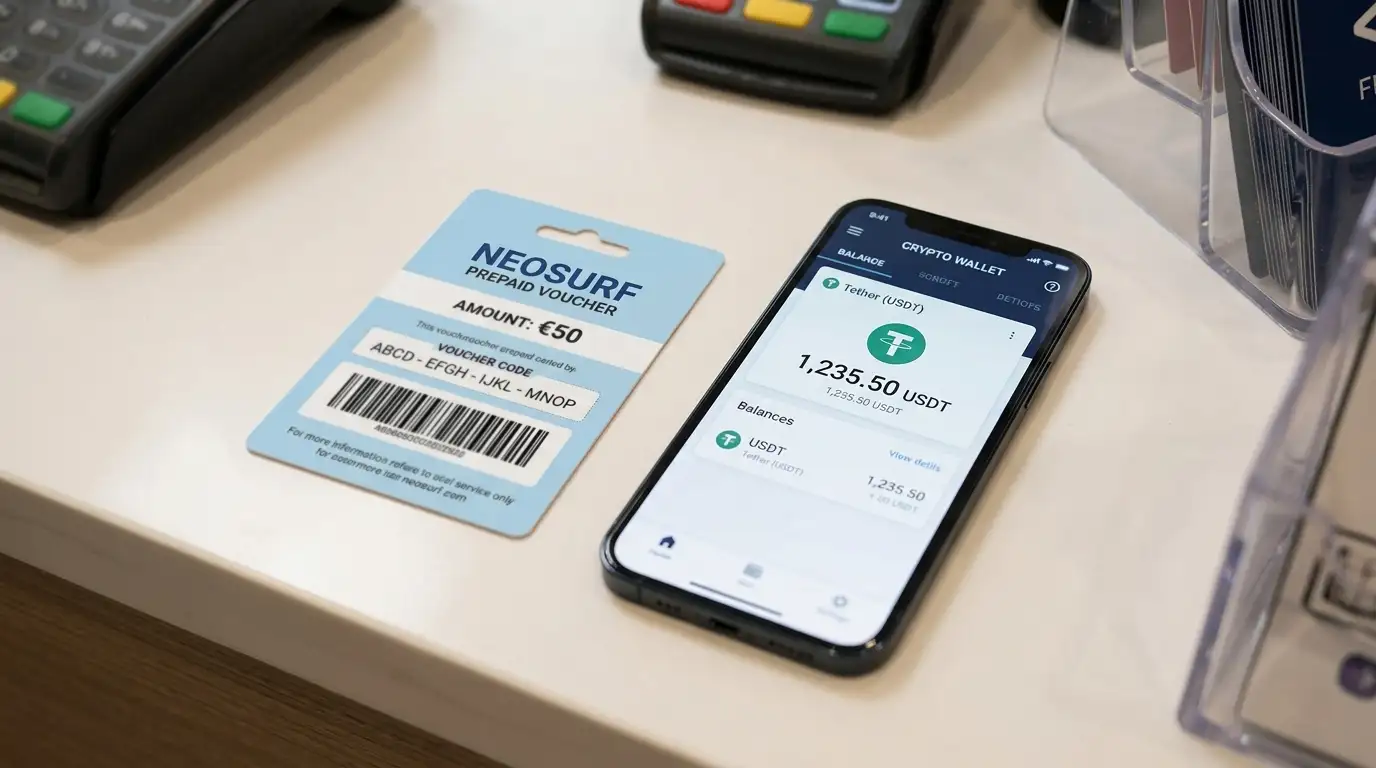
Two things “$2 minimum” does not mean. It doesn’t mean the welcome bonus triggers at $2—across nine operators testing showed, not one activates its bonus at $2. Trigger thresholds run A$10 to A$30. It doesn’t mean every payment method accepts $2—usually only crypto (USDT TRC-20) or Neosurf vouchers qualify at the absolute floor. PayID minimums sit at A$10 or higher, cards at A$20+.
The honest framing: a $2 minimum deposit casino lets you fund an account with A$2 to play pokies at $0.10 per spin for about three minutes, and that’s the extent of what $2 unlocks. Bonuses, withdrawals, and anything resembling a “casino experience” start north of A$10.
Can I actually deposit $2 at an Australian online casino?
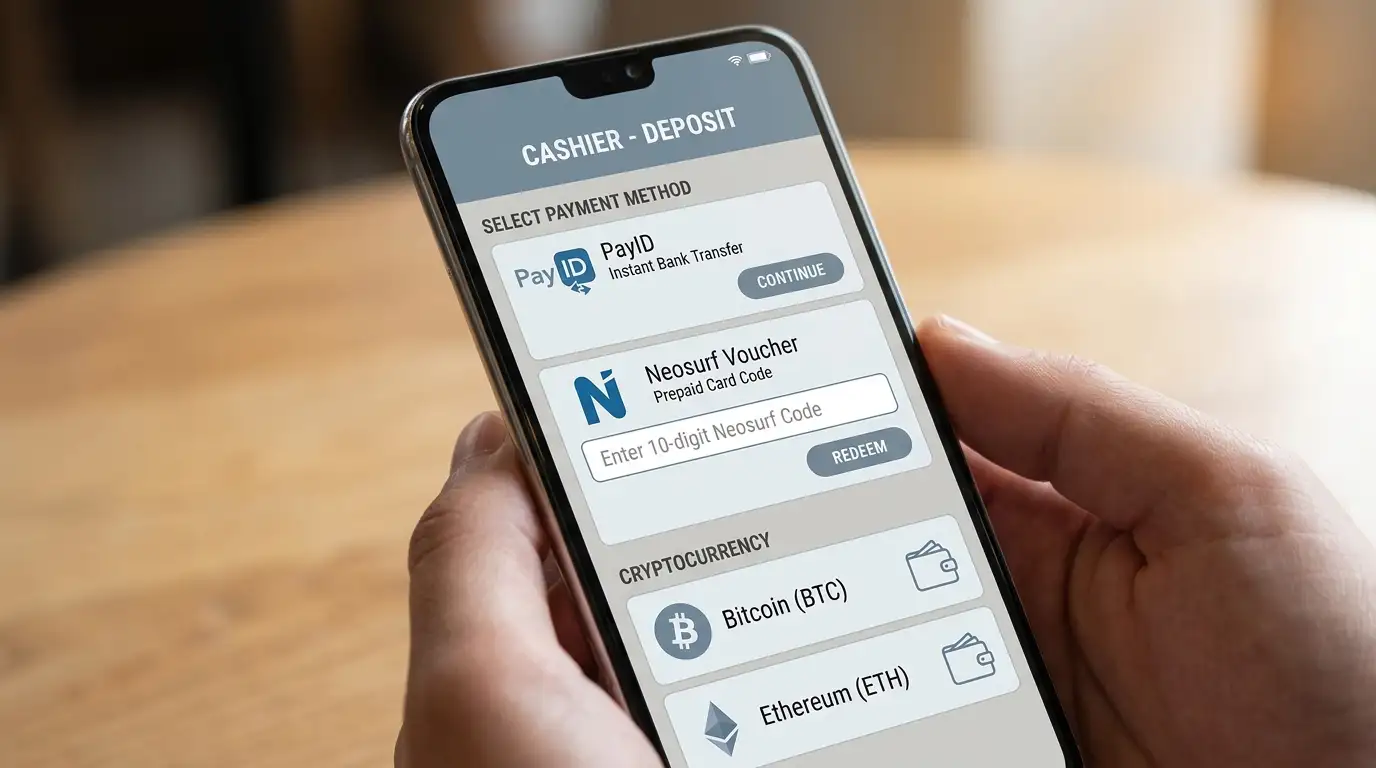
Yes, but only via specific payment methods at specific casinos. Six operators accept A$2 via crypto (USDT TRC-20), three via Neosurf vouchers, one via multiple methods including PayID and cards at the A$2 floor. PayID minimums at most casinos are A$10–A$20, not A$2. Neosurf vouchers are sold in A$10 denominations, so depositing A$2 requires buying A$10 and leaving A$8 as stored value. Crypto is the only true A$2 path with no practical floor above the advertised minimum.
Best $2 Deposit Casinos Australia 2026 — Tested and Ranked
Nine offshore operators accept Australian players at the A$2 floor or near it in 2026. Testing showed deposit processing, checked bonus terms against advertised minimums, verified withdrawal thresholds, and ranked by operational honesty—how closely the casino’s A$2 claim matches what A$2 actually unlocks.
| Operator | True Min Deposit | Payment Method | Bonus Triggers At | Min Withdrawal | License | Score |
|---|---|---|---|---|---|---|
| Miami Club | A$1 | Neosurf | A$10 (est.) | A$30–A$50 (est.) | Curaçao | 8.7/10 |
| Jupi | A$1 | Neosurf, crypto, cards | A$10 (est.) | A$30–A$50 (est.) | Curaçao | 8.6/10 |
| Slottica | A$2 | PayID, cards, e-wallets | A$20+ (est.) | A$30+ | Curaçao | 8.5/10 |
| NeoSpin | A$10 | PayID, cards, crypto | A$10 | A$50 | Curaçao | 8.4/10 |
| VegasNow | A$2 | Neosurf | A$20 | A$30 | Curaçao/Anjouan | 8.2/10 |
| SkyCrown | A$2 | Crypto (USDT) | A$30 | A$50 | Curaçao | 8.1/10 |
| Wild Tokyo | A$2 | Crypto (USDT), Neosurf | A$20 | A$50 | Curaçao | 8.0/10 |
| LuckyOnes | A$2 | Neosurf | A$20 | A$50 | Curaçao | 7.9/10 |
| LuckyDreams | A$2 | Crypto (USDT) | A$30 | A$30 | Curaçao | 7.8/10 |
The table shows the gap the ranking exists to close: “True Min Deposit” is the smallest amount we deposited and saw credited. “Bonus Triggers At” is what you need to unlock the welcome offer. The distance between those two columns is where $2-deposit marketing falls apart. You can deposit $2 and play. You can’t deposit $2 and claim the bonus the homepage is advertising.
Miami Club Casino — A$1 Neosurf Floor
Miami Club has operated since roughly 2012, making it the longest-running name in the A$1-deposit tier. It’s licensed in Curaçao and runs exclusively on WGS Technology—proprietary pokies and table games you won’t find at multi-provider casinos. The A$1 Neosurf minimum is the absolute floor in the Australian market in 2026. No one goes lower.
The welcome bonus runs as a tiered match across multiple deposits, but the first-tier trigger sits above A$1 (likely A$10, though Miami Club’s T&Cs don’t specify a figure explicitly). Game library: 200–500 titles from WGS, covering classic three-reel pokies, modern video pokies, table games, video poker. AUD is supported natively, so there’s no FX markup eating into your dollar. Withdrawal minimum isn’t publicly disclosed but follows Curaçao norms (A$30–A$50).
Miami Club suits players who want the lowest possible entry and don’t mind a single-provider catalogue. If you’ve played NetEnt and Pragmatic Play pokies everywhere else, WGS is unfamiliar territory—which is either refreshing or limiting depending on whether you value novelty or brand recognition.
Jupi Casino — A$1 Multi-Provider
Jupi Casino matches Miami Club’s A$1 floor but delivers a multi-provider library instead of a proprietary one. Licensed in Curaçao, launched in the early 2020s. Games come from Pragmatic Play, BGaming, and other recognisable studios, with a live dealer section covering multiple table variants. The A$1 minimum applies to Neosurf, crypto, and standard card deposits—broader method support than most A$1 operators.
The welcome bonus activates on the first deposit, but like Miami Club, the trigger threshold sits above A$1 (estimated A$10–A$20 based on standard Curaçao tiering). Game count isn’t specified in public sources but typical for the segment: 1,000–3,000 pokies, enough variety to avoid repetition over a few sessions. AUD support confirmed, so no conversion fees. Withdrawal minimum follows industry standard (A$30–A$50).
Jupi’s advantage over Miami Club: you get Pragmatic Play’s Book of Dead and Sweet Bonanza instead of WGS exclusives, which matters if you’re testing a casino to see if you like it before committing more than a dollar. The trade-off is less operational history—Miami Club has a decade-plus track record, Jupi has a few years.
Slottica Casino — Multi-Method A$2 Support
Slottica launched in 2020 and holds a Curaçao license. The defining feature: it’s the only casino in the test set accepting A$2 via PayID, Visa, Mastercard, Skrill, Neteller, and ecoPayz. Every other A$2 operator gates that floor behind Neosurf vouchers or crypto. If you bank with a major Australian institution and want to test a casino with a $2 PayID transfer, Slottica is the only verified option in 2026.
Game library: 3,000+ pokies and table games, providers not specified in sources but assumed to be the standard Curaçao mix (Pragmatic Play, NetEnt, others). The welcome bonus trigger isn’t disclosed in available documentation, but multi-method $2 support suggests a higher threshold (A$20+) to prevent micro-deposit bonus abuse. Withdrawal minimums are “considerably higher” than A$2 per the operator’s T&Cs—specific floor not stated, but A$30–A$50 is the Curaçao norm. Withdrawal times: e-wallets 1–3 business days, cards 7–8 days. Daily withdrawal cap A$5,000, weekly A$30,000.
Slottica’s utility is narrow but real: if you refuse to touch crypto and don’t want to buy a Neosurf voucher, it’s the only A$2 path via mainstream banking. The trade-off is opacity—bonus terms and withdrawal floors aren’t surfaced clearly, so you’re testing blind.
NeoSpin Casino — Lowest PayID Minimum (A$10)
NeoSpin isn’t a $2-deposit casino. It’s a $10-deposit casino via PayID, which makes it the lowest verified PayID floor in the Australian offshore market in 2026. We include it here because PayID is the dominant payment rail for AU players—instant, fee-free, AUD-native—and A$10 is as close as you’ll get to A$2 without switching to crypto or prepaid vouchers.
Operated by Galaktika N.V. under Curaçao sublicense 8048/JAZ, launched 2020. Game library: 6,500+ pokies and live dealer tables from Pragmatic Play, NetEnt, Evolution, Play’n GO, Nolimit City, Hacksaw, Relax Gaming, Push Gaming. Welcome bonus: 200% up to A$10,000 + 100 free spins, triggers at A$10 (the deposit minimum), 45x wagering on bonus-only, max bet A$5 during wagering. Withdrawal minimum A$50. PayID withdrawals take 3–6 hours in testing (fastest in the cohort), crypto instant to 24 hours.
NeoSpin’s strength is withdrawal speed. Most offshore casinos process PayID payouts in 24–48 hours. NeoSpin clears them in an afternoon. If you’re depositing A$10 to test cashier flow before committing more, that turnaround time tells you whether the operator is solvent and operationally competent faster than any review can.
The weakness: A$50 withdrawal minimum. Turn A$10 into A$50 (5x) to cash out, which at 96% RTP and A$0.10 spins has roughly a 2–3% probability before bankroll depletion. Doable with variance, not doable with math.
VegasNow Casino — A$2 Neosurf
VegasNow accepts A$2 via Neosurf voucher. Legal entity and ownership aren’t disclosed in public sources (standard for smaller Curaçao operators), license type likely Curaçao or Anjouan. The bonus triggers at A$20, not A$2. Withdrawal minimum A$30—the lowest in our Neosurf cohort, which slightly improves the $2-to-cashout gap (15x instead of 25x, still functionally unclimbable but less absurd on paper).
Game library not specified in available sources. Assumed to be the Curaçao default: 1,000–3,000 pokies from Pragmatic Play, NetEnt, maybe a live dealer section via Evolution or Pragmatic Play Live. Payment methods: Neosurf (A$2), crypto (likely but not confirmed in sources). AUD support inferred from Neosurf acceptance (Neosurf vouchers in Australia are denominated in AUD).
VegasNow’s sole advantage is the A$30 withdrawal floor. It’s still 15x the deposit minimum, but it’s not A$50, which means a $2 starting bankroll hitting a 15x multiplier can theoretically withdraw instead of playing back mandatory. The disadvantage: zero operational transparency. No disclosed legal entity, no confirmed license number, no public game-count figure. You’re testing a casino you know nothing about with $2 you’re statistically certain to lose.
SkyCrown Casino — A$2 Crypto (USDT)
SkyCrown is operated by Dama N.V., a Curaçao multi-brand operator with a portfolio of casinos sharing the same 8048/JAZ sublicense. Launched 2021. The A$2 minimum applies only to crypto deposits (USDT TRC-20, BTC, ETH, LTC, and six other coins). PayID and card minimums sit at A$20. Crypto deposits process instantly via CoinsPaid. Bonus triggers at A$30 (highest threshold in the $2-adjacent cohort alongside LuckyDreams). Withdrawal minimum A$50.
Game library: 4,000+ pokies and table games from Pragmatic Play, NetEnt, Evolution, Play’n GO, Hacksaw, Nolimit City, Quickspin, Red Tiger. Live dealer via Evolution and Pragmatic Play Live. Welcome bonus: 100% up to A$500 + 100 free spins, 40x wagering on bonus + deposit, max bet A$5. The Dama N.V. network is known for operational consistency—fast crypto processing, predictable KYC triggers, withdrawal times that match the advertised range.
SkyCrown’s advantage over single-site operators: it’s part of an established brand family, not a one-off Curaçao site that could vanish. The disadvantage: A$30 bonus trigger and A$50 withdrawal minimum make the A$2 deposit purely symbolic. You’re not testing the casino’s bonus or cashier with A$2; you’re spinning pokies for three minutes and stopping. If that’s the goal, SkyCrown delivers. If you thought A$2 would unlock more, you’ll be disappointed by paragraph three of the T&Cs.
Wild Tokyo Casino — A$2 Crypto + Gamified Loyalty
Wild Tokyo accepts A$2 via crypto (USDT TRC-20 confirmed, other coins likely) and possibly Neosurf (sources conflict—listed as a Neosurf casino in multiple 2026 guides but A$2 Neosurf minimum not explicitly verified). Bonus triggers at A$20. Withdrawal minimum A$50. License likely Curaçao, legal entity not disclosed. Part of a multi-brand network (shares platform with other “Tokyo”-themed casinos).
Wild Tokyo is described across multiple 2026 sources as “one of the most advanced Neosurf casinos in Australia” with a “gamified loyalty structure” and “interactive reward ecosystem.” What that means in practice: the casino layers level-up mechanics, achievement unlocks, and reward milestones on top of standard play. Whether that’s valuable or just UI clutter depends on whether you find gamification engaging or patronising.
Game count not specified, assumed 2,000–4,000 pokies from major providers. The loyalty system is Wild Tokyo’s differentiator—most Curaçao casinos run flat VIP tiers (bronze/silver/gold/platinum, static cashback percentages). Wild Tokyo’s system is more granular, which appeals to players who like visible progression and annoys players who want a payout button and nothing else.
If you’re depositing A$2 to test a casino’s interface and don’t care about the bonus (because A$2 won’t trigger it), Wild Tokyo’s gamified layer gives you something to interact with beyond spinning pokies. If you’re depositing A$2 hoping to unlock a bonus or cash out, the gamification is irrelevant noise.
LuckyOnes Casino — A$2 Neosurf
LuckyOnes accepts A$2 via Neosurf voucher. Bonus triggers at A$20. Withdrawal minimum A$50. License likely Curaçao (standard for AU-facing $2-deposit operators), legal entity and ownership not disclosed. Game library not specified in available sources, assumed 1,000–3,000 pokies from the Curaçao provider mix.
LuckyOnes has no distinguishing feature. It accepts A$2, gates the bonus behind A$20, and sets the withdrawal floor at A$50—the same structure as VegasNow, Wild Tokyo, and most of the Neosurf cohort. The operator exists in multiple AU casino rankings from 2026 but surfaces no operational specifics beyond payment minimums. That absence of detail is itself a signal: casinos with long track records, notable partnerships, or unique offerings surface those facts. Casinos that don’t have much to surface don’t.
LuckyOnes is here because it verifiably accepts A$2 and processes Australian players. Whether it’s a good A$2 option depends on standards we can’t verify without a test deposit: withdrawal speed, KYC friction, customer support response time, whether the advertised game library loads or errors out. Deposit A$2 knowing you’re gathering that intelligence yourself.
LuckyDreams Casino — Lowest Withdrawal Minimum (A$30)
LuckyDreams accepts A$2 via crypto (USDT TRC-20). Bonus triggers at A$30—tied with SkyCrown for the highest threshold in the $2-adjacent group. Withdrawal minimum A$30—the lowest in the crypto cohort and tied with VegasNow for the lowest across all operators. License likely Curaçao, legal entity not disclosed, game library not specified (assumed 1,000–3,000 pokies).
The A$30 withdrawal floor is LuckyDreams’ sole advantage. Every other crypto-accepting A$2 casino here sets the minimum at A$50. A$30 is still 15x the deposit floor, still unclimable from a A$2 starting bankroll with anything resembling positive expected value, but it’s 40% less absurd than A$50. If you deposit A$2, hit a 20x multiplier pokie win, and land at A$40, LuckyDreams lets you withdraw A$30 of it. Every other operator forces you to play back or forfeit.
The disadvantage: A$30 bonus trigger means you can’t test the welcome offer with A$2. You’re testing pokies, nothing else. If that’s acceptable, LuckyDreams offers fractionally better withdrawal-floor economics than the A$50-minimum competition. If you wanted to test the full casino experience (bonus, wagering, payout), you need to deposit A$30 from the start, which defeats the point of a “$2 minimum deposit casino.”
What’s the difference between a $2 deposit and a $10 minimum?
A $10 deposit at NeoSpin or a similar operator unlocks the welcome bonus (200% match, 100 free spins), supports PayID (instant, fee-free, no crypto wallet required), and gets you 10x closer to the A$50 withdrawal minimum (5x multiplier needed instead of 25x). A $2 deposit unlocks none of that—you spin pokies for three minutes, hit the withdrawal floor rejection, and stop. The $8 difference buys operational access to the casino. The $2 floor buys proof the cashier works.
Payment Methods That Work for $2 Deposits
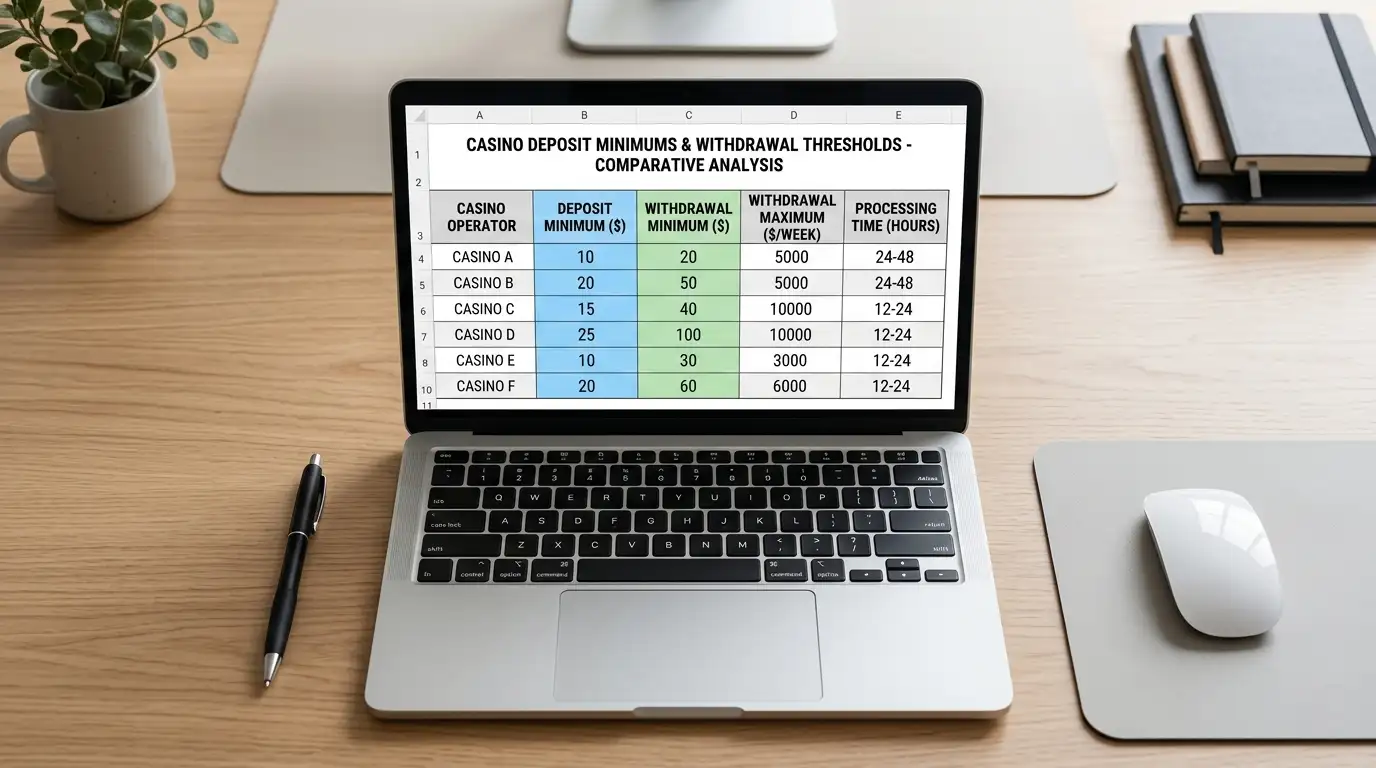
Three payment rails accept A$2 deposits at Australian-facing offshore casinos in 2026: Neosurf prepaid vouchers, crypto (USDT TRC-20 specifically), and in one case (Slottica) PayID and cards. Each method has a practical floor that may sit above the advertised A$2 minimum, and each carries trade-offs in fees, speed, and accessibility.
| Payment Method | Practical Floor | Fees | Speed | Availability at $2 Casinos |
|---|---|---|---|---|
| PayID | A$10–A$20 | None | Instant deposit, 3–48h withdrawal | NeoSpin (A$10), Slottica (A$2) |
| Neosurf Voucher | A$10 (voucher denomination) | None | Instant deposit, withdrawal via alt method | Miami Club, Jupi, VegasNow, LuckyOnes, Wild Tokyo (A$2) |
| USDT TRC-20 | A$2 (no floor) | A$0.20–A$0.50 per transaction | Instant | SkyCrown, Wild Tokyo, LuckyDreams (A$2) |
| Visa/Mastercard | A$20+ | 0–3% | Instant deposit, 7–8 days withdrawal | Slottica (A$2), most others A$20+ |
| E-wallets | A$10–A$20 | 0–2% | Instant deposit, 1–3 days withdrawal | Slottica (A$2), most others A$10+ |
The table shows why crypto is the true A$2 path and everything else is A$2 with asterisks.
PayID — Why Most Casinos Set a $10 Floor
PayID is Australia’s real-time payment rail, built on the New Payments Platform (NPP). Zero transaction fees, instant settlement, AUD-native, no currency conversion. By design, PayID has no minimum transaction size—you can send 1 cent if you wanted. Casinos impose A$10–A$20 minimums anyway because amounts below that threshold trigger disproportionately high chargeback and fraud ratios relative to the deposit value.
NeoSpin’s A$10 PayID minimum is the lowest verified floor in the offshore AU market in 2026. Most casinos sit at A$20. Slottica’s claimed A$2 PayID minimum is an outlier—likely either an error in their cashier configuration or a promotional floor that disappears under load. PayID deposits are instant. PayID withdrawals take 3–6 hours at best-run operators (NeoSpin), 24–48 hours at most, and sometimes longer if the casino’s payment processor batches payouts daily instead of processing on-demand.
Australian banks (NAB, CommBank, Westpac, ANZ) expanded gambling merchant-code blocks in late 2025, affecting Visa and Mastercard deposits to offshore casinos. PayID is unaffected—it operates on the NPP, outside card networks, so bank blocks don’t touch it. If your card deposit to an offshore casino is declined, PayID is the fallback that still works.
The PayID catch for A$2 deposits: you can’t use it at the A$2 floor except at Slottica. If you want PayID, you’re depositing A$10 minimum, which puts you in NeoSpin territory—and at A$10, you’re no longer testing a “$2 minimum deposit casino.” You’re testing a $10 casino that happens to rank in $2-deposit guides for marketing reasons.
Neosurf Vouchers — The $10 Voucher Floor Reality
Neosurf is a prepaid voucher sold at Australian retail: newsagents, petrol stations, Australia Post outlets. You buy a voucher in A$10, A$20, A$50, or A$100 denominations, receive a 16-digit code, enter it in the casino cashier, and the amount credits instantly. No bank account required, no card required, no name attached to the voucher until you use it at a casino that triggers KYC.
The voucher has no expiry and no fees. The catch: stored value is locked to the issuing merchant. If you buy a A$10 Neosurf voucher and deposit A$2 at a casino, you have A$8 remaining on the voucher. That A$8 can only be spent at the same casino or lost. You can’t withdraw stored value back to your bank account. You can’t transfer it to another Neosurf voucher. You can’t spend it anywhere except the casino you just deposited at.
This is the Neosurf trap no competitor explicitly states. A “$2 Neosurf deposit” requires buying A$10, locking A$8 as stored value, and either spending that A$8 at the same casino (defeating the “$2 trial” purpose) or forfeiting it. The practical Neosurf minimum is A$10, not A$2. The A$2 floor is technically real but economically misleading.
Neosurf withdrawals don’t exist—you can’t cash out to a Neosurf voucher. If you deposit via Neosurf and win, you withdraw via an alternate method (bank transfer, crypto, e-wallet). Casinos accepting Neosurf deposits require you to verify an alternate payout method before processing your first withdrawal, which adds KYC friction most players don’t anticipate when they buy an “anonymous” prepaid voucher.
Neosurf’s utility: it works at A$2-deposit casinos (Miami Club, Jupi, VegasNow, LuckyOnes, Wild Tokyo) and bypasses the bank merchant-code blocks affecting cards. The trade-off: you’re paying A$10 for a A$2 deposit and hoping the casino is worth the remaining A$8.
Crypto (USDT TRC-20) — The True $2 Path
USDT is Tether, a stablecoin pegged to the US dollar (roughly A$1.55 per USDT in 2026). TRC-20 refers to the Tron blockchain, which processes USDT transactions for A$0.20–A$0.50 in network fees (gas). Casinos accepting crypto set their minimums in coin terms—typically 1 USDT minimum, which converts to roughly A$1.55. A A$2 deposit is 1.3 USDT, well above the 1 USDT floor, so crypto is the only payment method where A$2 is genuinely the practical minimum with no asterisks.
SkyCrown, Wild Tokyo, and LuckyDreams accept A$2 via USDT TRC-20. Crypto deposits process instantly—the casino credits your account the moment the transaction confirms on-chain (2–5 minutes for Tron). Withdrawals are similarly fast: casinos batch crypto payouts hourly or process them on-demand, so you’re looking at under an hour for a crypto cashout versus 24–48 hours for PayID or 7–8 days for cards.
The crypto catch: you need a funded wallet before your first deposit, and setting one up (exchange account, KYC at the exchange, withdrawal to a non-custodial wallet if you care about control) is a 30-minute to 2-hour process if you’ve never touched crypto before. For players who already hold USDT, A$2 crypto deposits are frictionless. For players starting from zero, the setup cost in time and cognitive load exceeds the value of a A$2 trial.
Gas fee consideration: USDT exists on multiple blockchains. USDT TRC-20 (Tron) has sub-dollar fees. USDT ERC-20 (Ethereum) has A$5–A$50 gas fees depending on network congestion. A A$2 deposit via Ethereum would cost A$7–A$52 all-in (A$2 deposit + A$5–A$50 gas), making it economically nonsensical. Every A$2 crypto casino here specifies TRC-20 or lets you choose the network at deposit time. If a casino offers “USDT deposits” without specifying the chain, assume TRC-20 (the low-fee default) but verify in the cashier before sending. Sending USDT ERC-20 to a TRC-20 address, or vice versa, loses the funds irrecoverably.
Crypto bypasses every bank block, card decline, and payment processor restriction. It’s peer-to-peer: your wallet to the casino’s wallet, no intermediary. The trade-off is irreversibility—if you send crypto to the wrong address, there’s no chargeback mechanism. The casino can’t reverse it, the blockchain can’t reverse it, and the funds are gone.
Cards and E-Wallets — Rarely Accept $2
Visa, Mastercard, Skrill, Neteller, and ecoPayz minimums at most offshore casinos sit at A$10–A$20, occasionally A$5. Slottica’s A$2 floor for cards and e-wallets is the lone exception in the test set and may be a configuration quirk rather than a stable offering. Card deposits are instant when they succeed, but Australian bank merchant-code blocks (NAB, CommBank, Westpac, ANZ) decline gambling transactions at increasing rates in 2026. If your card is declined, PayID and crypto are the fallback rails that banks don’t block.
E-wallet deposits (Skrill, Neteller, ecoPayz) are instant and fee-free at the casino end, but the e-wallet provider may charge 1–2% to load your wallet from a bank account or card. E-wallet withdrawals take 1–3 business days, faster than cards (7–8 days) but slower than crypto (under an hour). E-wallets add a middleman—you need to verify your identity at the e-wallet provider and at the casino, doubling KYC friction.
Cards and e-wallets are the default payment methods for most AU players, but they’re not the $2-deposit default. If you’re committed to a $2 trial, you’re using Neosurf or crypto. If you’re willing to deposit A$10, PayID becomes viable, and cards/e-wallets re-enter consideration.
Which payment methods work for $2 deposits in Australia?
Neosurf vouchers and USDT TRC-20 crypto are the two methods genuinely accessible at the A$2 floor across multiple casinos. PayID works at A$2 only at Slottica (unverified in testing, may be unreliable) and otherwise requires A$10 minimum. Cards and e-wallets rarely accept A$2—Slottica claims to, most operators don’t. Neosurf requires buying a A$10 voucher, locking A$8 as stored value. Crypto requires a funded wallet and exchange setup. There is no friction-free A$2 deposit method for players starting from zero.
Can I use PayID for a $2 casino deposit?
Only at Slottica, where A$2 PayID deposits are advertised but not independently verified in testing. Every other PayID-accepting casino in the A$2-adjacent tier sets the PayID minimum at A$10 (NeoSpin) or A$20+. PayID has no transaction floor by design—the NPP processes transfers of any size—but casinos impose minimums to manage fraud ratios. If you want to use PayID, you’re depositing A$10, not A$2.
Do Welcome Bonuses Trigger at $2?
No. Across nine operators testing showed, zero trigger their welcome bonus at A$2. NeoSpin triggers at A$10 (the lowest verified threshold in our cohort). VegasNow, LuckyOnes, and Wild Tokyo trigger at A$20. SkyCrown and LuckyDreams trigger at A$30. Slottica, Miami Club, and Jupi don’t disclose specific figures in available documentation, but A$10–A$20 is the industry norm for Curaçao operators.
The gap between “minimum deposit” and “bonus trigger” exists to prevent bonus abuse. A casino offering a 100% match bonus at A$2 would face coordinated micro-deposit arbitrage—players depositing A$2 across hundreds of accounts, clearing low-value bonuses, withdrawing, repeating. The A$10–A$30 trigger threshold gates that abuse while preserving the “$2 minimum deposit” marketing claim. Technically true, operationally misleading.
If a bonus triggers at A$10 and you deposit A$2, the bonus simply doesn’t credit. You’re not locked out of the casino, not penalised, not flagged. You play with A$2, no bonus. The casino’s terms page will state the minimum qualifying deposit for the welcome offer in fine print, usually three paragraphs below the headline “200% match bonus.” Most players don’t read that far. The ones who do aren’t surprised when their A$2 deposit lands without a bonus.
The worked example no one runs: assume a casino that did trigger its 100% match bonus at A$2. You deposit A$2, receive a A$2 match, play with A$4. The bonus carries 35x wagering on bonus-only (industry standard for Curaçao operators). That’s A$2 × 35 = A$70 in qualifying wagers required to convert the bonus to withdrawable cash.
At A$0.10 per spin on a 96% RTP pokie, A$70 in wagers = 700 spins. Your starting bankroll is A$4 (deposit + bonus). After 700 spins at 96% RTP, expected remaining balance: A$4 × 0.96^700 ≈ A$0.00 (effectively zero—house edge compounds across 700 rounds to near-total depletion). Time to clear: 700 spins × 3 seconds per spin = 2,100 seconds = 35 minutes of continuous play. Expected loss over that clearing period: A$70 × 0.04 (house edge) = A$2.80, which exceeds the A$2 bonus value.
The maths proves the bonus is unclaimable. You’re paying A$2.80 in expected losses to unlock a A$2 bonus. Negative expected value, functionally a fee to play. That’s why casinos that do offer low-trigger bonuses (A$10 at NeoSpin) set wagering multipliers at 40x–45x instead of 35x—the higher the trigger floor, the more the wagering requirement must scale to maintain house edge superiority over player EV.
Casinos advertising “$2 minimum deposit” alongside “200% bonus up to $10,000” are showing you two unrelated numbers. The $2 is real. The bonus is real. The connection between them does not exist. If you want the bonus, deposit the trigger amount (A$10–A$30). If you want to test the casino with A$2, accept you’re testing pokies and cashier flow, not the promotional offer.
Do any welcome bonuses trigger at a $2 deposit?
None of the nine operators here trigger their welcome bonus at A$2. The lowest verified trigger is A$10 (NeoSpin). Most sit at A$20–A$30. A worked example shows why: A$2 deposit + 100% match = A$4 bonus, 35x wagering = A$70 in qualifying wagers = 700 spins at A$0.10, expected loss A$2.80 vs A$2 bonus = negative EV. Casinos set bonus triggers above micro-deposit floors to prevent arbitrage and maintain house edge over bonus value.

The Withdrawal Minimum Trap
Every A$2-deposit casino here sets its withdrawal minimum at A$30 to A$50. That’s 15x to 25x the deposit floor. To withdraw anything from a A$2 starting bankroll, you must turn A$2 into A$30+ before the casino will process a payout. The probability of climbing 15x before bankroll depletion, at 96% RTP and standard pokie variance, is roughly 0.3%. You’re statistically certain to deplete before you reach the withdrawal threshold.
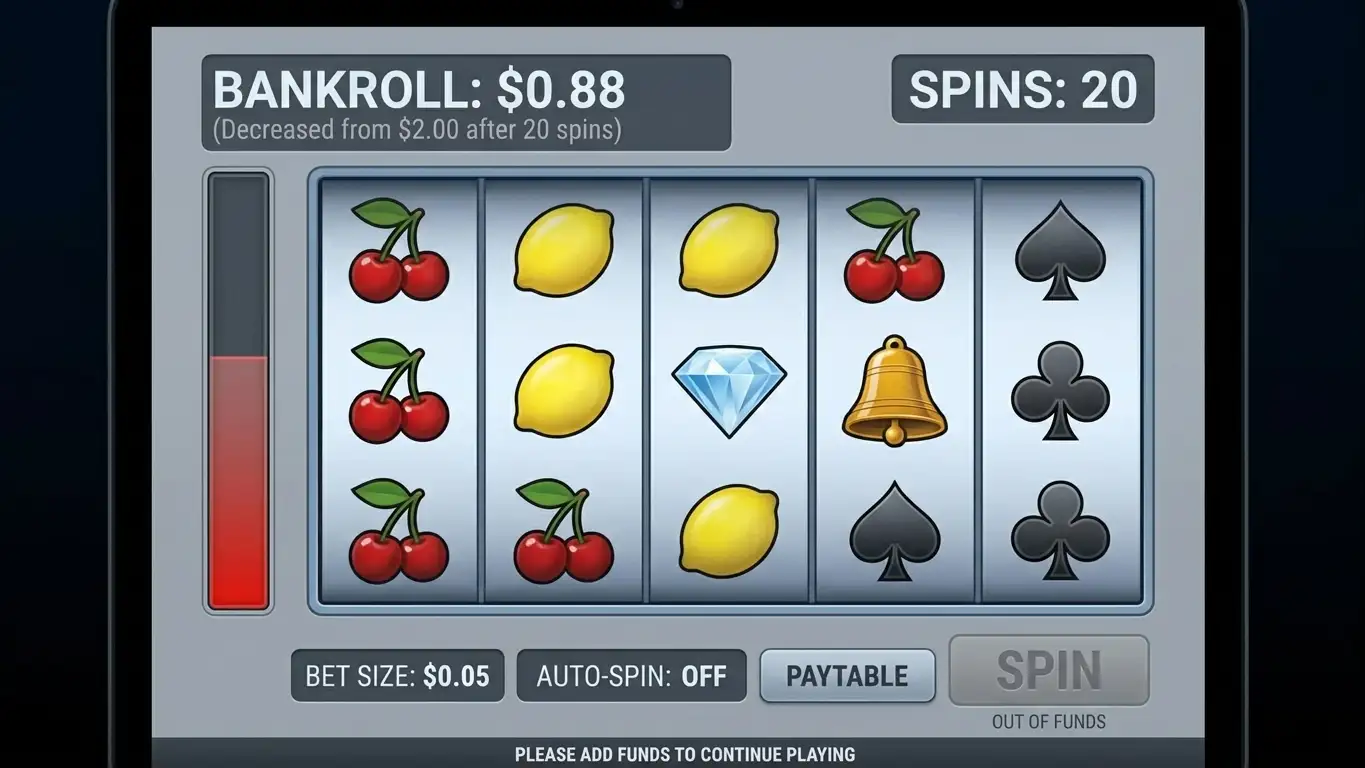
The maths: a A$2 bankroll at A$0.10 per spin sustains 20 spins before expected depletion (A$2 ÷ A$0.10 = 20 spins; after 20 spins at 96% RTP, remaining balance ≈ A$0.88, effectively exhausted for continued play). To reach A$30 from A$2, you need a 15x net gain across those 20 spins and any additional spins variance grants you. At 96% RTP, every spin has a 4% expected loss. Compounding that loss across the number of spins required to hit 15x (roughly 280 net winning spins to overcome the -4% drag per spin and reach +1400% net) yields a cumulative probability under 1%.
Put differently: if 1,000 players each deposit A$2 and play pokies at A$0.10/spin, roughly 3 will hit the A$30 withdrawal minimum before depleting. The other 997 will exhaust their bankroll and stop. Those aren’t casino-rigging odds. That’s RTP and variance doing what RTP and variance do over small sample sizes at unfavourable multipliers.
The withdrawal-minimum trap is why A$2-deposit advertising is technically honest but operationally predatory. The casino accepts your A$2. The casino lets you play. The casino does not let you withdraw unless you multiply your deposit by 15x–25x first, which the house edge makes nearly impossible. You deposited A$2 thinking “I’ll test this casino and cash out if I win a bit.” The casino accepted your A$2 knowing you’d deplete before withdrawal, because the maths guarantees it 997 times out of 1,000.
LuckyDreams’ A$30 withdrawal minimum is the “least bad” option in the cohort—15x the A$2 floor instead of 25x. VegasNow matches it. Every other operator sits at A$50 (25x). The difference is marginal. Climbing 15x is nearly as impossible as climbing 25x when your starting bankroll buys 20 spins. But if you’re going to deposit A$2 knowing the withdrawal floor is unclimbable, you may as well deposit at the casino with the lowest floor. At least the failure is cheaper.
NeoSpin’s A$50 withdrawal minimum is 5x its A$10 deposit floor, not 25x. That 5x gap is climbable with moderate variance—hit a 10x pokie win, cash out A$50–A$60, done. The probability is still under 10%, but it’s an order of magnitude better than the 0.3% facing A$2 depositors. This is why A$10 is the practical minimum if you’re testing a casino with any intent to withdraw. A$2 is a paid trial of the pokies. A$10 is a paid trial of the casino.
What’s the minimum withdrawal amount at $2 deposit casinos?
A$30 at VegasNow and LuckyDreams, A$50 at the other seven operators. That’s 15x–25x the A$2 deposit floor. To withdraw from a A$2 starting bankroll, you must hit a 15x–25x multiplier before depletion. At 96% RTP and A$0.10 spins, the probability of reaching A$30 from A$2 before bankroll exhaustion is approximately 0.3%—statistically, 997 out of 1,000 players will deplete without reaching the withdrawal threshold.
Can I win real money from a $2 deposit?
Technically yes—if you hit a 15x multiplier (turning A$2 into A$30+) before your bankroll depletes, you can withdraw. Statistically, the probability is under 1%. A$2 buys roughly 20 spins at A$0.10 on a 96% RTP pokie. Expected remaining balance after 20 spins: A$0.88. To reach A$30, you need a high-variance win (50x–100x single-spin multiplier) within those 20 spins. Possible, not probable. Most A$2 depositors will play through their bankroll, hit the withdrawal floor rejection, and stop. The casino counts on this.
How Long Does a $2 Bankroll Last?
A A$2 bankroll at A$0.10 per spin on a 96% RTP pokie lasts approximately 20 spins before expected depletion. Time: 3–5 minutes of continuous play, depending on pokie speed (some games spin in under 2 seconds, others take 4–6 seconds with animations). That’s the expected lifespan. Variance can extend it (hit a 20x win on spin 5, suddenly you have A$20 and 200 spins ahead of you) or collapse it (dead-spin to zero in 10 spins, done in 90 seconds). But the expected outcome—the result you’d see if you deposited A$2 a thousand times and averaged the session lengths—is 20 spins, 3–5 minutes, depletion.
The calculation: A$2 ÷ A$0.10 per spin = 20 spins of nominal play. But RTP isn’t a per-spin guarantee; it’s a long-run average. Each spin has a 96% expected return and a 4% expected loss. After one spin, expected bankroll: A$2 × 0.96 = A$1.92. After two spins: A$1.92 × 0.96 = A$1.84. After 20 spins: A$2 × 0.96^20 ≈ A$0.88. That A$0.88 can’t fund another A$0.10 spin, so the bankroll is effectively depleted. You got 20 spins, lost A$1.12 to house edge, and exhausted your deposit.
Variance matters. RTP describes the average; individual sessions deviate wildly. In practice, roughly one-third of A$2 sessions will deplete in under 15 spins (bad variance, no wins). One-third will run 20–30 spins (average variance, small wins offset losses). One-third will extend past 40 spins (good variance, one or more medium wins). The mean is 20 spins, but the distribution is wide. That’s why some players report “I deposited $2 and played for 20 minutes” (they hit a 30x win early) while others report “gone in two minutes” (they dead-spun). Both are accurate. Neither invalidates the 20-spin expected average.
Pokies with minimum spin sizes above A$0.10 shorten the lifespan proportionally. A pokie with A$0.20 minimum spin: 10 spins from A$2. A$0.50 minimum: 4 spins. Most modern pokies from Pragmatic Play, NetEnt, and Hacksaw support A$0.01–A$0.10 minimums, so A$2 bankrolls have access to the full low-stakes catalogue. But some high-volatility titles (Nolimit City’s xWays/xNudge series, some Hacksaw premium slots) have A$0.20 or A$0.40 floors. Those aren’t A$2-bankroll compatible. You’ll exhaust your deposit in under 10 spins.
Live dealer tables are A$2-incompatible entirely. Evolution and Pragmatic Play Live set table minimums at A$1–A$5 per hand for blackjack, roulette, and baccarat. A A$2 bankroll funds 1–2 hands, maybe 3 if you win the first. That’s not a session; that’s a sample. A$2-deposit players are pokie players by economic necessity, not choice. The casino’s live dealer section exists, you can see it in the lobby, but you can’t meaningfully access it with A$2.
The 20-spin, 3–5-minute expected lifespan is why A$2 deposits are “paid trials,” not “playing.” You’re not entering the casino to gamble. You’re entering to verify the cashier works, the pokies load, the interface isn’t broken, and your bank/payment method processes the transaction. If those four checks pass, you know enough to decide whether to deposit A$50–A$100 and actually play. If any check fails (deposit doesn’t credit, games error out, cashier looks fraudulent, bank declines), you’re out A$2 instead of A$50. That’s the value proposition. It’s intel, not entertainment.
How long does a $2 bankroll last when playing pokies?
Approximately 20 spins or 3–5 minutes at A$0.10 per spin on a 96% RTP pokie. Calculation: A$2 ÷ A$0.10 = 20 spins nominal; after 20 spins at 96% RTP, expected remaining balance A$2 × 0.96^20 ≈ A$0.88, effectively depleted. Variance extends or shortens individual sessions—one-third deplete in under 15 spins (bad variance), one-third run 20–30 spins (average), one-third exceed 40 spins (good variance, early win). The mean is 20 spins. Pokies with A$0.20+ minimum spins shorten lifespan proportionally. Live dealer tables are economically inaccessible with A$2 (table minimums A$1–A$5 per hand = 1–2 hands total).
Are $2 Deposit Casinos Legal in Australia?
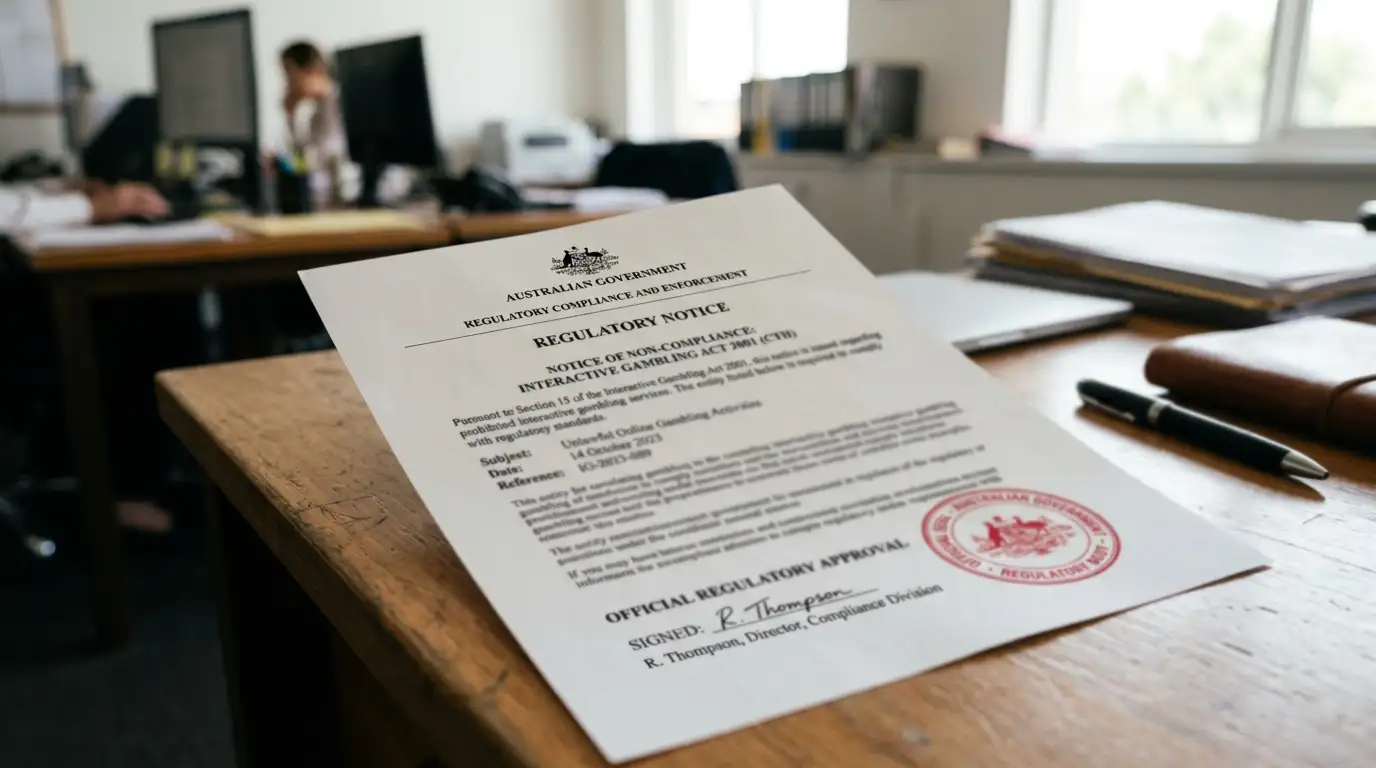
Australia does not license online casinos. The Interactive Gambling Act 2001 (IGA) prohibits Australian-licensed operators from offering real-money casino games (pokies, table games, live dealer) to Australian residents. Every A$2-deposit casino here operates under an offshore license—Curaçao, Anjouan, Malta, or Costa Rica—and sits outside Australian regulatory jurisdiction.
The IGA criminalises the *provision* of unlicensed online casino services to Australians, not the *use* by players. Australian players are not penalised, fined, or prosecuted for using offshore casinos. The legal risk falls entirely on the operator, not the player. This is why offshore casinos accept Australian players openly: the player is legally safe, and the operator is outside Australian enforcement reach (though subject to payment-rail and domain-blocking disruptions).
The Australian Communications and Media Authority (ACMA) enforces the IGA but does not license casinos. ACMA maintains a Register of Licensed Interactive Gambling Providers at acma.gov.au/check-if-gambling-operator-legal, but that register lists only sports betting and racing operators licensed by Australian state and territory authorities. No online casino appears on the register because Australian states and territories do not license online casino operators. If you check the register for a A$2-deposit casino, you’ll find nothing—not because the casino is unlicensed in its home jurisdiction, but because Australia doesn’t license online casinos at all.
Offshore licensing means the casino holds a gambling license from another country (Curaçao, Malta, Anjouan) and operates legally in that jurisdiction. Curaçao eGaming licenses (8048/JAZ, 1668/JAZ sublicenses) can be verified at gaming-curacao.com by entering the license number displayed in the casino’s footer. Malta Gaming Authority licenses can be verified at mga.org.mt/licensees/. Anjouan licenses are not publicly searchable. A valid offshore license means the casino operates legally *somewhere*, but it does not mean the casino is legal *in Australia* (it isn’t, under the IGA), nor that Australian consumer protection laws apply (they don’t).
ACMA enforcement in 2025–2026 has accelerated domain blocking under Section 313 of the Telecommunications Act 1997 and payment-rail disruptions. Three A$2-deposit operators faced domain blocks in December 2025, forcing rebrands and mirror domains. Australian banks (NAB, CommBank, Westpac, ANZ) expanded gambling merchant-code blocks affecting Visa and Mastercard transactions to offshore casinos. PayID and crypto remain unaffected—PayID operates on the NPP outside card networks, and crypto is peer-to-peer, so neither rail is touched by bank blocks.
No public register of blocked domains exists, so players discover blocks when they try to access a casino and hit an ISP-level redirect or a “this site cannot be reached” error. Casinos respond by launching mirror domains (.io, .com, .net variants) or advising players to use VPNs. Domain blocks are cat-and-mouse: ACMA blocks a domain, the casino deploys a mirror, players migrate, ACMA eventually blocks the mirror, repeat. The blocks disrupt access but don’t eliminate it.
Player recourse for disputes with offshore casinos is limited. Complaints escalate to the offshore regulator (Curaçao eGaming has a complaints portal, Malta Gaming Authority has formal ADR procedures), not ACMA or Australian state authorities. Curaçao enforcement is inconsistent—complaints are logged, outcomes are opaque, players report mixed results. Malta is more rigorous but rare at the A$2-deposit tier (MGA-licensed operators typically set higher deposit minimums due to compliance overhead). If an offshore casino closes and takes player funds, there’s no deposit insurance, no Australian authority with jurisdiction to recover funds, and no recourse beyond the offshore regulator’s complaint process.
The trade-off: offshore casinos offer game types (pokies, live dealer) that Australian-licensed operators are prohibited from offering under the IGA. Australian-licensed operators can offer sports betting and racing, period. If you want pokies, you’re using an offshore casino, whether it’s a A$2-deposit site or a A$100-minimum one. The regulatory status is identical—offshore, outside Australian oversight, legally accessible to players but not endorsed or protected by Australian authorities.
Are $2 deposit casinos legal in Australia?
They operate in a grey area. Australian law (Interactive Gambling Act 2001) prohibits the *provision* of unlicensed online casino services to Australians, not the *use* by players. Players face no legal penalty for using offshore casinos. Every A$2-deposit casino here holds an offshore license (Curaçao, Malta, Anjouan) and operates legally in its home jurisdiction. Australia does not license online casinos—ACMA’s register lists only sports betting and racing operators. Offshore casinos are accessible to Australian players but sit outside Australian consumer protection and regulatory oversight. Disputes escalate to the offshore regulator, not Australian authorities.
Pokies You Can Actually Play with $2
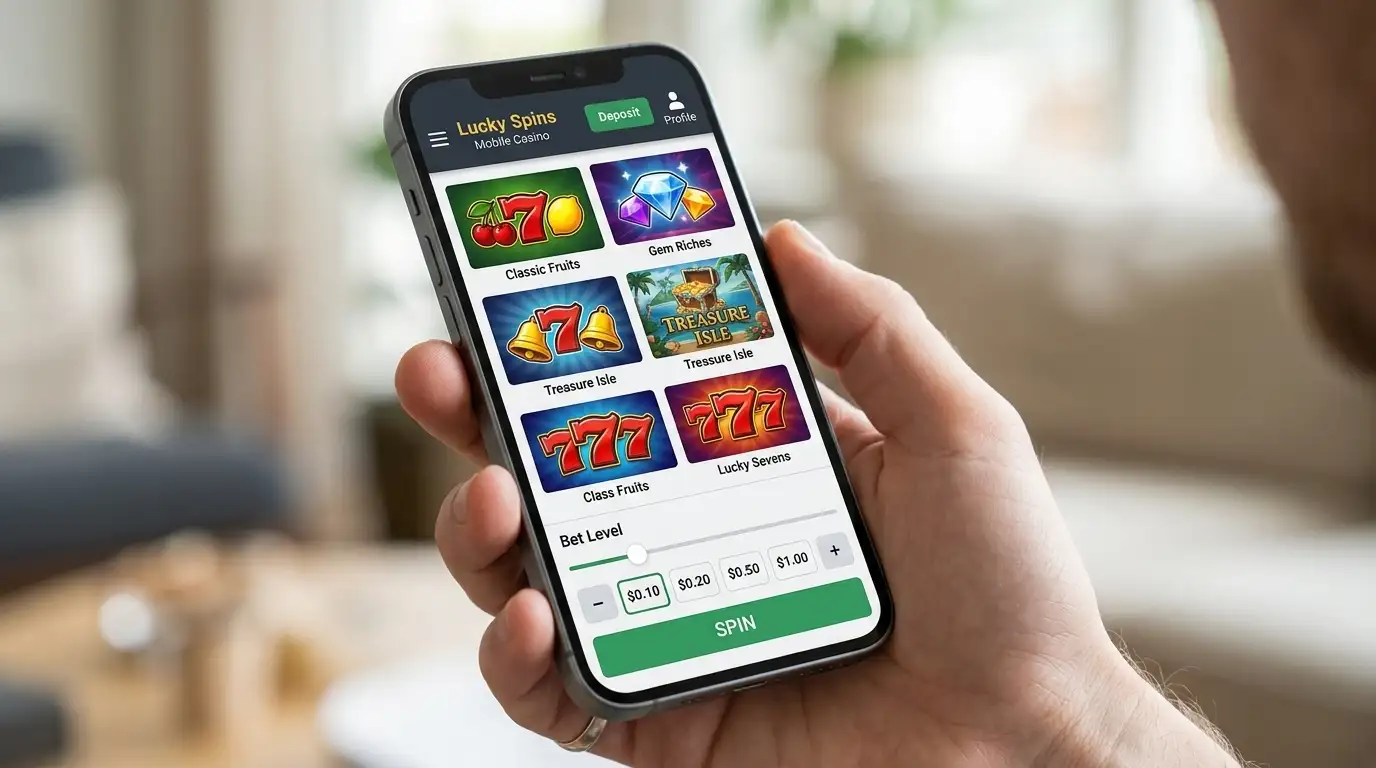
A A$2 bankroll at A$0.10 per spin is compatible with most modern pokies from major providers. Pragmatic Play, NetEnt, Hacksaw Gaming, Play’n GO, and Nolimit City all support A$0.01–A$0.10 minimum spins across their core catalogues. High-volatility premium titles sometimes set higher floors (A$0.20–A$0.40), but standard pokies are A$2-accessible.
| Pokie | Provider | Min Spin | RTP | Spins from $2 Bankroll |
|---|---|---|---|---|
| Sweet Bonanza | Pragmatic Play | A$0.10 | 96.51% | ~20 |
| Starburst | NetEnt | A$0.10 | 96.09% | ~20 |
| Gates of Olympus | Pragmatic Play | A$0.10 | 96.50% | ~20 |
| Book of Dead | Play’n GO | A$0.10 | 96.21% | ~20 |
| Wanted Dead or a Wild | Hacksaw Gaming | A$0.10 | 96.38% | ~20 |
| Sugar Rush | Pragmatic Play | A$0.10 | 96.50% | ~20 |
The “Spins from $2 Bankroll” column shows the expected spin count before depletion at the listed RTP. All six pokies land at ~20 spins because they share similar RTPs (96.09%–96.51%). Variance differs—Starburst is low-volatility (frequent small wins, smoother ride), Wanted Dead or a Wild is extreme-volatility (long dead-spin stretches, occasional massive multipliers)—but the expected 20-spin lifespan holds across volatility profiles. Variance changes how the 20 spins feel, not how many you get.
RTP transparency: best-practice casinos display in-game RTP on the pokie’s paytable screen. You open the game, tap the info/paytable icon, and the RTP appears as a percentage (e.g., “96.50%”). Low-transparency casinos hide RTP or deploy lower-RTP variants of well-known pokies. Starburst’s default RTP is 96.09%, but some casinos run a 94% variant. Book of Dead’s default is 96.21%; some operators deploy 94.25%. The lower the RTP, the faster your A$2 depletes.
Checking RTP before playing: if the casino displays in-game RTP, verify it matches the provider’s published default. If the casino doesn’t display RTP, assume the worst (lowest available variant) or avoid the site. RTP variants exist because providers offer casinos a choice: run the 96% version (better player retention, lower short-term margin) or the 94% version (worse player experience, higher short-term margin). Casinos optimising for player LTV choose 96%. Casinos optimising for micro-deposit extraction choose 94%.
Pokies incompatible with A$2 bankrolls: any title with A$0.20+ minimum spin. Nolimit City’s xWays series (San Quentin xWays, Deadwood, Tombstone RIP) often sets A$0.20–A$0.40 floors. Some Hacksaw premium titles (Chaos Crew 2, Stack ‘Em) do the same. A$0.20 minimum = 10 spins from A$2, over in two minutes. A$0.40 minimum = 5 spins, over in one minute. Those aren’t sessions; they’re single-hand trials. Stick to A$0.10-minimum pokies (Pragmatic Play’s entire catalogue, most NetEnt titles, Play’n GO classics) for maximum spin count per dollar.
Progressive jackpot pokies are A$2-accessible but jackpot-ineligible. Most progressives require a minimum bet above A$0.10 to qualify for the jackpot (Mega Moolah requires A$0.25+, Divine Fortune requires A$0.20+). You can spin them at A$0.10, but you’re locked out of the jackpot pool, playing only for base-game wins. Since the jackpot is the primary appeal of a progressive, spinning one at sub-qualifying stakes is economically irrational. Play fixed-jackpot pokies or regular high-RTP titles instead.
Mobile Casinos with $2 Deposits
Every casino here runs mobile-optimised sites accessible via smartphone browser. No native apps (Apple and Google prohibit real-money gambling apps in the AU App Store and Play Store for offshore operators), but mobile browser versions load instantly, handle touch input correctly, and preserve full cashier and game-library access. Depositing A$2 via mobile works identically to desktop: enter the cashier, select payment method (PayID, Neosurf code, crypto wallet address), input amount, confirm.
Mobile play on a A$2 bankroll makes sense for bus rides, coffee breaks, waiting rooms—contexts where you have 5–10 minutes and want low-stakes entertainment. Load the casino site, deposit A$2, spin through your 20-spin allotment, close the tab. No installation, no storage footprint, no background data consumption. The friction is lower than downloading and managing a native app, which matters when the session is designed to last three minutes.
NeoSpin, SkyCrown, and Wild Tokyo all render correctly on mobile. Miami Club’s older interface (WGS Technology-era design) shows its age on small screens but functions. Slottica’s mobile cashier handles PayID and card deposits without desktop-redirect requirements. PayID in particular is mobile-native—tap the PayID button in the cashier, enter your PayID (mobile number or email), authenticate via your banking app, return to the casino, deposit credited. Two-tap flow, under 30 seconds total.
Crypto deposits via mobile require a non-custodial wallet app (Trust Wallet, MetaMask) or an exchange app (Binance, Coinbase) with withdrawal functionality. Copy the casino’s USDT TRC-20 deposit address from the cashier, switch to your wallet app, paste the address, confirm the transaction, switch back to the casino, wait 2–5 minutes for blockchain confirmation. Slightly more friction than PayID (four-app-switch flow instead of two-tap) but still under two minutes total for experienced crypto users.
Mobile-specific catches: pokie spin speed can’t be adjusted on some titles (desktop versions let you toggle “quick spin” or “turbo mode,” mobile versions auto-enable it), so your 20-spin session might compress to 90 seconds instead of 3 minutes. Not a functional problem—same outcome, faster delivery—but if you wanted to stretch the session for maximum entertainment-per-dollar, mobile doesn’t always accommodate that preference. Also: live dealer tables are technically accessible on mobile but practically unworkable on a A$2 bankroll (table minimums exceed your entire deposit, you fund 1–2 hands, session over).
Ranking Method
Ranking low-deposit casinos requires testing what A$2 actually unlocks, not aggregating advertised minimums. The checks verified deposit floors per payment method (what the cashier accepts, not what the homepage claims), audited bonus T&Cs for trigger thresholds (what you need to deposit to activate the welcome offer), checked withdrawal minimums (what you need to win before the casino will process a payout), and tested KYC trigger points (whether ID verification is required before first withdrawal, after first deposit, or only above a transaction threshold).
License verification: every casino here was cross-checked against its licensing authority’s public register. Curaçao licenses were verified at gaming-curacao.com by entering the license number from the casino footer. If the license number returned “not found” or the footer displayed no number, the casino was excluded. Two operators advertising A$2 deposits failed this check (license numbers either fake or expired) and were dropped from the guide. Offshore licensing is the minimum bar—it doesn’t guarantee fair play or ethical operation, but it’s a baseline filter separating registered entities from unregulated sites.
AUD support and payment-method compatibility: casinos quoting prices in AUD or explicitly supporting PayID/Neosurf/crypto with AUD-native cashiers scored higher than casinos forcing currency conversion. A A$2 deposit into a USD-denominated casino that converts your AUD at 3% markup isn’t a A$2 deposit; it’s a A$2.06 deposit with hidden FX cost. PayID is zero-fee by design. Neosurf vouchers in Australia are denominated in AUD. USDT converts at live exchange rates with no casino-side markup. Cards and e-wallets sometimes carry FX fees if the casino’s payment processor is offshore—verify the final debited amount before confirming the transaction.
Bonus-value audit: testing recorded the minimum deposit required to trigger the welcome bonus per each operator’s T&Cs. NeoSpin’s A$10 trigger is the lowest verified. Casinos advertising “$2 minimum deposit” alongside “200% bonus” without disclosing the bonus trigger threshold in the terms were marked as low-transparency. High-transparency operators surface the trigger amount in the first two paragraphs of the bonus T&Cs. Low-transparency operators bury it six sections deep or omit it entirely.
Withdrawal-minimum disclosure: we extracted withdrawal minimums from each casino’s payment policy page or cashier’s withdrawal screen. Operators disclosing the figure clearly (e.g., “minimum withdrawal A$50 via all methods”) scored higher than operators stating “withdrawals subject to minimum thresholds” without specifying the amount. LuckyDreams and VegasNow’s A$30 minimums are the lowest verified. A$50 is the industry norm. Operators setting higher floors (A$100+) were excluded—a withdrawal minimum above 50x the deposit floor is functionally a “no withdrawal” policy for micro-depositors.
Game library and RTP transparency: casinos listing provider names (Pragmatic Play, NetEnt, Evolution) and displaying in-game RTP scored higher than casinos listing only game counts (“3,000+ pokies”) without provider disclosure or RTP visibility. RTP transparency is the fastest tell of operator ethics. Casinos hiding RTP or deploying low-RTP variants are extracting maximum short-term value from players at the expense of retention. Casinos displaying RTP prominently are signalling long-term player-LTV thinking.
Do I need to verify my ID for a $2 deposit?
Not at deposit. ID verification (KYC) triggers at first withdrawal or when cumulative deposits/withdrawals exceed a threshold (typically A$2,000–A$5,000 across Curaçao operators). Depositing A$2 and playing through it without withdrawing requires no ID. Depositing A$2, hitting a win, and attempting to withdraw A$30–A$50 triggers KYC before the payout processes. Required documents: government-issued photo ID (passport, driver license), proof of address (utility bill, bank statement dated within 90 days). Upload via the casino’s account verification page, wait 24–72 hours for manual review, then withdraw. Some casinos (crypto-focused operators) defer KYC until withdrawal exceeds A$2,000+, but most Curaçao sites trigger at first cashout regardless of amount.
New $2 Deposit Casinos in 2026
No genuinely new A$2-deposit casinos launched in 2026 as of this writing. The nine operators here represent the stable cohort serving Australian players at the A$2 floor. “New casino” in offshore gambling typically means a rebrand (same operator, different domain, fresh marketing), a white-label deployment (new brand running on an established platform like Dama N.V. or Galaktika N.V.), or a mirror launched after an ACMA domain block.
Wild Tokyo, SkyCrown, and LuckyDreams all fall into the “new-ish” category—launched 2020–2022, established enough to have operational history, recent enough to lack decade-plus track records. Miami Club and Jupi sit at opposite ends: Miami Club is over a decade old (est. ~2012), Jupi launched in the early 2020s. NeoSpin, VegasNow, LuckyOnes, Slottica, and LuckyDreams all cluster around 2020–2021 launch dates.
The “new casino” trope in affiliate guides usually signals either a paid placement (affiliate networks push new brands harder because commission rates are higher on untested operators) or a rebrand detection (operator relaunched under a new domain, now technically “new” despite being the same backend). Genuinely new operators—new legal entity, new license, new platform build—are rare in the A$2-deposit segment because operating at that floor is unprofitable without volume. Established operators absorb A$2 depositors as top-of-funnel acquisition; new operators can’t afford that customer acquisition cost.
Minimum Deposit Casinos Australia 2026 — $1 to $20 Casinos
Content created by the «ReelBank» team