
Casino Sites That Accept BPAY Australia 2026: The Cold Math of Moving Money
 Available in AU
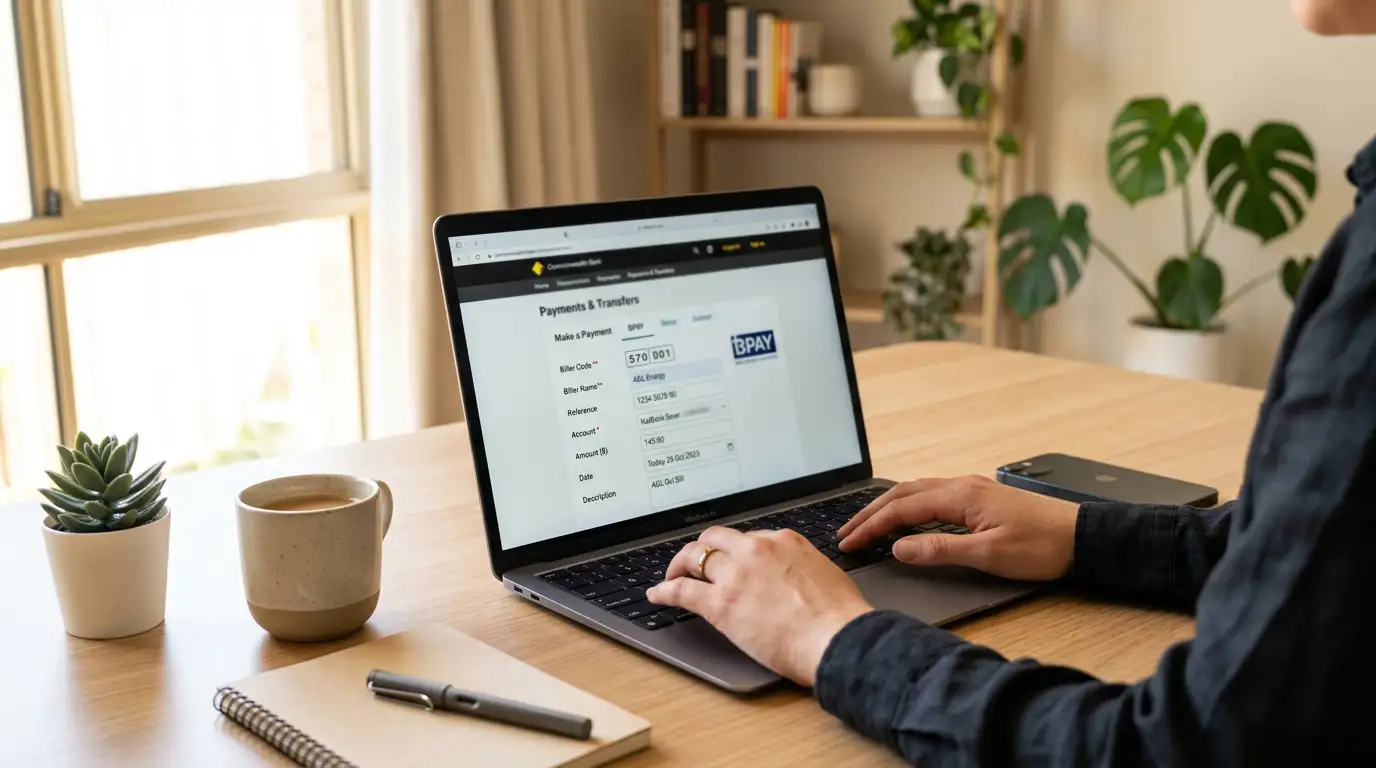
BPAY turns up in the cashier of exactly 22 offshore casinos serving Australian players as of March 2026. That number has been falling for two years. PayID is faster, crypto is more anonymous, and cards land instantly. So why does BPAY persist?
Because BPAY does three things competing rails cannot match at once: universal bank support, daily limits reaching A$100,000 at NAB, and a statement descriptor that reads “BPAY BILL PAYMENT” rather than naming the casino. The catch is a 1-3 business day batch settlement window that turns every deposit into a scheduled transaction rather than an impulse.
This puts BPAY in a specific use bracket. Players over 40 who bank through the Big Four and distrust e-wallet signups. High-value depositors hitting PayID’s A$1,000-A$25,000 daily caps. Anyone sharing a bank account where a casino charge on the statement would prompt an awkward conversation. The trade is privacy and capacity for speed.
The guide below maps which offshore casinos accept BPAY in 2026, how the biller-code deposit process works step-by-step, what limits apply at CBA versus NAB versus Westpac, and when the overnight batch delay stops being a flaw and starts acting like forced responsible gambling.
Why BPAY Still Matters for Casino Deposits in 2026
PayID launched in 2018 on Australia’s New Payments Platform and settled deposits in under ten seconds. BPAY launched in 1997 as a bill-payment rail and has never cleared a transaction the same day. On paper, BPAY should have died the moment real-time alternatives arrived.
The reality is demographic and structural. BPAY is baked into every Australian bank’s internet banking interface—Commonwealth, NAB, Westpac, ANZ, ING, Bendigo, every credit union. A customer who opened an account in 2005 knows exactly where the “Pay a bill” button sits. They do not need to download an app, generate a PayID alias, or learn what OSKO means. The friction is zero because the rail was already there.
Compare that to PayID adoption curves. Younger banks like ING and ubank rolled PayID out fast. Smaller regional banks and credit unions lagged by years. A player banking with a credit union in regional Queensland in 2026 may find BPAY works but PayID does not, purely because their institution has not prioritised NPP integration. BPAY’s age is its moat.
The second structural advantage is limits. PayID defaults sit between A$1,000 and A$25,000 per day depending on the bank, and many customers never realise those limits are adjustable. BPAY defaults are higher from the start: NAB allows A$100,000 daily, Westpac A$40,000, ANZ A$25,000. A player depositing A$30,000 to fund a weekend’s high-roller session hits PayID’s ceiling instantly. BPAY clears it in one transaction.
The third factor is privacy at the statement level. A PayID deposit from your account to an offshore casino shows the casino’s registered PayID name, often a recognisable brand. A card payment names the merchant descriptor the casino chose, which may or may not be discreet. BPAY shows “BPAY BILL PAYMENT — Biller [code] CRN [your reference]”. The biller code maps to a payment intermediary, not the casino. Your spouse scrolling the joint account statement sees a bill payment, not a poker session.
None of this makes BPAY faster. The batch processing window remains the same as it was in 1997: payments queue during the day, clear overnight, credit the next business day if the casino’s reconciliation is efficient or two business days if it is not. Weekend deposits sit idle until Monday. Public holidays stretch the window further. But for the use cases above—universal bank coverage, high limits, statement discretion—the wait is the cost of doing business.
The final reason BPAY endures is that it forces planning. Depositing A$500 via card at 11pm because you are chasing losses is effortless. Logging into internet banking, entering a biller code and a 15-digit customer reference number, waiting 36 hours for the balance to update—that is friction. Friction reduces impulsive behaviour. Offshore casinos do not market BPAY as a responsible gambling tool, but the batch delay works as one by accident.
That is the demographic niche BPAY occupies in 2026: older players, high-value players, privacy-conscious players, and anyone whose bank or budget structure makes a two-day window preferable to instant gratification. The segment is shrinking as PayID spreads and younger cohorts enter the market, but it has not disappeared.
Which Australian Online Casinos Accept BPAY in 2026
CasinoAudit tracked 22 offshore operators accepting BPAY deposits from Australian players as of March 2026. Betzoid’s September shortlist narrowed that to 11. The difference is filtering: CasinoAudit counts every casino with BPAY in the cashier, while Betzoid applies quality thresholds—license transparency, documented crediting windows, whether the welcome bonus applies to BPAY-funded balances.
All 22 are offshore. The Interactive Gambling Act 2001 prohibits locally licensed online casinos from serving Australian residents, so NT and ACT licenses cover sports betting only. Every casino below holds a Curaçao, Malta, or similar international license and operates outside Australian regulatory oversight. BPAY itself is not illegal—Reserve Bank of Australia regulations permit bill payments to any registered biller—but the casinos on the receiving end are.
The table below compares the ten operators with the clearest BPAY terms and fastest documented payouts. They are ranked by CasinoAudit rating (March 2026), which weights payout speed, game-library size, license transparency, and player complaint ratios.
| Operator | License | Min Deposit | Payout Speed | Distinguishing Feature |
|---|---|---|---|---|
| GOGOPokies | Not disclosed | A$5 | <24 hours | Lowest BPAY minimum in the cohort |
| LevelUp | Curaçao | A$10 | <12 hours | Sub-12-hour payouts, 7,000+ pokies |
| Lucky Hunter | Curaçao OGL/2023/176/0095 | A$20 | <24 hours | Hollycorn N.V., Hold & Win specialty |
| VegasNow | Curaçao | A$20 | <24 hours | 4,900-12,000 games (claim variance) |
| GoldenStar | Not disclosed | A$20 | <24 hours | EUR-denominated bonus (€1,000) |
| Gamblezen | Not disclosed | A$20 | <24 hours | Responsible gambling tools emphasised |
| Spirit | Not disclosed | A$20 | <24 hours | Cashback-focused, Monday Slot promo |
| Lucky7even | Not disclosed | A$30 | <24 hours | A$5,000 bonus cap, higher minimum |
| Joo | Not disclosed | A$10-A$30 | Instant claim | Launched 2014, 12-year operational history |
| CrownGold | Not disclosed | A$30 | <48 hours | Slowest payout window, reload focus |
GOGOPokies: Lowest BPAY Minimum at A$5
GOGOPokies operates through a partnership with WinSpirit Casino, though the legal entity and ownership structure remain undisclosed. The domain gogopokies.casino serves Australian players with 1,700+ pokies and a CasinoAudit rating of 84/100—the highest in the BPAY cohort as of March 2026. The license is not stated on the footer or terms page, which places it in the common offshore grey zone: functional, but opaque.
The A$5 BPAY minimum is the lowest among researched casinos and removes the barrier for recreational players testing a new platform without committing A$20 or A$30 upfront. Payout speed sits under 24 hours according to CasinoAudit, and the site supports PayID for instant withdrawals—unusual among BPAY casinos, where bank transfer is still the dominant cashout method. The welcome bonus reaches A$1,250 across multiple deposits, though the exact structure (match percentages, wagering multiples) was not detailed in accessible sources. What distinguishes GOGOPokies from the pack is the combination of low entry friction and fast exit—the A$5 floor attracts trial deposits, the sub-24-hour payout keeps players from waiting three business days to test a withdrawal.
LevelUp: 7,000+ Pokies and Sub-12-Hour Payouts
LevelUp launched between 2020 and 2021—sources vary on the exact quarter—under a Curaçao license. The timing matters because 2020 marked the post-PayID boom in Australia, when offshore casinos began building payment stacks around the rails local players were actually adopting. LevelUp’s cashier reflects that: BPAY, PayID, crypto (BTC and others), and cards all sit on the deposit page with equal prominence, rather than BPAY buried under “other methods.”
The game library claims 7,000+ pokies, supplied by 50 providers including NetEnt, Pragmatic Play, Evolution, and regional studios. The A$10 BPAY minimum is mid-range. The welcome bonus varies by source—A$8,000 total on some domains, 100% up to A$2,000 + 100 free spins on others—which suggests multiple campaign variants running concurrently or older marketing copy still ranking in search. CasinoAudit lists payout speed at under 12 hours, the fastest in this cohort. That sub-12-hour window applies post-approval, meaning the casino’s internal KYC and fraud review still add 24-72 hours for first withdrawals, but once your account is verified the cashout clears in half a business day.
LevelUp’s CasinoAudit rating is 81/100. The site explicitly promotes its BPAY option—levelup-casino.games/bpay-deposit is a live page explaining the process—rather than treating it as a legacy holdover. For players prioritising fast payouts over the largest game counts, LevelUp’s sub-12-hour processing is the standout metric.
Lucky Hunter: Hold & Win Hub with VIP Focus
Lucky Hunter operates under Hollycorn N.V., a Curaçao-registered entity holding license OGL/2023/176/0095 from the Curaçao Gaming Control Board. The 2023 license date makes Lucky Hunter one of the newer operators in the BPAY space, though Hollycorn runs multiple casinos under the same license, suggesting an established back-office infrastructure rather than a greenfield startup.
The site markets itself as a “Hold & Win hub,” referencing the slot mechanic where symbols lock in place across respins until a payout or bonus round triggers. That branding is narrower than the typical “we have everything” offshore pitch and implies a pokies-first audience. CasinoAudit lists 4,000+ pokies from 57 providers, and the game lobby skews toward high-volatility titles with bonus-buy features—Pragmatic Play, Hacksaw Gaming, Nolimit City.
Lucky Hunter’s CasinoAudit rating is 80/100, but its Customer Review Average (CRA) is 88.0/100, significantly above the BPAY casino cohort average of 74.9. That CRA score comes from aggregated player reviews and suggests the operator handles support tickets and payout disputes more competently than its mid-tier overall rating would imply. The A$20 BPAY minimum is standard. Payout speed is under 24 hours post-approval. The VIP program is highlighted across reviews, with tiered cashback and reload bonuses that scale by deposit volume—common in offshore casinos but executed here with enough transparency that players mention it unprompted in review threads.
Registration reportedly takes under two minutes, requiring only email, password, and phone number upfront, with document verification deferred until the first withdrawal. That friction-light onboarding is typical of Curaçao-licensed operators competing on convenience rather than regulatory compliance theatre.
VegasNow: 12,000-Game Library and A$8,000 Welcome Bonus
VegasNow holds a Curaçao license—the issuing authority is not specified—and operates across multiple Australian-facing domains: vegas-now-au-casino.com, vegasnow.au, vegasnowcasino-aussie.com. The game library claim oscillates between 4,900 and 12,000 titles depending on which domain you land on. The 12,000 figure is almost certainly marketing inflation—most offshore casinos top out around 5,000-7,000 unique titles even when counting every slot variant and table-limit permutation separately. The conservative 4,900 claim is more credible.
The A$20 BPAY minimum matches Lucky Hunter and most mid-tier offshore casinos. The welcome bonus caps at A$8,000 + 500 free spins, among the highest nominal values in this cohort, though the wagering requirements and game-weighting rules were not detailed in accessible terms pages. CasinoAudit rates VegasNow at 79/100. Payout speed is listed as under 24 hours, and the cashier supports PayID and crypto for withdrawals alongside bank transfer.
What sets VegasNow apart is the domain proliferation. Three separate AU-specific domains with different bonus structures and slightly different game-count claims suggest either A/B testing different value propositions or legacy domains that were never decommissioned after a rebrand. For players, this creates confusion—vegasnow.au claims 12,000 games and an A$8,000 bonus, while vegas-now-au-casino.com claims 4,900 games and the same bonus. Both resolve to the same back-end platform after login.
The explicit BPAY deposit page at vegasnowcasino-aussie.com/bpay-deposit mirrors LevelUp’s approach: treating BPAY as a featured method rather than a footnote. That level of payment-method granularity is uncommon among offshore operators and suggests VegasNow sees enough BPAY volume to justify dedicated landing pages per rail.
GoldenStar: EUR-Denominated Bonus for Multi-GEO Players
GoldenStar’s legal entity, domain, and ownership are not disclosed in accessible sources. The CasinoAudit rating is 78/100. The welcome bonus is denominated in euros—100% up to €1,000 + 300 free spins—which immediately flags GoldenStar as a European operator extending coverage to Australia via payment-rail partnerships rather than a purpose-built AU casino adding EUR as an afterthought.
The A$20 BPAY minimum deposit is standard. Payout speed is under 24 hours. The EUR bonus is the anomaly. Most offshore casinos serving Australia either offer AUD-native bonuses or run parallel campaigns with separate currency tiers. GoldenStar presents the EUR bonus as the primary offer, with no visible AUD equivalent on the promotions page. That works fine for Australian players comfortable with currency conversion and multi-currency wallets, but it introduces a mental-math friction point that AUD-native casinos avoid.
The game library size was not specified in research, and the provider roster is undisclosed. CasinoAudit’s 78/100 rating sits in the “above average” band but below the top-tier operators in this cohort. For players who already hold balances in multiple currencies—expats, frequent travellers, anyone arbitraging forex spreads—the EUR denomination is neutral or even a feature. For everyone else, it is a tell that you are playing on a platform built for a different market.
Gamblezen: Responsible Gambling Emphasis and 200% Match
Gamblezen operates from the domain gamblezenaussie.com, an AU-specific subdomain that suggests geographic segmentation in the back-end. License details are not disclosed. The CasinoAudit rating is 76/100. The welcome bonus is a 200% match up to A$1,360 + 100 free spins—the percentage is higher than most (100-150% is standard), but the absolute cap is lower.
What distinguishes Gamblezen is the responsible gambling messaging. The homepage and footer emphasise deposit limits, session reminders, and self-exclusion tools in language that reads less like boilerplate compliance and more like a deliberate positioning choice. Offshore casinos rarely compete on responsible gambling because the regulatory pressure is minimal and the marketing appeal is niche, but Gamblezen leans into it. Whether that reflects genuine policy or savvy branding is unknowable from the outside, but the messaging is consistent across the site.
The A$20 BPAY minimum is standard. Payout speed is under 24 hours. The game count and provider list were not detailed in accessible sources. The 200% welcome match is the other differentiator—a higher match percentage appeals to players with smaller bankrolls who want to stretch their first deposit, even if the absolute bonus cap is lower than competitors offering 100% up to A$8,000.
Spirit: Cashback-Focused Promotions Over Upfront Bonuses
Spirit Casino operates from playspiritcasino.com. Legal entity and license details are not disclosed. The CasinoAudit rating is 76/100, tied with Gamblezen. The A$20 BPAY minimum and sub-24-hour payout speed match the cohort baseline.
The standout feature is the promotions model. Spirit de-emphasises the large upfront welcome bonus in favour of recurring cashback—specifically, a “Monday Slot Cashback” promotion that returns a percentage of weekend losses every week. That structure signals a retention-first rather than acquisition-first model. Welcome bonuses convert new signups but expire after the first deposit. Cashback keeps existing players active by softening losing streaks.
Cashback percentages and caps were not detailed in accessible sources, but the weekly cadence is clear. For players who grind sessions regularly rather than depositing once and churning out, recurring cashback has higher lifetime value than a one-time A$1,000 welcome bonus that requires 35x rollover before withdrawal. Spirit’s CasinoAudit rating sits mid-pack, and the game library was not specified in research, but the cashback focus is distinct enough to segment it from the bonus-inflation arms race most offshore casinos compete on.
Lucky7even: Higher A$30 Minimum, A$5,000 Bonus Cap
Lucky7even’s legal entity, domain, and ownership are undisclosed. The CasinoAudit rating is 75/100. The BPAY minimum is A$30—higher than the A$10-A$20 standard—and the payout speed is under 24 hours. The casino bonus reaches A$5,000, with structure and wagering terms not detailed in accessible sources.
The A$30 floor is the differentiator. Most offshore casinos set BPAY minimums at A$10 or A$20 to lower the trial barrier. Lucky7even’s A$30 threshold pushes casual players toward other casinos or other payment methods, which suggests either a deliberate high-value player focus or simply a blunt policy inherited from the payment processor’s fee structure. Either way, it narrows the addressable audience.
The A$5,000 bonus cap sits in the middle of the cohort—higher than Gamblezen’s A$1,360, lower than VegasNow’s A$8,000. The game library and provider roster were not detailed in research. Lucky7even’s 75/100 CasinoAudit rating is the lowest among the top ten, and nothing in the public-facing copy or review threads suggests a compelling reason to pick it over GOGOPokies (A$5 minimum, 84/100 rating) or LevelUp (A$10 minimum, sub-12-hour payouts). It clears the quality floor but does not stand out.
Joo: 12-Year Veteran with Wide Payment Rail Support
Joo Casino launched in 2014, making it the oldest operator in this cohort by a margin of six years. That longevity is rare among offshore casinos, where most shut down, rebrand, or exit the Australian market within five years of launch. Joo has outlasted payment-rail shifts (BPAY to PayID), regulatory crackdowns (the 2017 IGA amendments, ACMA’s 800+ domain blocks), and the consolidation waves that absorbed smaller operators into white-label networks.
The site runs across multiple AU-facing domains: joocasinoaus.net, joo-casino-aussie.com, joocasinosaustralia.com. Game counts vary by source—6,000 on one domain, 2,500-3,500 on others—and the welcome bonus structure differs across domains as well: A$28,500 + 300 spins on joocasinoaus.net, A$7,500 + 200 spins on joo-casino-aussie.com, A$1,500 on joocasinosaustralia.com. That variance suggests either concurrent A/B testing or legacy campaigns that were never scrubbed from older domains.
License details are not disclosed. The CasinoAudit rating is 75/100. BPAY minimum deposits range from A$10 to A$30 depending on the domain. Joo claims “instant withdrawals” on some landing pages, though payout speed in practice depends on KYC status and payment method. The cashier supports an unusually wide range of rails: Visa, Mastercard, Bitcoin, USDT, Neosurf, Apple Pay, bank transfer, paysafecard, and BPAY. That breadth is uncommon—most offshore casinos pick three or four rails and optimise around them. Joo supports nine.
Providers include NetEnt, Pragmatic Play, Evolution, BGaming, and Amatic. The site also runs a 15% weekly cashback promotion capped at A$5,000 USD equivalent, with 5x wagering requirements. Joo’s 12-year operational history is the primary signal of stability. Offshore casinos fold or rebrand constantly. Surviving since 2014 means Joo has navigated multiple regulatory shifts, payment-processor exits, and market contractions without shuttering. That track record does not guarantee future reliability, but it beats a six-month-old Curaçao license with no complaint history to reference.
CrownGold: Reload Focus with Slowest Payout Window
CrownGold’s legal entity, domain, and ownership are undisclosed. The CasinoAudit rating is 75/100, tied with Lucky7even and Joo. The BPAY minimum is A$30, matching Lucky7even’s higher threshold. The payout speed is under 48 hours—the slowest in this cohort, where sub-24-hour processing is standard.
The reload bonus is 150% up to A$4,000 + 150 free spins. Reload bonuses target existing players making their second, third, or tenth deposit rather than new signups. CrownGold’s emphasis on reloads over a large welcome bonus signals a retention model similar to Spirit’s cashback focus, though the mechanics differ. A 150% reload up to A$4,000 is generous by offshore standards, where reload matches typically sit at 50-75%.
The game library was not detailed in research. The <48-hour payout window is the red flag. Every other casino in this top-ten list processes withdrawals in under 24 hours post-approval. CrownGold's 48-hour window doubles the wait, and the CasinoAudit rating of 75/100 suggests that delay is reflected in player feedback. For a market where PayID delivers instant cashouts and even bank transfers clear in 1-3 business days, a 48-hour internal processing window reads as inefficiency or deliberate friction.
The A$30 BPAY minimum further narrows CrownGold’s appeal. Combine the higher deposit floor with the slowest payout and a mid-pack CasinoAudit rating, and CrownGold lands at the bottom of the top-ten list by process of elimination rather than by competitive strength.
Do BPAY deposits qualify for casino welcome bonuses?
Most offshore casinos accepting BPAY treat it identically to card or PayID deposits for bonus eligibility—the welcome offer applies regardless of which rail you fund with. The exception occurs when the promotion’s fine print explicitly excludes certain payment methods, typically e-wallets like Skrill or Neteller, to prevent bonus abuse via instant round-tripping. BPAY’s 1-3 business day settlement makes round-tripping impractical, so exclusions are rare. Verify the bonus terms page before depositing if the welcome match is the primary reason you picked the casino, but in practice BPAY-funded balances qualify for standard promotions at the ten operators above.
How BPAY Casino Deposits Actually Work
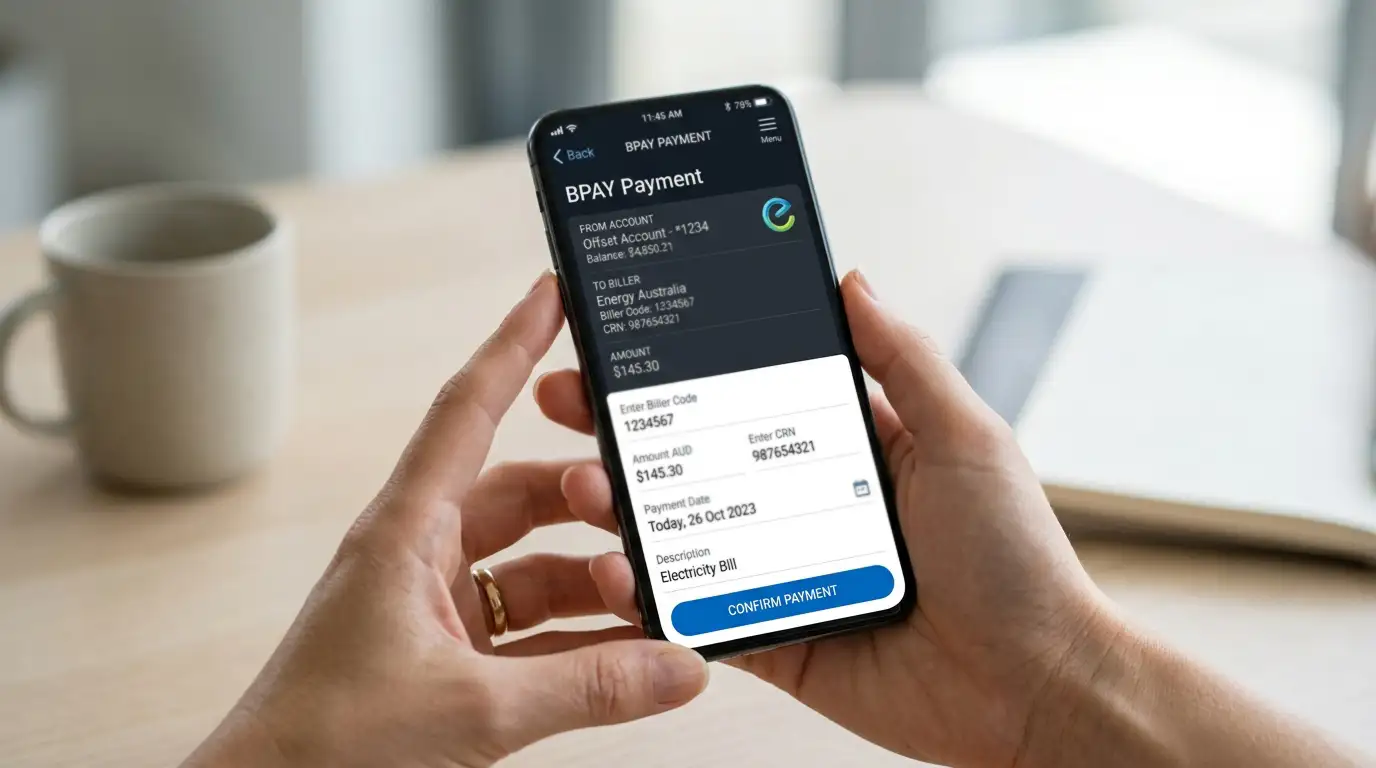
BPAY is not a direct casino-to-bank connection. It is a biller-directory system operated by BPAY Group, a consortium owned collectively by Commonwealth Bank, NAB, Westpac, and ANZ. Every registered biller—electricity companies, councils, telcos, and the payment intermediaries that offshore casinos contract with—holds a unique Biller Code. Every customer of that biller gets a unique Customer Reference Number (CRN) tied to their account. You initiate a payment from your bank using those two identifiers, and the overnight batch processes it through to the biller’s account.
The offshore casino cannot register a BPAY biller code directly. BPAY Group requires billers to hold an Australian Business Number (ABN), which means a registered business presence in Australia. Casinos licensed in Curaçao or Malta and operating outside Australian jurisdiction do not qualify. The workaround is a payment intermediary—an Australian-registered entity that holds the biller code and processes transactions on behalf of multiple offshore operators. When you deposit A$500 at LevelUp via BPAY, the biller code points to the intermediary, not LevelUp itself. The intermediary receives the batch payment, matches your CRN to your LevelUp player account, and credits your balance.
This two-hop structure explains why BPAY deposits at offshore casinos take longer than BPAY payments to your electricity provider. Your power company is the biller. The casino is a client of the biller. The intermediary must reconcile incoming payments against a database of CRNs across dozens of casino clients, then notify each operator to credit the correct player account. That reconciliation happens during Australian business hours, which adds 12-24 hours on top of the bank’s overnight batch processing.
Step 1: Generate Biller Code and CRN at Casino Cashier
Log into the offshore casino and navigate to the deposit section. Select BPAY from the payment methods list. The cashier generates two numbers: a Biller Code (typically 4-6 digits) and a Customer Reference Number (10-20 digits). The biller code is the same for every player at that casino because it identifies the payment intermediary. The CRN is unique to your player account.
Screenshot both numbers immediately. Do not rely on memory. A single transposed digit in the CRN will route your payment to the wrong account or leave it unmatched in the intermediary’s reconciliation queue, and tracing a stuck deposit without a screenshot of the correct CRN is a support-ticket nightmare that can stretch across a week.
The casino may display a time window—typically 24-48 hours—during which the CRN remains valid. If you do not complete the BPAY payment within that window, the CRN expires and you must regenerate a new one. This expiry mechanism prevents stale references from piling up in the system, but it means you cannot save the CRN for later. Generate it only when you are ready to log into your bank and complete the payment immediately.
Step 2: Log Into Your Bank’s BPAY Section
Open your bank’s internet banking portal or mobile app. Navigate to the bill payment or BPAY section. The exact menu label varies by bank: Commonwealth calls it “BPAY,” NAB labels it “Pay Bills,” Westpac uses “Pay Anyone (BPAY),” ANZ calls it “Payments & Transfers > BPAY.” Every Australian bank supports BPAY, but some account types—youth accounts, certain savings products—may have BPAY disabled by default. Check your account settings if the BPAY option does not appear.
Select “Add New Payee” or “Pay a New Biller.” Enter the Biller Code from the casino cashier. Your bank will display the registered biller’s name—typically the payment intermediary, not the casino. Confirm the name looks like a financial services or payment processing entity rather than an unrelated business. If the name is obviously wrong (a plumbing company, a retail chain), stop and contact casino support. A mismatched biller name means the casino provided an incorrect or expired biller code.
Step 3: Enter Code and Reference
After adding the biller, enter the Customer Reference Number exactly as the casino displayed it. Do not add spaces, dashes, or formatting—copy it character-for-character. Enter the deposit amount in AUD. Double-check the CRN and amount before confirming. Your bank will display a summary: biller name, CRN, amount, and the account the funds will be debited from. Verify everything matches your screenshot.
Submit the payment. Your bank queues it for the next BPAY batch. You will receive a confirmation screen with a receipt number. Screenshot that receipt as well. If your deposit does not credit within 48 hours, the casino’s support team will need both the CRN and the bank receipt to trace the payment through the intermediary’s reconciliation system.
Some banks allow you to save the biller as a recurring payee after the first payment. This shortcut eliminates the need to re-enter the biller code on future deposits, but the CRN is always unique per transaction—you must still generate a new CRN from the casino cashier every time. Saving the biller just removes one data-entry step; it does not turn BPAY into a one-click deposit method.
Step 4: Wait for Batch Clearance
Banks process BPAY payments in scheduled overnight batches, typically between 8pm and 4am AEST. If you submit a payment at 3pm on a Tuesday, it enters that evening’s batch and clears by Wednesday morning. If you submit at 9pm Tuesday after your bank’s cut-off, it enters Wednesday evening’s batch and clears Thursday morning. Weekend payments sit idle until Monday’s batch, and public holidays extend the delay further.
Once the batch clears and the funds reach the payment intermediary, the intermediary reconciles your CRN against their casino-client database and notifies the operator to credit your account. This reconciliation happens during Australian business hours. If the intermediary processes reconciliations at 9am and your batch cleared at 4am, you see the credit by mid-morning. If reconciliation runs only once daily at 5pm, your deposit will not land until late afternoon even though the batch cleared 13 hours earlier.
The end-to-end timeline is 1-3 business days. Best case: payment submitted before your bank’s weekday cut-off, batch clears overnight, reconciliation runs early the next morning, balance credited within 24 hours. Worst case: payment submitted Friday night, batch clears Monday morning, reconciliation happens Tuesday afternoon, balance credited 72 hours later. The casino’s terms page may state a specific crediting window like “24-48 hours after clearance,” which is the operator’s internal SLA, not the total time from submission to playable funds.
What Happens If a Deposit Goes Missing
The most common failure point is an incorrect Customer Reference Number. If you transposed a digit, the payment clears from your bank account and reaches the intermediary, but the intermediary cannot match the CRN to any player account. The funds sit in the intermediary’s unreconciled queue. Some intermediaries auto-refund unmatched payments after 5-7 business days. Others hold them indefinitely until the player or casino initiates a manual trace.
Contact the casino’s live chat or support email immediately if your balance has not updated 48 hours after the batch cleared. Provide three pieces of information: your player username, the exact CRN you entered at your bank, and a screenshot of your bank’s BPAY receipt showing the biller code, amount, and payment date. The casino forwards this to the payment intermediary, who searches the unreconciled queue for a transaction matching your receipt. If found, they manually credit your account. Resolution time varies from same-day to five business days depending on the intermediary’s support queue.
The second failure mode is an expired CRN. If you generated the CRN on Monday but did not submit the BPAY payment until Wednesday, and the casino’s CRN validity window was 24 hours, the reference expired Tuesday. Your bank processes the payment normally, but the intermediary rejects it because the CRN is no longer active in their system. The outcome is identical to a transposed digit: unreconciled funds, manual trace required. Always complete the BPAY payment within the validity window displayed at the casino cashier.
The third, rarer failure is a bank-side gambling block. Some Australian banks flag BPAY payments to known gambling billers and either decline them outright or hold them for manual review under internal responsible gambling policies. CBA, NAB, Westpac, and ANZ do not publicly disclose which biller codes are on their gambling watchlists, but anecdotal reports from player forums suggest certain intermediaries trip these blocks more frequently than others. If your BPAY payment to a casino is declined at your bank with no explanation, contact your bank first to confirm BPAY-to-gambling is permitted on your account type, then try a different payment method or a different casino whose intermediary is not on your bank’s watchlist.
How long does a BPAY casino deposit take to clear?
The total time from submitting a BPAY payment at your bank to seeing playable funds in your casino account is 1-3 business days. The bank’s overnight batch processes your payment in 12-24 hours. The payment intermediary’s reconciliation adds another 12-24 hours. The casino’s internal crediting step adds a few minutes to a few hours. Weekday payments before your bank’s cut-off (typically 6-8pm AEST) credit within 24-36 hours. Weekend payments or those submitted after the cut-off stretch to 48-72 hours.
What happens if I enter the wrong Customer Reference Number (CRN)?
Your bank processes the payment normally, but the intermediary cannot match the incorrect CRN to your player account. The funds enter an unreconciled queue at the intermediary. Contact casino support immediately with your player username, the CRN you entered (even if wrong), and your bank’s BPAY receipt. The casino forwards the trace request to the intermediary, who searches for transactions matching your receipt details and manually credits your account. Resolution takes 1-5 business days depending on the intermediary’s support workload.
BPAY Deposit Limits by Australian Bank

BPAY daily limits vary by bank and are separate from—and usually higher than—the daily limits on card payments, PayID, or OSKO transfers. The limits apply per 24-hour rolling window across all BPAY payments from your account, not per transaction. If your bank allows A$10,000 daily and you pay A$6,000 to a casino via BPAY at 2pm, you have A$4,000 remaining until 2pm the next day, regardless of how many separate transactions you split that A$4,000 across.
The table below lists default BPAY daily limits at Australia’s major banks as of 2026. Most banks allow customers to adjust these limits upward through internet banking or by calling support, though increases may require identity verification or a waiting period before taking effect. Check your bank’s specific terms, as limits can differ by account type (everyday accounts, savings accounts, business accounts) even within the same institution.
| Bank | Daily BPAY Limit | Adjustable? | Notes |
|---|---|---|---|
| CBA / Bankwest | A$10,000 | Yes, via NetBank | Bankwest inherited CBA’s limit structure post-acquisition |
| NAB / ubank | A$100,000 | Yes, via Internet Banking | Highest default limit among major banks |
| Westpac / St.George / BankSA / Bank of Melbourne | A$40,000 | Yes, via Online Banking | Uniform across Westpac Group brands |
| ANZ | A$25,000 | Yes, via Internet Banking | Adjustable upward with verification |
| ING Australia | A$10,000 | Yes, in-app | Matches CBA’s default |
| Bendigo and Adelaide Bank | A$25,000 | Varies by account type | Check account-specific terms |
| BOQ (Bank of Queensland) | A$25,000 | Varies by account type | Mid-tier among regionals |
NAB’s A$100,000 daily limit is the outlier. Most Australian players never approach that ceiling, but for high-rollers funding a weekend session with five-figure deposits, NAB removes the need to split transactions across multiple days or escalate a limit-increase request. Westpac Group’s A$40,000 sits comfortably above PayID’s typical A$10,000-A$25,000 caps and covers all but the highest-value deposits in a single transaction. CBA and ING match at A$10,000, which is adequate for recreational play but restrictive for anyone depositing A$15,000 or A$20,000 at once.
Casino BPAY minimums range from A$5 to A$50, with A$10-A$20 the most common. Casino maximums per transaction are typically stated as “bank limit” rather than a hard cap, meaning the payment intermediary will accept whatever your bank allows. A few casinos impose their own caps—A$10,000 or A$50,000 per transaction—but these are rare and usually disclosed on the deposit page.
The interaction between your bank’s daily BPAY limit and the casino’s minimum/maximum creates the practical deposit range. If you bank with CBA (A$10,000 daily limit) and play at GOGOPokies (A$5 minimum), you can deposit anywhere from A$5 to A$10,000 in a single day. If you bank with NAB (A$100,000 daily limit) and play at Lucky7even (A$30 minimum), your range is A$30 to A$100,000. The upper bound matters for high-value players; the lower bound matters for casual players testing a new casino.
One hidden friction point is that BPAY limits are often significantly higher than card or PayID limits at the same bank, but many customers never realise this because they default to the payment method they used first. A player who signed up with a A$50 PayID deposit and later wants to deposit A$15,000 may assume their bank caps all transfers at A$10,000 and never checks the BPAY limit. That is where BPAY’s age becomes an advantage—it is the legacy rail, so it inherited the higher limits that banks set decades ago for bill payments before real-time transfers existed.
What are the BPAY deposit limits at CBA, NAB, Westpac and ANZ?
CBA allows A$10,000 per day, adjustable upward via NetBank. NAB allows A$100,000 per day, the highest among major banks. Westpac (and its subsidiaries St.George, BankSA, Bank of Melbourne) allows A$40,000 per day. ANZ allows A$25,000 per day, adjustable upward with verification. All four banks permit limit increases through their internet banking portals, though NAB’s default is already high enough that most players never need to request an increase.
Which Australian banks support BPAY for casino deposits?
Every Australian bank supports BPAY as a payment method—it is a universal bill-payment rail built into the banking system. However, some banks apply internal restrictions to BPAY payments directed at known gambling billers. CBA, NAB, Westpac, and ANZ do not publicly disclose which biller codes trigger gambling-specific blocks, but anecdotal evidence suggests these blocks are rare and usually applied at the account level (youth accounts, certain savings products) rather than universally. Regional banks (Bendigo, BOQ, credit unions) and digital banks (ING, ubank) all support BPAY with equivalent functionality. If your account supports bill payments, it supports BPAY, and BPAY to a casino is technically identical to BPAY to any other biller.
BPAY Processing Times: Why the Wait and How to Plan Around It

BPAY’s batch processing window is the reason it persists in a market that has moved to real-time rails. The delay is not a bug or inefficiency—it is the design. BPAY was built in 1997 for scheduled bill payments where overnight settlement was acceptable because the payee was a utility or government agency with predictable billing cycles. Casinos do not fit that model, but they adapted to it because BPAY offered universal bank coverage and high limits that cards and early e-wallets could not match.
The batch runs overnight because Australian banks aggregate BPAY transactions throughout the day and submit them to BPAY Group in a single file during a scheduled processing window, typically between 8pm and 4am AEST. BPAY Group validates the file, routes payments to the correct biller banks, and settles balances across the banking system before business opens the next morning. This batch-and-settle architecture is the same one that powers direct debit and cheque clearance—it is fundamentally incompatible with instant settlement because it was never designed for it.
The exact cut-off time for entering a batch varies by bank and is rarely published. CBA’s cut-off is approximately 7pm AEST on weekdays, meaning payments submitted at 6:50pm enter that evening’s batch and clear by the next morning, while payments submitted at 7:10pm enter the following evening’s batch and clear two mornings later. NAB’s cut-off is rumoured to be closer to 8pm, but the bank does not confirm this publicly. Westpac and ANZ fall somewhere in between. No major bank publishes exact cut-off times because they reserve the right to adjust them for operational reasons, and publishing a time would create customer-service headaches when payments submitted one minute before the stated cut-off miss the batch due to system lag.
Weekend and public holiday timing is non-negotiable. BPAY batches do not run Saturday, Sunday, or public holidays. A payment submitted Friday at 8pm sits idle until Monday evening’s batch and does not clear until Tuesday morning. A payment submitted Saturday morning also waits until Monday. A payment submitted Monday morning before the cut-off enters Monday evening’s batch and clears Tuesday morning. A long weekend can stretch this to four calendar days from submission to clearance.
The payment intermediary’s reconciliation adds another 12-24 hours on top of bank clearance. Some intermediaries reconcile continuously during business hours, crediting player accounts within an hour of the batch clearing. Others reconcile once daily at a fixed time—9am, 2pm, 5pm—and any payment that clears after that time waits until the next day’s reconciliation run. The casino has no control over this timing because reconciliation happens at the intermediary, not the operator. CasinoAudit’s “<24 hours" payout claims refer to the casino's internal processing after reconciliation completes, not the total time from BPAY submission to playable funds.
Planning around the delay requires treating BPAY like a scheduled deposit rather than an on-demand top-up. If you know you will play Friday evening, submit the BPAY payment Wednesday afternoon. It clears Thursday, reconciles Thursday or Friday, and credits by Friday. If you submit Friday at 9pm hoping to play Friday night, the funds will not arrive until Tuesday at the earliest. That five-day gap is the worst case, but it happens every long weekend.
The flip side is that the delay creates forced friction. Depositing A$1,000 at 11pm during a losing streak requires two minutes and zero cooling-off period if you use a card or PayID. Depositing the same A$1,000 via BPAY requires logging into internet banking, entering a biller code and a 15-digit CRN, and waiting 36 hours. The friction is high enough that impulsive late-night deposits become logistically difficult, which functions as an accidental responsible gambling mechanism even though no party in the transaction designed it that way.
BPAY Withdrawals: The Deposit-Only Reality and Your Alternatives
BPAY is a one-way rail. You can send money from your bank to a biller, but the biller cannot send money back to you. This is not a casino-specific restriction—it is architectural. BPAY was designed for bill payments flowing outward from the payer to the payee, and the reverse flow was never part of the specification. Your electricity company cannot refund your overpayment via BPAY. Neither can a casino.
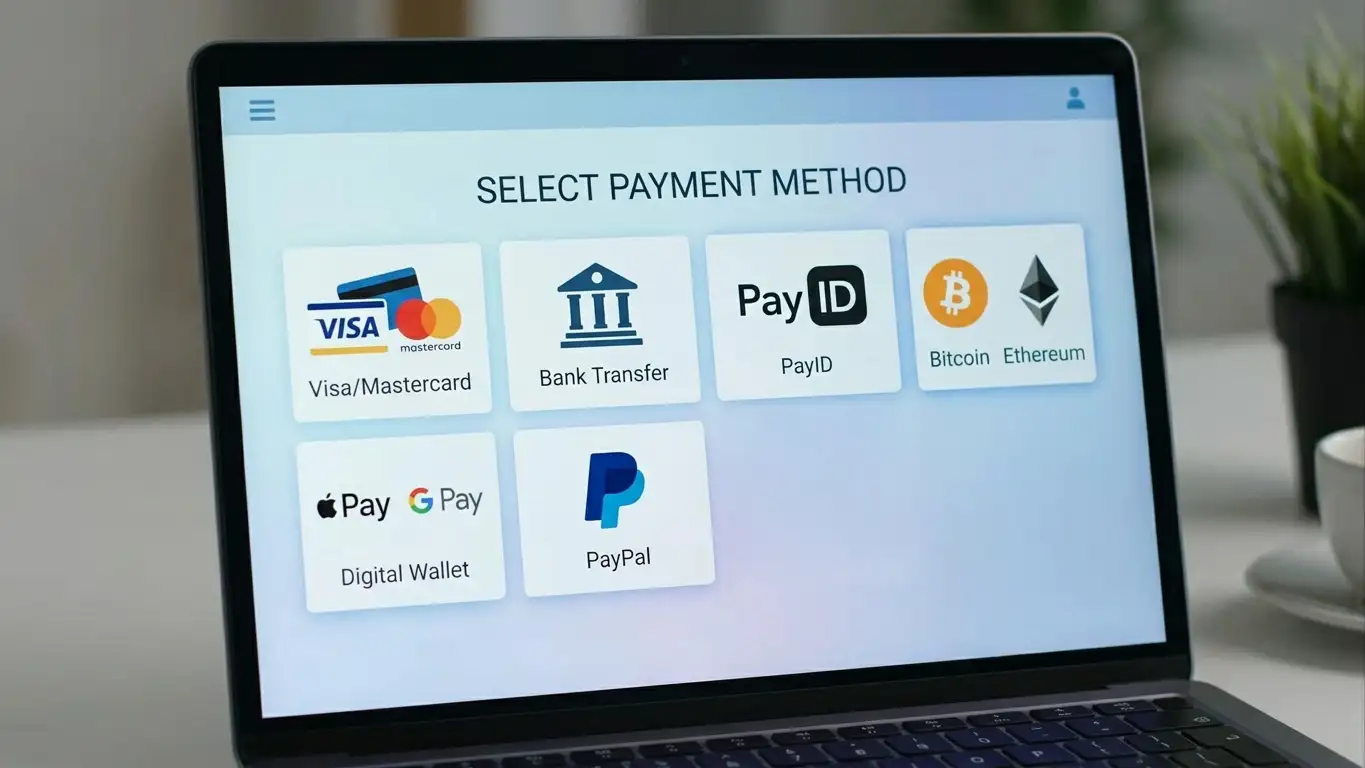
Every offshore casino that accepts BPAY deposits requires you to withdraw via a different method. The most common alternatives are bank transfer, PayID, and cryptocurrency. Some casinos also support card withdrawals (Visa, Mastercard), though these are less frequent for Australian players because international card processors often block gambling-related transactions or impose high fees.
Bank transfer withdrawals are the baseline. You provide your BSB and account number during the withdrawal request, the casino processes the payment through its banking partner, and the funds arrive in 3-5 business days. International wire transfers from offshore casinos can incur fees—A$10-A$30 per withdrawal is typical—either charged by the casino, your bank, or an intermediary bank in the payment chain. Some casinos absorb these fees for withdrawals above a certain threshold (e.g., free withdrawals over A$500, A$25 fee for withdrawals under A$500).
PayID withdrawals are faster and usually free. The casino sends the funds to your registered PayID alias (mobile number or email), and they arrive in your account within seconds to a few hours. Not all BPAY casinos support PayID withdrawals—the ten operators in the cohort above vary—but PayID adoption is growing among offshore operators because it eliminates the fee friction and processing delays that make bank transfers unappealing to players.
Cryptocurrency withdrawals (Bitcoin, USDT-TRC20, Ethereum) clear in 15 minutes to 2 hours depending on network congestion and the casino’s internal approval process. Crypto withdrawals are pseudonymous, fast, and bypass traditional banking rails entirely, which appeals to privacy-conscious players and those whose banks restrict gambling transactions. The downside is exchange-rate volatility—if you deposit A$1,000 worth of Bitcoin and the price drops 5% before you withdraw, you take the loss—and the need to manage a crypto wallet, which adds complexity for players unfamiliar with the ecosystem.
The practical impact is that BPAY-funded accounts must plan for asymmetric deposit and withdrawal timelines. Deposits take 1-3 business days. Bank transfer withdrawals take 3-5 business days. PayID or crypto withdrawals are faster, but you must verify your PayID alias or crypto wallet address with the casino before the first withdrawal, which can add 24-48 hours of KYC processing. The round-trip time from “I want to play” to “I have my winnings in my bank account” is 4-8 business days if you use BPAY in and bank transfer out, or 2-4 business days if you use BPAY in and PayID out.
The table below compares withdrawal methods available at the ten BPAY casinos reviewed earlier. Availability varies by operator—not all casinos support all methods—and the processing times listed are post-approval, meaning they exclude the casino’s internal KYC and fraud review, which adds 24-72 hours for first withdrawals.
| Method | Speed | Fees | Availability at BPAY Casinos |
|---|---|---|---|
| Bank Transfer | 3-5 business days | A$0-A$30 | Universal (all 10 casinos) |
| PayID | Instant to 1 hour | A$0 | 7 of 10 casinos |
| Crypto (BTC/USDT) | 15 minutes to 2 hours | Network gas fees only | 8 of 10 casinos |
| Card (Visa/Mastercard) | 3-7 business days | 1-2% | 3 of 10 casinos |
Can I withdraw winnings via BPAY?
No. BPAY is a deposit-only payment rail by design. The system supports bill payments flowing from the payer (you) to the biller (the casino’s payment intermediary), but it does not support reverse payments from the biller back to the payer. Every casino that accepts BPAY deposits requires you to withdraw via bank transfer, PayID, cryptocurrency, or card. PayID is the fastest withdrawal option among BPAY casinos, clearing in under an hour. Bank transfers take 3-5 business days and may incur fees. Crypto withdrawals clear in 15 minutes to 2 hours and bypass banking rails entirely.
BPAY vs PayID vs Cards vs Crypto: When to Use Each
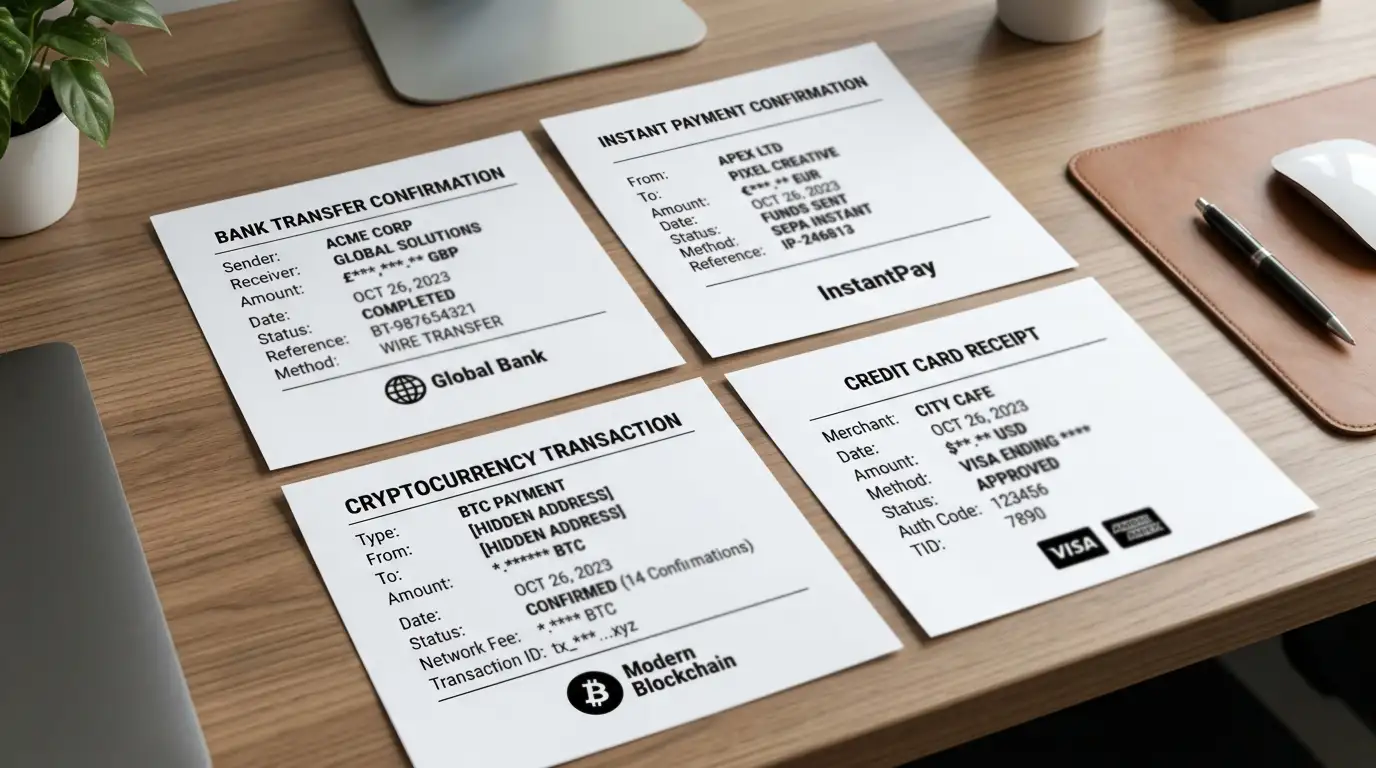
The Australian casino deposit landscape in 2026 splits into four payment categories, each with distinct speed, limit, and privacy characteristics. BPAY occupies a specific niche rather than competing as a general-purpose rail. The comparison below maps when each method fits.
BPAY wins on three dimensions: universal bank coverage, high daily limits, and statement discretion. Every Australian bank supports it, NAB allows A$100,000 daily, and your statement shows “BPAY BILL PAYMENT” rather than a casino name. The cost is 1-3 business days from submission to playable funds, and the deposit-only limitation forces you to withdraw via another method. BPAY is the correct choice when you are depositing more than your PayID limit allows, you value privacy on your bank statement, or your bank has not yet enabled PayID on your account.
PayID is the opposite trade. It clears in under ten seconds, works for deposits and withdrawals, and avoids the batch-processing delay entirely. Daily limits default lower—A$1,000 to A$25,000 depending on your bank—and your statement shows the casino’s registered PayID alias, which may or may not be discreet. PayID is the correct choice for deposits under A$10,000 where speed matters, and for all withdrawals if the casino supports it. The limit ceiling is the primary constraint. A A$30,000 deposit requires either splitting across multiple days or switching to BPAY.
Credit and debit cards land instantly and require no signup friction beyond entering your card details at the casino cashier. Visa and Mastercard are universal. The downsides are threefold: your card statement names the merchant descriptor the casino chose (sometimes discreet, often not), many Australian banks block gambling transactions on credit cards under the 2020 IGA amendment, and card processors charge casinos 2-3% per transaction, which some operators pass through to players as a deposit fee or exclude from bonus eligibility. Cards are the correct choice for small trial deposits (A$20-A$50) when you want instant access and do not yet trust the casino enough to link your bank account via BPAY or PayID.
Cryptocurrency (Bitcoin, USDT-TRC20, Ethereum) is pseudonymous, fast (15-60 minutes), and bypasses banking rails entirely. Your bank never sees the transaction because it flows through the blockchain. Daily limits are effectively unlimited—you can deposit A$100,000 worth of Bitcoin in a single transaction if the casino accepts it. The costs are exchange-rate volatility, network gas fees (A$2-A$50 depending on blockchain congestion), and the operational complexity of managing a crypto wallet. Crypto is the correct choice when anonymity matters, your bank blocks gambling transactions, or you already hold a balance in BTC or USDT and want to avoid the conversion friction of cashing out to AUD first.
The table below summarises the structural trade-offs. No single method is optimal across all dimensions—each fits a specific use case.
| Method | Deposit Speed | Withdrawal Speed | Daily Limit (Typical) | Privacy (Bank Statement) | Best For |
|---|---|---|---|---|---|
| BPAY | 1-3 business days | Not supported | A$10,000-A$100,000 | High (shows “BILL PAYMENT”) | High-limit deposits, privacy, universal bank support |
| PayID | Instant (<10 seconds) | Instant (<1 hour) | A$1,000-A$25,000 | Medium (shows casino PayID alias) | Speed, deposits under A$10,000, fast withdrawals |
| Card (Visa/Mastercard) | Instant | 3-7 business days | A$5,000-A$10,000 | Low (shows merchant descriptor) | Trial deposits, no bank-account linking |
| Crypto (BTC/USDT) | 15-60 minutes | 15 minutes-2 hours | Unlimited | Very high (blockchain, not bank) | Anonymity, bank blocks gambling, volatility tolerance |
Why should I choose BPAY over PayID for casino deposits?
Choose BPAY when your deposit exceeds your PayID daily limit (typically A$1,000-A$25,000), you value privacy on your bank statement (BPAY shows “BILL PAYMENT” rather than the casino name), or your bank has not enabled PayID on your account type. BPAY’s 1-3 business day processing delay is the trade-off for higher limits and universal bank coverage. Choose PayID when speed matters more than limits—PayID clears in under ten seconds versus BPAY’s overnight batch—and your deposit amount fits within your daily PayID cap.
Can I use BPAY from a credit card account?
Technically, some banks allow BPAY payments initiated from a credit card account, but this is rare and inadvisable for gambling. The 2020 Interactive Gambling Amendment Act prohibits Australian credit card providers from processing gambling transactions, and most banks classify BPAY-to-gambling-biller as an MCC 7995 transaction (gambling) regardless of whether the payment originates from credit or debit. If you initiate BPAY from a credit card account and your bank flags the transaction, it will be declined. Use BPAY from your everyday debit or savings account instead. The credit-card ban applies to the funding source, not the payment rail.
BPAY Casino Deposits and Australian Law
The Interactive Gambling Act 2001 (IGA) prohibits offshore operators from offering online casino services to Australian residents. The Act does not criminalise Australian players for accessing offshore sites. This legal asymmetry creates the environment where 22 offshore casinos accept BPAY deposits from Australians as of 2026, none of them hold Australian licenses, and players face no direct legal risk for depositing or withdrawing.
The Australian Communications and Media Authority (ACMA) enforces the IGA by issuing domain-blocking orders under section 313 of the Telecommunications Act. Over 800 offshore gambling sites have been blocked since 2017, but blocking a domain is reactive and slow—new domains appear faster than ACMA can add them to ISP blocklists. The casinos listed earlier here operate on domains that are currently accessible in Australia, but that accessibility is not a signal of legality. It simply means ACMA has not yet blocked those specific domains.
BPAY itself sits outside the IGA’s scope. The Reserve Bank of Australia regulates BPAY through the Payment Systems Board as a bill-payment infrastructure, and nothing in RBA regulations prohibits BPAY transactions to gambling billers. BPAY Group, the operator of the system, requires billers to hold an Australian Business Number (ABN), which is why offshore casinos cannot register biller codes directly. The workaround is a payment intermediary—an Australian-registered entity that holds the biller code and processes transactions on behalf of offshore operators.
This intermediary structure is the legal grey zone. The intermediary is not offering gambling services, so it arguably falls outside the IGA’s prohibition. It is processing payments on behalf of entities that are offering gambling services, which may or may not trigger secondary liability depending on how ACMA interprets “facilitating” under the Act. ACMA has not publicly pursued payment intermediaries holding BPAY biller codes for offshore casinos, but the legal position is untested in court.
For Australian players, the practical risk is near zero. The IGA targets operators, not customers. No Australian has been prosecuted for depositing at an offshore casino via any payment method, including BPAY. The risks are operational rather than legal: offshore casinos are not subject to Australian consumer protection laws, dispute resolution through the casino’s license jurisdiction (Curaçao, Malta) is slow and player-unfriendly, and your deposits are not covered by the Australian Financial Complaints Authority or any deposit insurance scheme. If the casino folds or refuses to pay a withdrawal, your recourse is limited.
BPAY transactions themselves are secure in the banking sense—your payment flows through APRA-regulated banks and clears through BPAY Group’s infrastructure, which is as robust as any domestic bill payment. The security risk is not in the payment rail but in the endpoint: the offshore casino holding your balance after the deposit clears. A Curaçao-licensed casino is not subject to Australian Banking Code protections or ASIC oversight. If the operator is insolvent, fraudulent, or simply decides to withhold your winnings, BPAY cannot reverse the transaction after it has cleared.
The distinction between “legally risky” and “financially risky” matters. Depositing at an offshore casino via BPAY is not illegal for Australian players. It is financially risky because the casino operates outside Australian jurisdiction and regulatory protections do not apply. That risk is identical whether you deposit via BPAY, PayID, card, or crypto—the payment method changes the speed and privacy characteristics, not the legal or financial risk profile of gambling with an offshore operator.
Is online casino gambling legal in Australia if I use BPAY?
The Interactive Gambling Act 2001 prohibits offshore operators from offering online casino services to Australian residents, but it does not criminalise Australian players for accessing those services. Using BPAY to deposit at an offshore casino is not illegal for the player—the legal violation is on the operator’s side. However, offshore casinos are not subject to Australian consumer protections, licensing standards, or dispute resolution frameworks. If the casino withholds a withdrawal or folds, your recourse is limited. The legal risk for Australian players is near zero. The financial risk is that you are gambling with an entity outside Australian regulatory oversight.
Are BPAY casino deposits safe and secure?
BPAY transactions flow through APRA-regulated Australian banks and clear through BPAY Group’s infrastructure, making the payment rail itself as secure as paying an electricity bill. The security risk lies at the endpoint—the offshore casino holding your balance after the deposit clears. Casinos licensed in Curaçao, Malta, or similar jurisdictions are not subject to Australian Banking Code protections, ASIC oversight, or deposit insurance schemes. If the casino is insolvent or refuses to pay a withdrawal, BPAY cannot reverse a cleared transaction. The payment method is secure; the entity you are paying is not covered by Australian consumer protections.
Pokies, Bonuses and Low-Deposit BPAY Casinos
Australian players use “pokies” and “slots” interchangeably, but the term pokies dominates local search volume and casino marketing. Every offshore casino accepting BPAY in 2026 offers pokies—it is the core product. Game libraries range from 1,700 titles at GOGOPokies to 12,000 at VegasNow (if the claim is accurate), sourced from providers like Pragmatic Play, NetEnt, Hacksaw Gaming, Nolimit City, and Push Gaming. Pokies dominate because they require no skill, run on mobile, and generate higher revenue per player than table games.
The pokies available at BPAY casinos are identical to those at PayID or crypto casinos—there is no “BPAY-exclusive” game library. The payment method determines how you fund your account, not which games you can access once funded. Volatility, RTP, and bonus features depend on the slot itself and the provider’s design, not the deposit rail. A player funding with BPAY at LevelUp has access to the same Pragmatic Play titles, at the same RTP settings, as a player funding with PayID.
Bonuses at BPAY casinos follow offshore norms: large headline numbers (A$8,000 welcome packages, 500 free spins), high wagering requirements (35x to 50x deposit-plus-bonus), and game-weighting rules that exclude or reduce contributions from low-edge games like blackjack. BPAY deposits qualify for standard welcome bonuses at most casinos—CrownGold, LevelUp, Joo, VegasNow all treat BPAY-funded balances identically to card or PayID deposits for bonus eligibility. The exception occurs when the promotion’s terms explicitly exclude certain payment methods, typically e-wallets, to prevent bonus abuse. BPAY’s batch delay makes round-tripping impractical, so exclusions are rare.
Low-deposit BPAY casinos cater to casual players and trial sessions. GOGOPokies’ A$5 minimum is the floor in this cohort, followed by LevelUp and Joo at A$10. The A$5 threshold removes friction for players testing a new casino without committing A$20 or A$30, though BPAY’s 1-3 business day delay means even a A$5 trial deposit requires planning ahead rather than impulse. The higher minimums at Lucky Hunter (A$20), Lucky7even (A$30), and CrownGold (A$30) narrow the addressable audience but signal either a high-value player focus or blunt fee-structure inheritance from the payment intermediary.
Free spins and no-deposit bonuses appear less frequently at BPAY casinos than at PayID or card-focused operators, likely because BPAY’s batch delay reduces the conversion rate of “free bonus → first deposit” funnels. A player claiming 50 no-deposit spins at a PayID casino can deposit instantly if the spins convert to a win. A player at a BPAY casino must wait 1-3 days, during which time interest wanes. The economics favour instant-deposit rails for no-deposit promotions, so BPAY casinos lean harder on deposit-match bonuses where the player has already committed funds.
Responsible Gambling with BPAY Deposits
BPAY’s 1-3 business day settlement window is never marketed as a responsible gambling feature, but it functions as one by accident. Depositing A$500 at 11pm during a losing streak via card or PayID is effortless—two minutes, zero friction, instant balance update. The same deposit via BPAY requires logging into internet banking, navigating to the BPAY section, entering a biller code and a 15-digit customer reference number, confirming the payment, and waiting 36 hours for the funds to land. That multi-step process with a forced delay creates enough friction that impulsive late-night deposits become logistically difficult.
The delay is not a cooling-off period in the formal sense—there is no option to cancel a BPAY payment after submission, and the batch processes regardless of whether you regret the decision an hour later. But the inability to fund and play immediately introduces a planning requirement that instant-deposit methods do not. If you want to play Friday evening, you submit the BPAY payment Wednesday afternoon. If you are chasing losses at midnight and want to deposit immediately, BPAY does not accommodate that impulse. You must either wait two days or switch to a faster rail, and switching requires enough intentionality to disrupt the loss-chasing cycle.
This friction-as-feature dynamic is unintentional. BPAY’s batch architecture predates real-time payments by two decades, and offshore casinos adopted it for high limits and universal bank coverage, not for responsible gambling benefits. But the outcome is that BPAY-funded sessions are structurally less compatible with impulsive behaviour than card or PayID sessions. A player who funds exclusively via BPAY and never links a card or PayID cannot chase losses in real time because the money is not there to chase with.
The ten casinos reviewed earlier offer standard responsible gambling tools—deposit limits, session timers, self-exclusion—through their account settings. These tools are mandatory under Curaçao and Malta licensing standards and function identically regardless of deposit method. BPAY does not replace or bypass these tools; it simply adds a structural delay that makes impulsive deposits harder. A player can still set a A$500 weekly deposit limit, fund via BPAY, and blow through that limit the moment the batch clears. The limit is the active control, not the payment rail.
The gap in BPAY’s friction-as-feature model is the player who links multiple payment methods. If you have BPAY, PayID, and a card all registered at the same casino, the BPAY delay only constrains you if you choose to use BPAY. The moment you switch to PayID mid-session, the friction disappears. For players relying on external structure to limit gambling behaviour, the correct approach is to register only BPAY, never link instant-deposit methods, and accept the planning overhead as the cost of that structure.
None of this makes BPAY a substitute for clinical support, financial counselling, or self-exclusion through BetStop (Australia’s national self-exclusion register, which covers licensed operators but not offshore casinos). BPAY’s delay is a speed bump, not a barrier. But speed bumps reduce accidents, and in a market where instant gratification is the norm, BPAY’s structural sluggishness is an accidental countermeasure worth recognising.
Casino Deposit Methods Australia 2026 — Full Comparison
Content created by the «ReelBank» team