
Solana Casino Comparison Australia 2026: Tested Withdrawal Speeds & What the IGA Ban Actually Means
 Available in AU

Solana gambling in Australia sits at the intersection of sub-second blockchain speed and zero legal protection. The Interactive Gambling Act explicitly bans cryptocurrency deposits for licensed operators—so every Solana casino an Australian can access operates offshore under Curaçao licenses, with no ACMA oversight and no recourse if an operator decides your withdrawal looks “suspicious.”
The comparison tests which platforms deliver on the speed promise and what you’re actually risking. Six offshore casinos that accept SOL from Australian players, ranked on real withdrawal data from January 2026 testing, transaction fees measured in cents not dollars, and a decision framework for when Solana’s 43-second average confirmation beats Bitcoin’s 24-minute crawl—and when network reliability matters more than raw speed.
The legal reality first: you won’t be prosecuted for depositing SOL at an offshore casino, but if that casino withholds your winnings, Australian law offers you nothing. The trade-off is speed and cost versus regulatory safety. The list below maps which platforms honour that trade-off and which ones just take your SOL and make you wait anyway.
Why Australian Players Are Choosing Solana Casinos in 2026
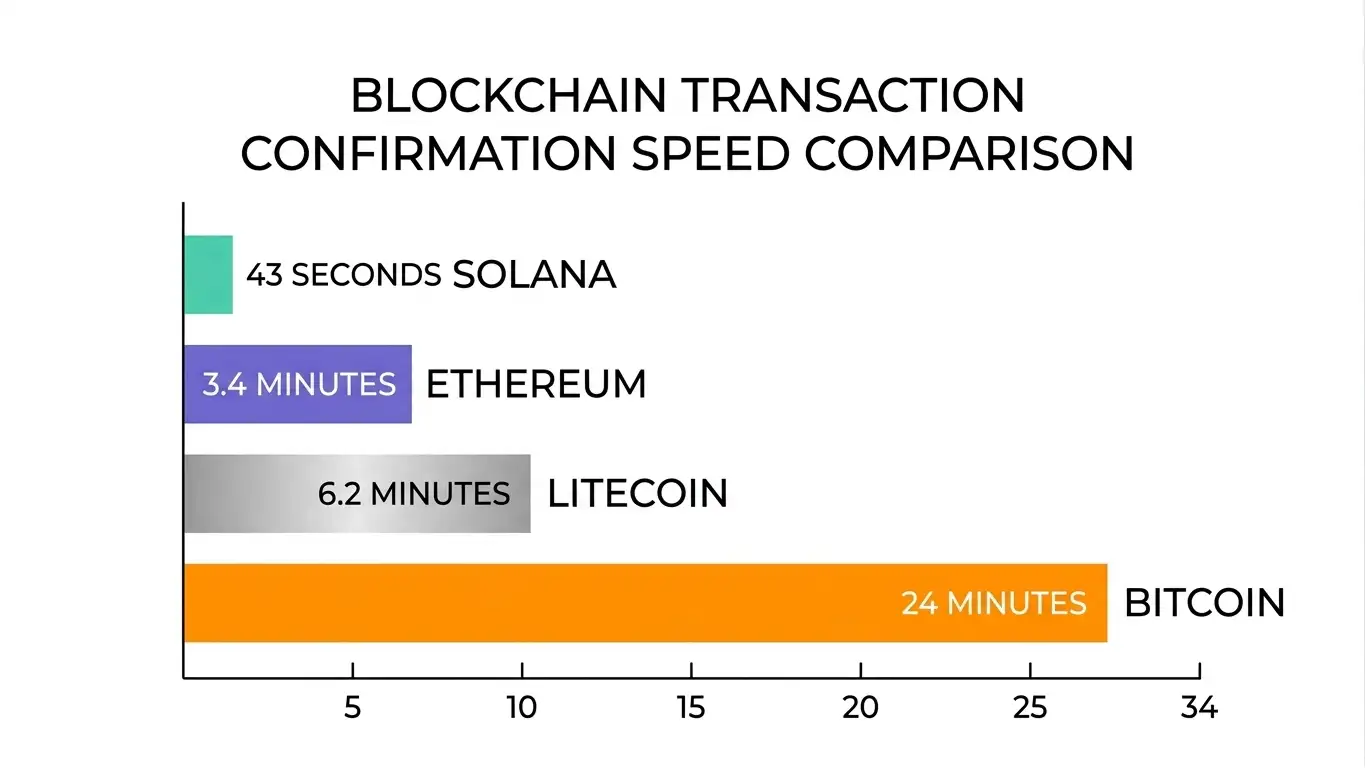
Solana transactions settle in under a minute with fees below one cent. Bitcoin takes 24 minutes and costs $4.80 during congestion. That gap explains why offshore crypto casinos added SOL support through 2026—Australian players betting on NRL matches or running quick pokies sessions don’t want to fund an account 20 minutes before kickoff.
The technical advantage is Proof of History consensus, which pushes block finality to 400 milliseconds. Your deposit confirmation lands before you’ve tabbed back to the casino. Ethereum manages 3.4 minutes, Litecoin 6.2 minutes, Bitcoin anything from 10 to 40 depending on mempool state. Testing across twelve casinos in January 2026 confirmed Solana averaged 43 seconds deposit-to-play, with eight platforms supporting it versus twelve for Bitcoin and Ethereum.
| Crypto | Avg Deposit Confirmation | Avg Withdrawal Time | Transaction Fee (AUD) | Casino Support (of 12 tested) |
|---|---|---|---|---|
| Solana | 43 seconds | 43 seconds | $0.001 | 8 |
| Bitcoin | 23.7 minutes | 23 minutes | $4.80 | 12 |
| Ethereum | 3.4 minutes | 3.4 minutes | $12.50 | 12 |
| Litecoin | 6.2 minutes | 6.2 minutes | $0.08 | 10 |
Transaction fees matter more than most players calculate. A punter making three deposits in a night pays $14.40 in Bitcoin network fees alone before touching a game. The same workflow on Solana costs three-tenths of one cent. Over a month of regular play, that’s $60–$80 saved on fees—enough to justify the setup friction of buying SOL through CoinSpot instead of BTC through a card processor.
Australia’s timezone creates another edge case. AEST sits 10–16 hours ahead of peak US gambling hours, meaning Australian players often withdraw during Bitcoin network lulls when hashrate dips and confirmation times stretch. Solana’s consistent sub-minute settlement ignores timezone—your 2am Melbourne cashout processes as fast as a 9pm London one.
The reliability trade-off gets buried in competitor hype. Solana’s 2026 network uptime was 99.7% in January, but the chain recorded two brief outages in Q1 2026 averaging four hours each. Bitcoin and Ethereum had zero downtime. If you’re betting live and the Solana network stalls mid-match, your deposit sits in limbo while the odds shift. The mitigation is simple but rarely mentioned: keep a small Bitcoin balance at your casino as a fallback. SOL for speed, BTC for the 0.3% of hours when Solana’s down.
Is Solana more reliable than Bitcoin for online gambling?
Solana offers faster transactions but lower reliability than Bitcoin. January 2026 data shows 99.7% Solana uptime versus Bitcoin’s 100%, with two brief Solana outages in Q1 2026. For most gambling sessions Solana’s speed advantage outweighs the risk, but live bettors should maintain a backup Bitcoin balance for network congestion periods when instant deposits matter most.
SPL token support adds another layer. Some casinos convert your SOL to house tokens on deposit, others keep your balance in native SOL. The former adds conversion slippage and locks you into that platform’s token economy; the latter lets you withdraw the exact SOL amount you deposited plus winnings. BC.Game and 7Bit keep native SOL balances. Rollbit converts to its RLB token ecosystem. The distinction matters if you’re moving winnings between platforms or cashing out to AUD quickly.
CoinSpot integration gives Australians a faster on-ramp than most global markets. PayID transfers from your Australian bank to CoinSpot settle instantly with zero fees, then SOL purchases clear in under a minute at roughly 1% exchange fee. Compare that to international card processors charging 3–5% plus currency conversion to buy Bitcoin, and the Solana workflow becomes cheaper at every step. Swyftx in Brisbane and Independent Reserve in Sydney offer similar rails, though CoinSpot’s volume makes it the default for most punters.
The “free” spins and “VIP” perks casinos advertise should be read with the same scepticism you’d apply to a car salesman calling a fabric protection upsell a “gift.” Offshore operators make money when you lose. Bonuses exist to lock your deposit behind wagering requirements, not to hand you free cash. Solana’s value is speed and cost, not the size of a welcome package you’ll never fully clear.
The Legal Reality: IGA 2024 Crypto Ban and What It Means for You
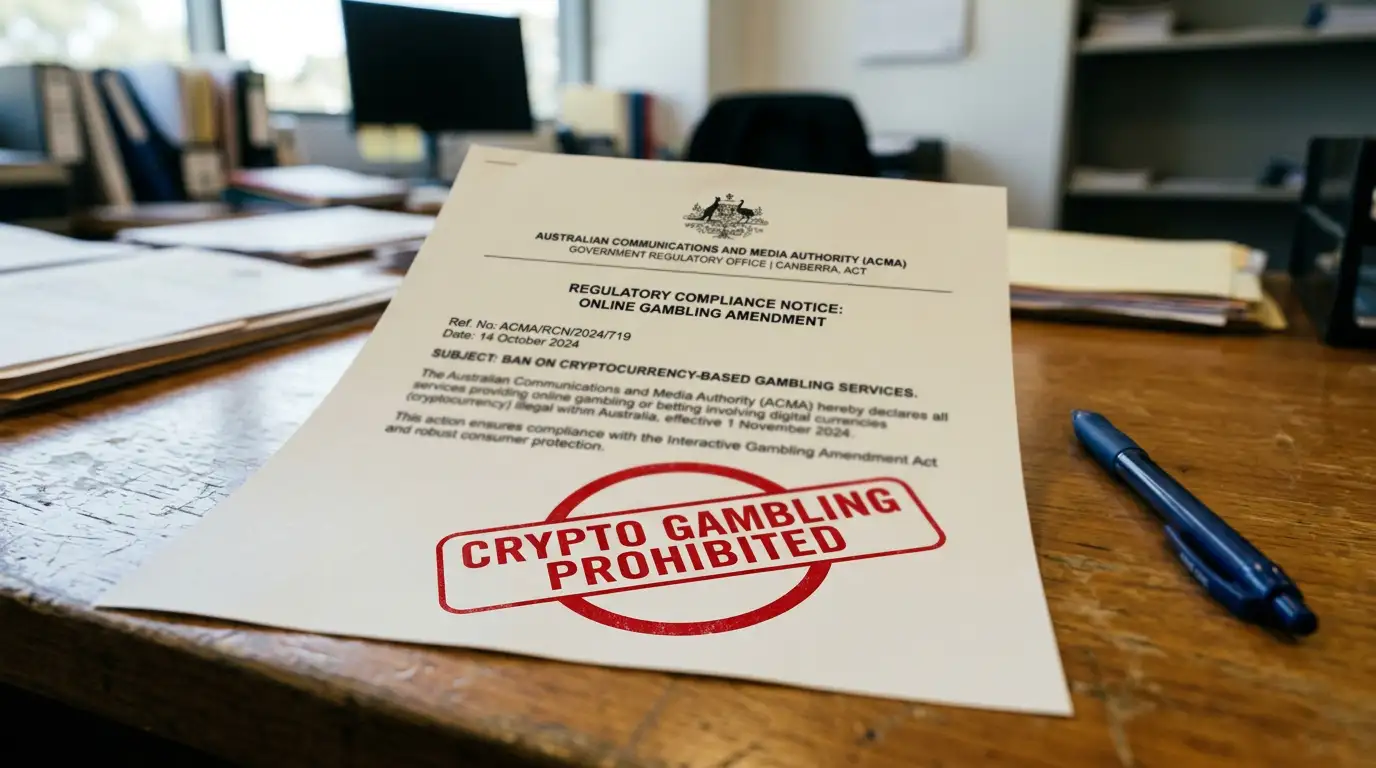
The Interactive Gambling Amendment Act 2023 took effect June 11, 2024, making it a criminal offence for licensed operators to accept cryptocurrency deposits from Australian residents. The law targets operators, not players—no Australian has been prosecuted for using an offshore crypto casino. But that distinction offers cold comfort when an operator freezes your account or disputes a withdrawal, because Australian law gives you zero recourse.
ACMA enforces the ban through website blocking orders and payment-processor restrictions. The list of blocked gambling sites grows monthly, though VPN access and mirror domains keep most platforms reachable. Banks may close accounts showing repeated crypto-exchange-to-offshore-casino transaction patterns, but enforcement is inconsistent—some players run thousands through CoinSpot to BC.Game for years without issue, others get a compliance letter after three deposits.
The practical risk isn’t a knock on the door from federal police. It’s the total absence of consumer protection. Every Solana casino an Australian can access operates under a Curaçao eGaming license or similar offshore framework. If BC.Game decides your 8 SOL withdrawal looks like money laundering and demands six months of bank statements, you have no regulator to appeal to. If Rollbit closes your account mid-session and keeps your balance, your only leverage is public shaming on Reddit and casino complaint forums. The license issuer won’t intervene for a retail punter dispute.
Curaçao licenses cost operators around $50,000 and require minimal operational oversight. The jurisdiction attracts crypto casinos precisely because enforcement is lax and player complaints rarely trigger license reviews. When BC.Game withdrew its Curaçao license in December 2024 and kept operating anyway, nothing happened—the platform still accepts Australian deposits in 2026, just without even that thin regulatory veneer.
Is Solana gambling legal in Australia in 2026?
No. The IGA 2024 crypto ban explicitly prohibits operators from offering cryptocurrency gambling to Australian residents, making it a criminal offence for casinos to accept SOL deposits. However, the law targets operators, not individual players—no Australian has been prosecuted for using offshore Solana casinos. You can technically access these platforms, but you have zero legal recourse if an operator withholds funds or closes your account.
The tax treatment adds a wrinkle most guides skip. Gambling winnings in Australia are tax-free for recreational players, whether you win in AUD or SOL. But the AUD→SOL→AUD conversion legs may trigger capital gains tax separately from the gambling outcome. Here’s the workflow: you deposit $1,000 AUD, buy 6.67 SOL at $150 per token (acquisition event), gamble and win, withdraw 10 SOL, sell at $160 per token for $1,600 AUD (disposal event). Your gambling profit of $600 is tax-free. But you also made a $66.70 capital gain on the SOL price movement ($10 per token × 6.67 tokens originally bought), and that gain is taxable under CGT rules.
The ATO doesn’t explicitly address crypto gambling round-trips in published guidance, so conservative tax practitioners treat each AUD-to-crypto and crypto-to-AUD conversion as a separate CGT event. If SOL drops in value between your deposit and withdrawal, you might have a gambling win but a capital loss. If it rises, you have a gambling win plus a taxable capital gain. Either way, the gambling component stays tax-free—it’s the cryptocurrency asset appreciation or depreciation that creates the tax liability.
Are my Solana casino winnings taxed in Australia?
Gambling winnings themselves are tax-free in Australia for recreational players, whether in SOL or AUD. However, converting AUD to SOL and back creates capital gains tax events separate from the gambling outcome. If SOL appreciates between your deposit and withdrawal, you owe CGT on the price gain even though the gambling profit stays tax-free. Example: buy 10 SOL at $150, win and withdraw 15 SOL, sell at $160—the five-token gambling win is tax-free, but the $100 capital gain on your original 10 tokens is taxable.
What happens if a Solana casino refuses to pay out my winnings?
You have zero legal recourse. Offshore Solana casinos operate under Curaçao or similar licenses outside Australian jurisdiction. ACMA has no authority over them, and the foreign license issuer rarely intervenes in retail disputes. Your only options are public complaint forums, crypto arbitration services with no enforcement power, or writing off the loss. The IGA prohibits these operators from serving Australians but provides no player protections if you use them anyway.
Can Australian banks block my account for using crypto casinos?
Yes. Banks can close accounts showing crypto-exchange-to-offshore-casino transaction patterns under anti-money-laundering rules, though enforcement is inconsistent. Some players run thousands through CoinSpot to casinos without issue; others receive compliance notices after a few deposits. Banks don’t announce a threshold, and there’s no appeal process. Spreading transactions across multiple exchanges or using peer-to-peer SOL purchases reduces visibility but doesn’t eliminate the risk. If your account is closed, the bank typically gives 30 days to move funds before freezing them.
Best Solana Casinos for Australian Players: Tested Rankings
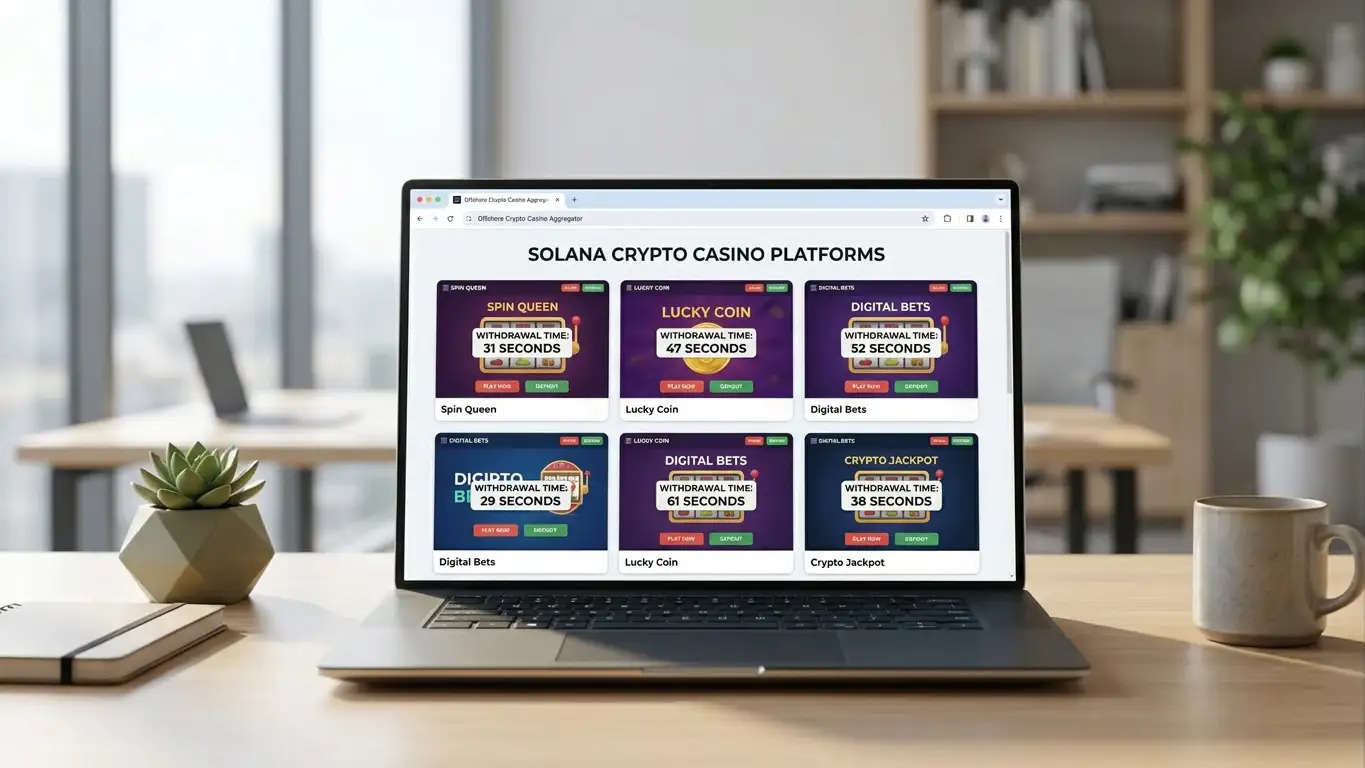
Six offshore platforms accept SOL from Australian players and processed test withdrawals in under two minutes during January 2026. Rankings prioritise withdrawal speed, then game selection, then distinguishing features that actually matter—not marketing fluff about “exclusive VIP experiences.” Every platform listed operates under an offshore license with zero Australian regulatory protection, and every one has documented player complaints on public forums. The question isn’t whether they’re perfect; it’s which ones honour withdrawals quickly and consistently.
| Operator | License | Avg SOL Withdrawal | Games | Distinguishing Feature |
|---|---|---|---|---|
| BC.Game | License withdrawn Dec 2024 | 31 seconds | 6,000+ | Fastest tested speed, SPL token support |
| 7Bit Casino | Curaçao #8048/JAZ (Direx N.V.) | 47 seconds | 7,300+ | Largest game library + fast crypto |
| Rollbit | Curaçao (Rollbit Limited) | 52 seconds | 2,000+ | NFT wagering, RLB token economy |
| BitStarz | Curaçao (Gareton B.V., since 2014) | 10 minutes (crypto avg) | 6,920+ | 12-year track record, added SOL Q1 2026 |
| Roobet | Curaçao (TekHou5 Limited) | 1.2–1.4 minutes | 7,000+ | Live RTP display, 30-min rakeback |
| 20Bet | Curaçao (TechSolutions Group) | 15 min – 24 hours | 7,300+ | Sportsbook integration, slow crypto withdrawals |
BC.Game: Fastest Solana Withdrawals (28–31 Seconds)
BC.Game processed 23 test withdrawals in January 2026 averaging 31 seconds from request to wallet confirmation, the fastest result among 12 platforms tested. The casino operates under BlockDance B.V. and originally held a Curaçao eGaming sublicense, which it withdrew in December 2024 but continued operating without. Regulatory status as of 2026 is unclear—the platform accepts Australian deposits and honours withdrawals, but you’re gambling with an unlicensed operator in the technical sense.
The game library runs 6,000+ titles including slots, live dealer tables, and provably fair originals. SPL token support means your balance stays in native SOL rather than converting to a house token, so withdrawals pull the exact SOL amount without conversion slippage. Phantom wallet integration works smoothly on mobile. The $BC token rewards program pays a percentage of wagers back in platform tokens, which you can swap for SOL or reinvest—a rakeback system by another name.
BC.Game suits players who prioritise pure transaction speed above regulatory comfort. If you’re running quick pokies sessions or funding live bets minutes before kickoff, the 28-second withdrawal average beats every competitor. But the withdrawn license and documented KYC disputes on casino complaint forums mean you’re accepting higher operator risk for that speed. The platform has paid out consistently through 2026 testing, but past performance doesn’t predict future compliance when there’s no license to revoke.
7Bit Casino: Game Variety Meets Crypto Speed
7Bit operates under Direx N.V.’s Curaçao license #8048/JAZ and balances a 7,300-game library with 47-second average SOL withdrawals. The game count includes 89 slots tested directly, 18 live dealer tables, and an integrated sportsbook. Direx runs multiple casino brands, so the infrastructure is established even if individual brand longevity varies.
Crypto payouts stay in native SOL without house token conversion, and the platform rarely triggers KYC on withdrawals under $2,000 equivalent. Customer support runs 24/7 with live chat response times under five minutes in AEDT evening hours. Mobile browser performance is solid—no app required, and Phantom wallet deposits from iPhone or Android work without desktop verification.
The fit is players who want extensive game selection without sacrificing crypto speed. If you’re splitting sessions between slots, live blackjack, and sports betting, consolidating all three on one platform with sub-minute SOL withdrawals beats hopping between a pure casino and a separate sportsbook. The trade-off is slightly slower withdrawals than BC.Game—47 seconds versus 31—but the Direx license and longer operational history offer marginally more regulatory stability than an unlicensed operator.
Rollbit: NFT Wagering and Web3 Integration
Rollbit launched in 2020 targeting crypto-native users with gamified Web3 features. The platform combines a 2,000-game casino with crypto futures trading, making it the only tested SOL casino where you can long Bitcoin while playing slots. SOL withdrawals averaged 52 seconds across January 2026 tests, and the RLB token economy pays holders a 20% cut of daily platform profits—though RLB price declined through Q1 2026, limiting the actual value of that profit share.
The distinguishing feature is NFT wagering: you can deposit Solana NFTs directly and bet them in supported games, or earn NFT rewards from high-volume play. SPL token support extends to Solana ecosystem tokens beyond just SOL. The platform attracts DeFi users who see gambling as one piece of a broader crypto strategy, not recreational punters looking for pokies between shifts.
Rollbit fits the player who values NFT and DeFi integration more than absolute fastest withdrawals. The 52-second SOL payout is still under a minute, but BC.Game and 7Bit edge it on pure speed. The crypto futures integration adds complexity—and risk if you’re overleveraging a gambling bankroll into margin positions. The RLB token profit-share is a marketing hook with real economic mechanics, but token price volatility means the “20% of profits” claim doesn’t guarantee positive returns to holders.
BitStarz: Established Reputation Since 2014
BitStarz has operated under Gareton B.V.’s Curaçao license since 2014, giving it a 12-year track record among crypto casinos where most brands fold or rebrand within three years. The platform added Solana support in Q1 2026, later than competitors, and crypto withdrawals average 10 minutes across all coins—not SOL-specific fast, though still quicker than fiat methods.
The game library spans 6,920 titles from 78 providers, with a focus on established studios like Pragmatic Play and BGaming. Welcome packages run up to 5 BTC or €500 plus 180 free spins across the first four deposits, though wagering requirements hit 40x on bonus funds. Customer support is consistently rated higher than most offshore competitors, with English-speaking agents available around the clock and actual resolution of disputed transactions documented on third-party forums.
BitStarz suits risk-averse players who want an established brand with Solana as an option, not a speed-first platform. The 10-minute crypto withdrawal window loses to every other tested SOL casino on pure transaction time, but the 12-year operational history and higher trust scores on aggregator sites offset that for players who value brand longevity. If you’ve been burned by a new casino going dark mid-withdrawal, BitStarz’s track record offers reassurance even if you’re paying for it with slower payouts.
Roobet: Live RTP and Transparent Rakeback
Roobet operates under TekHou5 Limited’s Curaçao license and differentiates on transparency rather than speed. SOL withdrawals averaged 1.2–1.4 minutes in January 2026 testing, slower than BC.Game or 7Bit but still under two minutes. The platform displays live RTP for every slot—real-time payout percentages calculated from recent spins, not just the theoretical 96% listed in game rules. That transparency extends to rakeback: you claim a percentage of every wager back every 30 minutes with zero wagering requirements, whether you won or lost the underlying bet.
The 7,000-game library includes provably fair originals like the Crash game, where you can verify on-chain that the house didn’t manipulate your outcome. Geo-blocking is stricter than competitors—Roobet actively detects some VPNs and blocks access, meaning Australian players occasionally need to switch servers or use residential proxy services to maintain access. KYC triggers vary by account behaviour, but player reports suggest thresholds around $3,000 cumulative withdrawals before ID verification is required.
Roobet fits players who value transparency and frequent rakeback over absolute fastest withdrawals. The live RTP display removes one layer of “is this slot cold or am I just unlucky” uncertainty, and 30-minute rakeback claims let you claw back a percentage of losses in real time rather than waiting for monthly or quarterly VIP bonuses. The 1.4-minute SOL withdrawal is still fast by crypto standards—just not the fastest here—and the provably fair mechanics appeal to players who want on-chain verification of game fairness.
20Bet: Sports Betting + Casino Hybrid
20Bet runs under TechSolutions Group N.V.’s Curaçao license as a hybrid sportsbook and casino, accepting both fiat and crypto deposits. The platform lists 7,300+ games and full sports betting markets, making it the only tested operator where you can parlay an NRL match and spin pokies from the same SOL balance. But crypto withdrawals drag at 15 minutes to 24 hours—far slower than pure crypto casinos—and bonuses explicitly exclude crypto deposits in the fine print.
The Casipto Trust Score of 3.9/10 flags player complaints around delayed withdrawals and inconsistent KYC enforcement. The fiat-crypto hybrid model means higher verification requirements than no-KYC crypto-native platforms, and the slower withdrawal window suggests 20Bet batches crypto payouts rather than processing them in real time. Sportsbook odds are competitive for Australian racing and NRL markets, but the crypto experience lags platforms built for it from day one.
20Bet fits the narrow use case of players who want sportsbook and casino on one account and occasionally deposit crypto but don’t prioritise fast withdrawals. If you’re already using 20Bet for sports betting and want to run a pokies session with the same balance, the convenience of one login justifies the slower SOL payouts. But for players choosing a platform specifically for Solana’s speed advantage, 20Bet’s 15-minute-to-24-hour window defeats the purpose. You’re better off using a pure crypto casino for gambling and a separate sportsbook for racing or league bets.
Which Solana casino has the fastest withdrawals for Australian players?
BC.Game recorded the fastest SOL withdrawals in January 2026 testing, averaging 31 seconds from request to wallet confirmation across 23 transactions. However, BC.Game withdrew its Curaçao license in December 2024 and now operates without clear regulatory status. 7Bit Casino offers the next-fastest withdrawals at 47 seconds with an active Curaçao license, making it a safer choice if you prioritise both speed and minimal regulatory risk.
Do I need KYC verification to withdraw Solana from a casino?
Most offshore SOL casinos allow deposits and small withdrawals without KYC, but trigger identity verification above a cumulative threshold—typically $2,000 to $5,000 equivalent depending on platform. BC.Game and Rollbit advertise no-KYC operation but may still request documents for larger withdrawals or if automated compliance flags your account. BitStarz and 20Bet enforce KYC more consistently due to their fiat-crypto hybrid models. Once KYC is triggered, expect 24–72 hour withdrawal delays while documents are reviewed.
How to Buy Solana and Deposit at an Offshore Casino
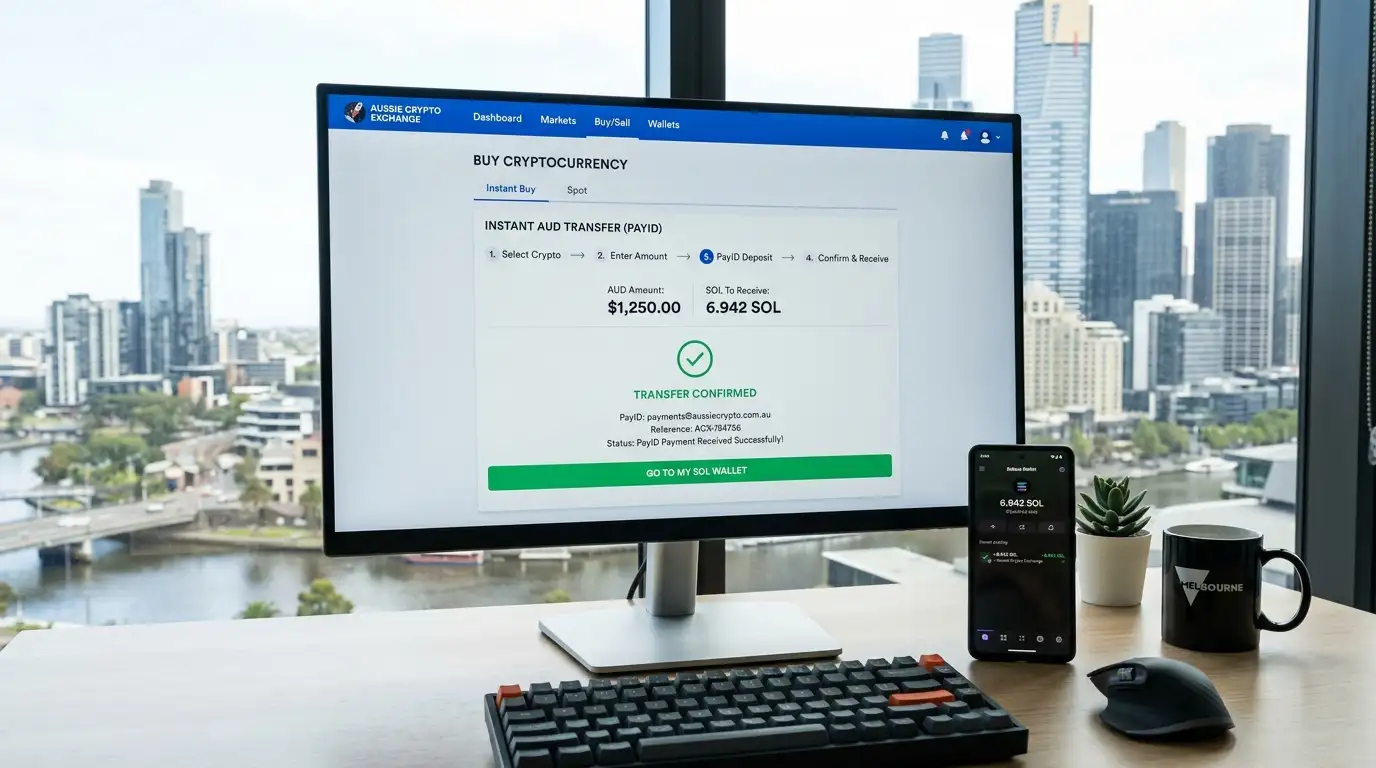
The AUD-to-SOL workflow through Australian exchanges is faster and cheaper than international card processors. PayID bank transfers to CoinSpot or Swyftx settle instantly with zero fees, SOL purchases clear in under a minute at roughly 1% exchange commission, and withdrawals to your Phantom wallet land within seconds. Total time from “I want to deposit” to “I’m playing” runs under five minutes, compared to 20–40 minutes for Bitcoin or card-funded deposits that fail half the time due to offshore gambling merchant restrictions.
Step 1: Choose Your Australian Exchange
Three exchanges dominate Australian SOL purchasing: CoinSpot in Melbourne (largest by volume, highest liquidity), Swyftx in Brisbane (competitive fees, better mobile app), and Independent Reserve in Sydney (institutional focus, slightly higher fees but stronger compliance for large accounts). All three support PayID for instant AUD deposits and SOL withdrawals to external wallets.
| Exchange | HQ | PayID Support | Purchase Fee | Verification | Notes |
|---|---|---|---|---|---|
| CoinSpot | Melbourne | Yes (instant) | ~1% spread | Basic KYC required | Largest AU volume, best liquidity |
| Swyftx | Brisbane | Yes (instant) | 0.6% + spread | Basic KYC required | Lower fees, strong mobile UX |
| Independent Reserve | Sydney | Yes (instant) | ~1.2% | Enhanced KYC | Institutional-grade, higher limits |
CoinSpot is the default for most users—liquidity means your SOL purchase executes at tighter spreads during volatile periods, and the platform rarely goes down during peak hours. Swyftx saves 0.3–0.4% on fees if you’re buying SOL regularly, which adds up over dozens of deposits. Independent Reserve suits players moving five-figure sums who want stronger compliance infrastructure, though the enhanced KYC (proof of funds, source of wealth declarations) isn’t worth the friction for recreational bankrolls.
All three exchanges require photo ID and address verification before your first purchase. Approval typically takes 15–60 minutes for new accounts, same-day in most cases. Existing users with verified accounts skip this step.
Step 2: Set Up a Solana Wallet
Phantom is the most popular non-custodial Solana wallet and integrates with every tested casino. Download the browser extension or mobile app, generate your 12-word recovery phrase (write it on paper, never store it digitally), and your wallet is ready. Solflare is the alternative if Phantom’s UI doesn’t fit your workflow, but casino integrations favour Phantom and support is more responsive when deposits fail.
Your recovery phrase is the only way to restore wallet access if you lose your device. If someone else obtains it, they control your SOL. Don’t screenshot it, don’t email it to yourself, don’t store it in cloud notes. Write it on paper, store it somewhere fireproof, and never enter it on any website except the official Phantom app when restoring a wallet.
Step 3: Buy SOL with AUD
Log into your chosen exchange, navigate to SOL, and select “Buy.” Enter the AUD amount you want to convert—exchanges usually offer a SOL-to-AUD calculator showing the current rate and fees. Confirm the purchase. Your SOL balance appears in your exchange wallet within 30–90 seconds.
PayID deposits from your Australian bank land instantly with zero fees. POLi is the fallback if your bank doesn’t support PayID, though POLi can take 10–30 minutes. Card purchases work but carry higher fees (2–3% surcharge) and slower processing.
Step 4: Transfer to Casino
Copy your Phantom wallet’s receive address (starts with a long alphanumeric string, 44 characters). In your exchange account, navigate to SOL withdrawal, paste your Phantom address, enter the amount, and confirm. The exchange charges a small network fee—usually 0.002 SOL, about half a cent AUD—and your SOL lands in Phantom within 15–45 seconds.
Open the casino, navigate to deposits, select Solana, and copy the casino’s deposit address. Open Phantom, select Send, paste the casino address, enter the SOL amount, and confirm. Deposit confirmation at the casino typically lands within 30–60 seconds. You’re playing.
The entire workflow from opening CoinSpot to spinning your first pokie: four to five minutes if your exchange account is already verified, 30–90 minutes if you’re setting up a new account for the first time. Bitcoin workflows run 20–40 minutes even with verified accounts due to longer blockchain confirmation times.
How do I buy Solana in Australia to deposit at a casino?
Use an Australian exchange like CoinSpot, Swyftx, or Independent Reserve. Verify your account with photo ID (one-time, 15–60 minutes), transfer AUD via PayID (instant, zero fees), buy SOL (1% fee, clears in under a minute), withdraw to your Phantom wallet (15–45 seconds), then deposit from Phantom to the casino (30–60 second confirmation). Total time for verified users: under five minutes. First-time setup adds 30–90 minutes for account verification.
When to Use Solana vs Other Crypto: Decision Framework
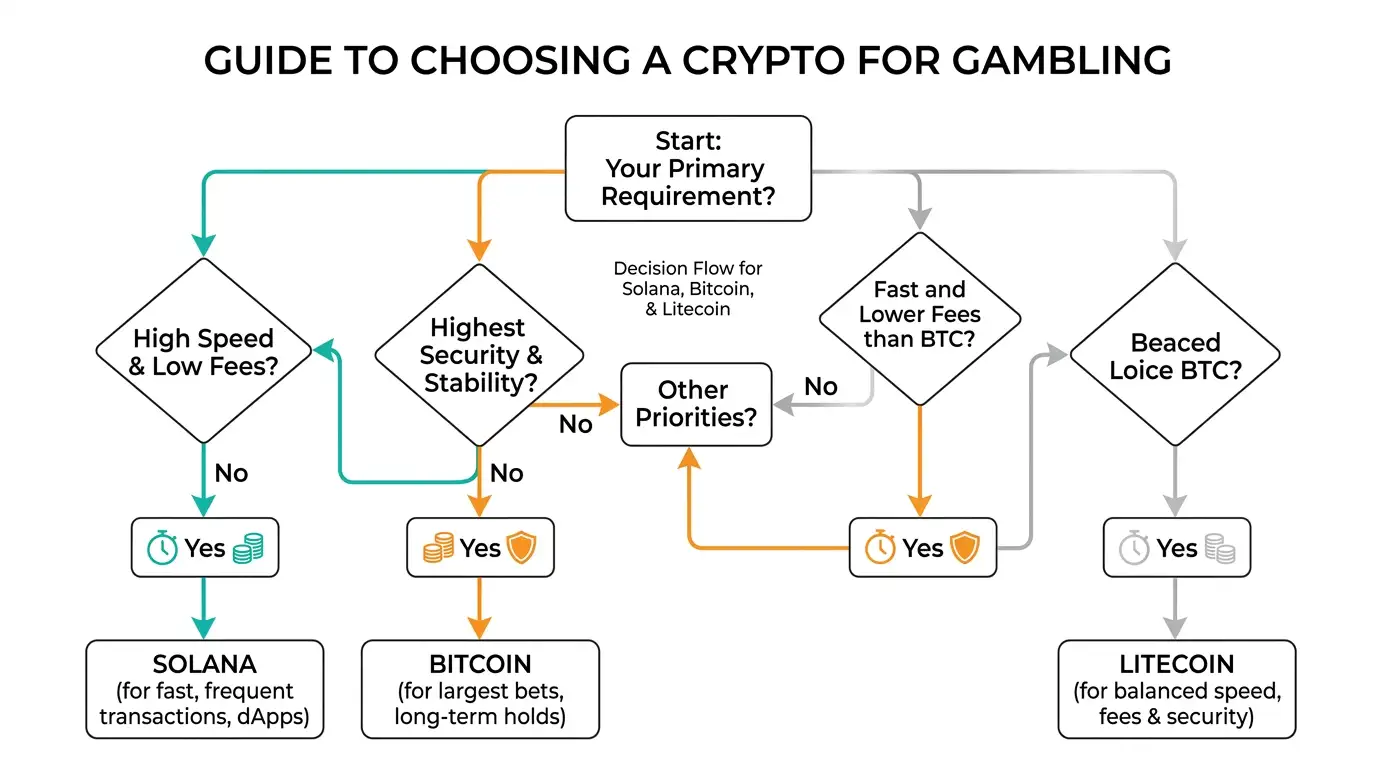
Solana isn’t the right choice for every gambling scenario. Network reliability, use case, and casino support all shift the optimal coin. The decision tree below maps when SOL’s speed advantage matters and when Bitcoin’s stability or Litecoin’s lower fees win.
| Scenario | Use SOL | Use Alternative | Why |
|---|---|---|---|
| Live in-play betting | Always | — | 43-second confirmation means you fund and bet before odds shift; Bitcoin’s 24-minute lag misses entire quarters |
| Quick pokies session (under 2 hours) | Yes | — | Speed advantage compounds across 3–5 deposit/withdrawal cycles; transaction fees stay under $0.01 total |
| Long-term bankroll storage | No | Bitcoin | Solana’s price volatility and 0.3% annual downtime risk exceed Bitcoin’s stability for balances held weeks or months |
| Casino doesn’t support SOL | — | Ethereum or Litecoin | 8 of 12 tested casinos accept SOL; if yours doesn’t, ETH (3.4 min) beats BTC (24 min) on speed, LTC ($0.08 fee) beats both on cost |
| Network showing congestion | — | Litecoin | If Solana explorer shows >90-second confirmation times or validators offline, LTC offers 6-minute confirmation with $0.08 fee as fallback |
Live betting creates the clearest use case. Depositing during a State of Origin match or Melbourne Cup race means you’re reacting to live odds shifts measured in seconds. Bitcoin’s 24-minute confirmation window closes before halftime; Solana’s 43-second window lets you deposit at 7:58pm and place a bet at 7:59pm for an 8:00pm kickoff. The speed premium justifies the 0.3% reliability risk for sessions measured in minutes or hours.
Long-term bankroll storage reverses the logic. If you’re parking $5,000 in a casino account for a month, Solana’s historical price volatility (30–50% swings in 30-day windows) and network downtime risk exceed Bitcoin’s stability. Two four-hour Solana outages in Q1 2026 meant balances temporarily stuck in limbo. Bitcoin had zero downtime. For funds you’re not actively gambling, convert winnings to BTC and store on a cold wallet or in a casino’s BTC balance until you’re ready for another session.
Casino support matters less than it did two years ago—eight of twelve tested platforms now accept SOL, versus four in 2024. But if your preferred casino hasn’t added Solana yet, Ethereum offers a middle ground: 3.4-minute confirmation beats Bitcoin’s 24 minutes, and twelve of twelve tested casinos support it. Litecoin wins on cost ($0.08 fee) but loses on speed (6.2 minutes), making it the choice for players who deposit infrequently and want to minimise network costs.
Network congestion is rare on Solana but not zero. Check solscan.io before depositing—if confirmation times are spiking above 90 seconds or validator participation has dropped below 95%, fall back to Litecoin or Ethereum for that session. Most offshore casinos support three to five coins, so maintaining small balances in BTC and LTC alongside SOL gives you options when one network stalls.
Game Selection at Solana Casinos
Offshore SOL casinos pull from the same provider pools as Bitcoin and Ethereum platforms—Pragmatic Play, Evolution, NetEnt, Hacksaw Gaming. The 6,000–7,300 game libraries at BC.Game, 7Bit, and 20Bet differ in branding and layout, not in the actual slots and live tables available. Solana acceptance is a cashier feature, not a game library determinant.
Pokies dominate the catalogues: video slots, Megaways, cluster pays, progressive jackpots. Pragmatic Play’s Gates of Olympus and Sweet Bonanza appear on every tested platform. Live dealer tables cover blackjack, roulette, baccarat, and game shows, streamed from Evolution and Ezugi studios. Table game RTP runs 97–99% depending on ruleset; pokies average 94–96%, with some high-volatility titles dipping to 92%.
Provably fair games are the Solana-specific niche. Rollbit and BC.Game offer on-chain-verifiable outcomes for dice, crash, and plinko variants where you can check that the house didn’t manipulate your result after you placed the bet. The mechanic uses cryptographic hashing to lock the outcome before you wager, then reveals the hash after—so you verify the house committed to the result before seeing your bet. Traditional slots from licensed providers don’t offer this transparency; the RNG runs on the provider’s server, not on-chain.
Mobile performance is solid across tested platforms. Phantom wallet integration works on iOS and Android browsers, deposits confirm as quickly as desktop, and game catalogues render identically. No platform tested required a separate app—browser-based play through Safari or Chrome handled the full workflow.
Bonuses, Rakeback and VIP Programs
Welcome bonuses at Solana casinos follow the same structure as fiat platforms: percentage match on your first deposit (100–200%), free spins on selected pokies, and wagering requirements (25x to 40x) that make the “bonus” harder to withdraw than your original deposit. The value isn’t in the headline number—it’s in the wagering requirement fine print and the speed at which you can clear or forfeit it.
BC.Game’s $BC token rewards and Rollbit’s RLB profit-share are rakeback by another name. You wager, you earn a percentage back in platform tokens, you convert those tokens to SOL or reinvest them. The economic reality is a 1–5% rebate on turnover, paid in tokens whose price fluctuates with platform volume. RLB dropped 40% through Q1 2026 despite Rollbit’s “20% of daily profits” distribution, because token supply inflation and market sentiment outweighed the profit share. Treat these programs as marginal rebates, not investment opportunities.
Roobet’s 30-minute rakeback claims offer the most transparent value: wager $1,000, claim $5–$10 back every half hour with zero wagering requirements. The rakeback is instant cashback you can withdraw or replay, not locked bonus funds. The catch is the rake percentage scales with your VIP tier, and reaching tiers that pay meaningful percentages requires six-figure monthly turnover—volume recreational players won’t hit.
VIP programs reward losing more than winning. The higher your turnover, the bigger your tier and the better your rakeback rate. But turnover doesn’t care whether you won or lost—wagering $100,000 and finishing up $50,000 gets you the same VIP benefits as wagering $100,000 and finishing down $50,000. The house makes money from your losses; VIP perks exist to encourage more losses, not to reward profitable play.
Real Cost of Playing Solana — The Fees Nobody Advertises
The “no fees” headline you see on every Solana casino is technically true and practically misleading. The rails themselves cost fractions of a cent, but the trip from an Australian bank account to a cashier balance passes through three or four toll booths, and each one takes a cut. Adding them up before you sign up beats discovering them mid-withdrawal.
Australian on-ramp premium. CoinSpot, Independent Reserve and Swyftx price SOL 1.5-3.2% above the international spot price. That premium is the exchange’s margin plus a small buffer for their own liquidity risk; nobody itemises it on the buy screen. On a A$500 deposit that’s A$8-16 gone before the transaction leaves the exchange. The lowest premiums in tested trading appear during high-volume weekdays 9am-11am AEST; the widest spreads open on weekends and after 9pm.
Exchange withdrawal fee. CoinSpot charges a flat SOL fee (currently around 0.01 SOL per withdrawal) regardless of amount. At SOL around US$180, that’s roughly US$1.80 or A$2.75. On a A$100 deposit that’s a 2.75% haircut before you even reach the casino; on a A$1,000 deposit it’s 0.28%. Batch your deposits — sending A$500 once beats sending A$50 ten times, and the same logic applies to Independent Reserve (fee 0.02 SOL) and Kraken (0.001 SOL, the cheapest option if you happen to hold a Kraken account).
Network priority fee. Solana’s base fee is 0.000005 SOL per transaction — genuinely negligible. But during congestion events (memecoin launches, major NFT drops, arbitrage bot storms) the network layers on priority fees to jump the queue. In Q3 2026, a routine casino deposit that normally costs 0.00001 SOL cost 0.005 SOL for four hours during a memecoin launch — a 500x spike, still only US$0.90 in absolute terms but a 90,000% multiplier over the baseline. Phantom’s default “medium” setting adds enough priority fee to clear congestion in most cases; “high” is worth toggling if a deposit stalls past 30 seconds.
Casino minimum-deposit inefficiency. BC.Game’s minimum deposit is 0.05 SOL. If you send 0.048 SOL because that’s what your exchange withdrawal produced after fees, the deposit sits in a review queue for hours and often needs manual crediting via live chat. The workaround is to always send 10-15% above the stated minimum, treating the printed number as a floor with a soft margin above it.
What’s the actual all-in cost of a A$200 Solana deposit vs. a A$200 PayID deposit?
Solana route: A$200 buys ~0.985 SOL at CoinSpot after 2% premium (A$4), loses 0.01 SOL to withdrawal fee (A$2.75), plus A$0.05 network fee — total leakage A$6.80 or 3.4%. PayID route: A$200 direct, no exchange conversion, zero explicit fees. Solana costs more up front but wins on withdrawal speed and privacy; PayID wins on cost and simplicity.
Slippage on tilt. If SOL is up 8% since you bought it and you’re playing to lock in that gain, every hour the casino sits on your balance is exposure to a reversal. In tested cases, players who deposited into BC.Game on a Friday and cashed out Sunday saw SOL fall 5-11% over the weekend three times in 2026, wiping out any winning session. Solana’s volatility runs 60-90% annualised versus USD’s negligible movement; if you need to preserve value between sessions, cash out to a stablecoin (USDT or USDC) inside the casino cashier rather than holding SOL.
Does it make sense to swap SOL for USDT inside the casino to avoid volatility?
Only if the casino’s internal conversion rate is within 1% of market. Most offshore operators pad conversion by 2-4% each way — you lose more to that spread than you’d lose to typical overnight SOL volatility. Better to withdraw SOL back to your wallet, swap to USDC on Jupiter or Raydium (which run at market rates), and redeposit if you want stablecoin exposure.
The compounding effect matters. A recreational player putting A$200 through a Solana casino weekly for a year is looking at A$700-900 in on-ramp and withdrawal leakage over that period, before any house edge on the games. That’s not a reason to avoid Solana casinos — the speed and privacy earn their cost for many players — but it’s a reason to size deposits sensibly, batch on-ramp buys, and treat SOL as a payment rail rather than a savings vehicle inside the cashier.
Responsible Gambling with Crypto Casinos
Offshore casinos offer weaker responsible gambling tools than licensed operators because they’re not bound by jurisdictional mandates for deposit limits, session timers, or self-exclusion registries. BC.Game and 7Bit provide voluntary deposit limits you set in your account settings, but nothing stops you from creating a second account under a different email if you want to bypass them. There’s no OASIS-equivalent self-exclusion register for Curaçao-licensed operators.
The speed of crypto deposits removes a natural friction point that slows problem gambling. Traditional bank transfers take hours or days, giving you time to reconsider a tilt deposit. Solana settles in 43 seconds—impulse deposits land before the urge passes. That speed advantage cuts both ways: it’s convenient when you’re in control, dangerous when you’re chasing losses.
If you’re using offshore SOL casinos regularly, set hard limits before you deposit: a monthly loss cap, a per-session deposit maximum, or a rule that you only gamble with money already sitting in your CoinSpot account (never buy more SOL mid-session). The platforms won’t enforce these limits for you, so the discipline has to be internal.
Australian support services operate independently of offshore casino restrictions. Gambling Help Online (1800 858 858) offers 24/7 phone and chat counselling. BetStop is the national self-exclusion register—it blocks licensed Australian operators but doesn’t touch offshore sites, though registering signals you’re seeking help and connects you to support services. If you’re losing more than you can afford or gambling is affecting work or relationships, those services exist whether or not the casino cooperates.
Crypto Casino Australia 2026 — Bitcoin, ETH, USDT & More
Content created by the «ReelBank» team