
Fast Payout Online Casinos Australia 2026: 12 Verified Withdrawal Times
 Available in AU
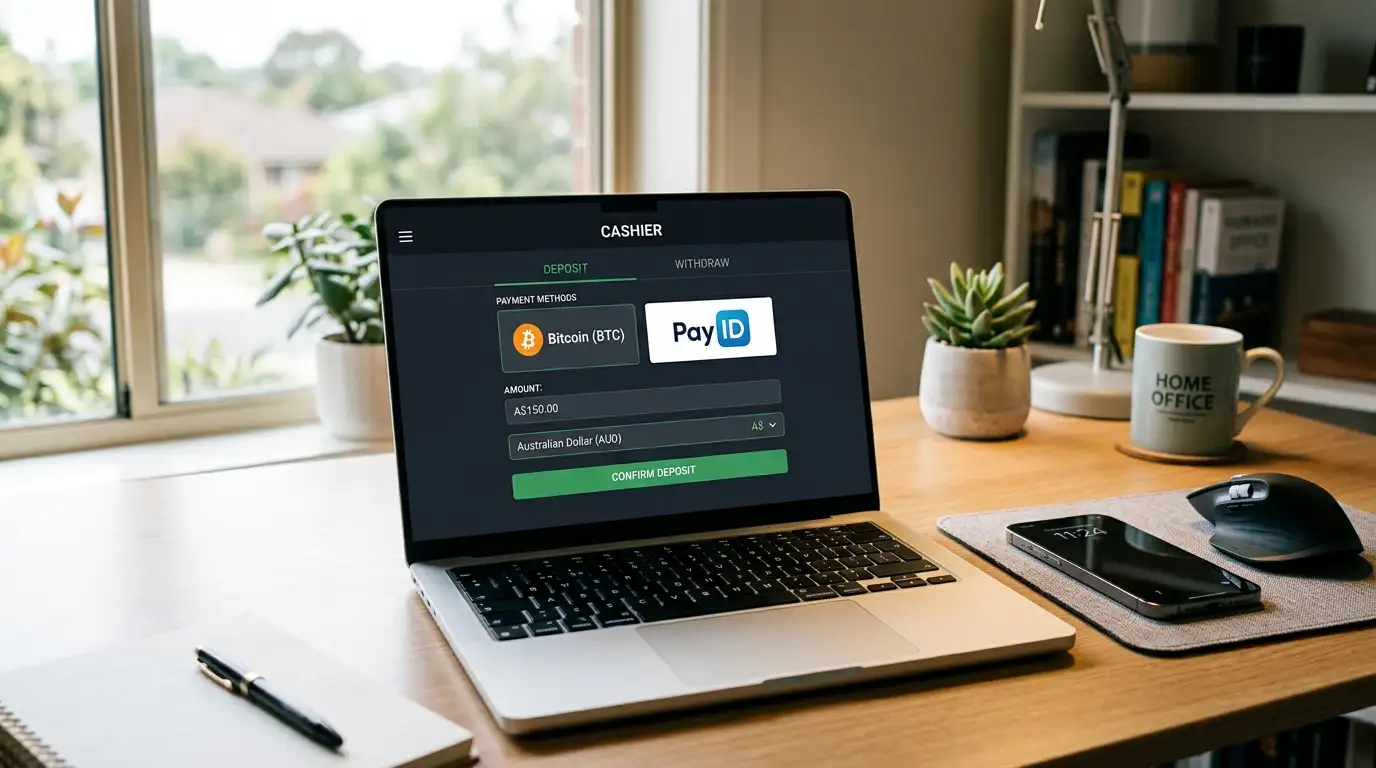
Waiting three days for a withdrawal in 2026 is quaint. The offshore casinos accepting Australian players have moved past that — the fastest now clear Bitcoin payouts in under an hour, and PayID settlements land in your bank account within minutes once the operator releases funds. The catch is that none of these sites hold Australian licences, because no such licences exist. Online casino games remain federally prohibited under the Interactive Gambling Act 2001, so every operator in this space is offshore. That changes what protection you have if things go sideways.
The ranking below covers twelve offshore casinos by verified withdrawal speed — recorded times with dollar amounts, not marketing claims. BitStarz processed a $2,000 Bitcoin cashout in 42 minutes. Mr Jones cleared US$130 in 1-2 minutes. Skycrown delivered a PayID withdrawal in under 10 minutes. Those are facts from independent testing, and they set the benchmark. The comparison below covers withdrawal times, payment methods, limits, fees, and the legal reality of playing at offshore sites from Australia.
Fast Payout Casinos Australia 2026 — Top 12 Offshore Operators with Verified Withdrawal Times
The table below compares the twelve offshore operators with the fastest recorded withdrawal times for Australian players. Every entry is backed by independent testing — specific dollar amounts, timestamps, and payment methods verified by CasinoWhizz, VerifiedPokies, or equivalent review sources. The ranking prioritises verified withdrawal speed, but also weighs limits, minimums, and banking method availability.
| Operator | License | Verified Withdrawal Time | Minimum Cashout | Weekly Limit | Distinguishing Feature |
|---|---|---|---|---|---|
| Mr Jones | Offshore | US$130 BTC in 1-2 minutes (14 Sept 2026) | Varies by method | Varies by account | 9,000+ games, live dealer focus |
| BitStarz | Curaçao | $2,000 BTC in 42 minutes; earlier: 6m 25s | Check cashier | By coin and account | Award-winning crypto payouts, 7,000+ games |
| Skycrown | Curaçao | PayID under 10 minutes | Varies by method | By VIP level | 7,000+ games, 13 payment options |
| Ripper Casino | Offshore | $268 BTC in 1h 21m | $100 (BTC) | $2,000 (BTC) | Neosurf deposits, pokies focus |
| Joe Fortune | Curaçao (OGL/2024/676/0726) | A$263 BTC in 1h 37m (1 March 2025) | A$100 (BTC) | A$10,000 per request | AUD accounts, native Australian dollar integration |
| Velobet | Offshore | BTC under 2 hours | Check cashier | $7,500 per week | Casino + sportsbook unified balance |
| Neospin | Curaçao | Not disclosed; crypto priority | Check cashier | $7,500 per transaction | 7 cryptocurrencies via CoinsPaid |
| BetWhale | Offshore | Litecoin in 3h 12m (after KYC) | $150 | $2,500 per transaction | MatchPay funding, Litecoin option |
| Cafe Casino | Offshore | $320 BTC in 3h 21m | $10 (BTC) | $10,000 increments | Hot Drop Jackpots, $10 BTC minimum |
| Ignition Casino | Offshore | $185 BTC in 18 hours (after poker) | $100 | $9,500 per request | Poker + casino, Zone Poker, anonymous tables |
| Zotabet | Offshore | Not disclosed | Check cashier | Check cashier | 20% daily cashback, 4,000+ games |
| Fair Go Casino | Offshore | BTC 22h 15m; USDT 2h 58m | Check cashier | Check cashier | RTG pokies, Neosurf deposits |
Mr Jones — US$130 in 1-2 Minutes
Mr Jones delivered the fastest verified withdrawal in the research: US$130 in Bitcoin, settled in about one to two minutes on 14 September 2026. An earlier test returned £420 in two hours after a £150 Bitcoin deposit from a GBP account. The site runs a multi-currency model — AUD, GBP, USD accounts supported where registration is available — and hosts over 9,000 games, with a heavy tilt toward live dealer tables from multiple studios. The offshore licence jurisdiction is not disclosed in public-facing materials.
The welcome package advertised for Australians runs up to A$5,200 across multiple deposits, activated with code JONES300. Wagering is 30× deposit plus bonus, with a maximum bonus bet of A$10 and a promotional cashout cap at 20× the deposit. That cap matters if you run the bonus balance high — check the full terms before opting in. The live dealer catalogue is the draw here, and the sub-two-minute Bitcoin cashout on a three-figure amount sets the speed benchmark for the comparison.
BitStarz — $2,000 BTC in 42 Minutes
BitStarz has processed real-money bets since 2014, making it one of the longer-running crypto-first operators still accepting Australian players. The brand operates under a Curaçao eGaming licence and runs a dual-currency cashier: fiat for card and bank methods, crypto for near-instant settlement. CasinoWhizz deposited $200 and withdrew $2,000 in Bitcoin; the funds reached the wallet in 42 minutes with no casino withdrawal fee recorded. A separate earlier test cleared in 6 minutes 25 seconds.
The game library spans 7,000+ titles from Pragmatic Play, Big Time Gaming, Betsoft, Booming Games, Habanero, and other multi-provider studios. AUD accounts are available where registration works, and the welcome package reaches A$10,000 plus 180 free spins across deposit stages, with approximately 40× wagering on the bonus portion. Free spin winnings carry their own 40× requirement. BitStarz has collected industry awards specifically for payout speed, and the recorded times back that reputation. The provably fair section sits alongside the standard slots and live casino, adding a blockchain-native angle most competitors skip.
Skycrown — PayID Under 10 Minutes
Skycrown stands out for PayID withdrawal availability, not just deposits. VerifiedPokies recorded a PayID cashout landing in under 10 minutes from approval to bank account — one of the few offshore operators where PayID works in both directions. Most sites accept PayID deposits but return winnings via bank transfer or crypto only. The Curaçao-licensed operator hosts a 7,000+ game catalogue and supports 13 payment options, with instant processing advertised across the board.
The welcome package runs up to A$4,000 plus 400 free spins, spread across the first few deposits with roughly 35× wagering. That is a fair clearance number compared to the 50× terms some offshore sites bury in the fine print. Crypto users see higher withdrawal limits and faster processing than fiat, but the PayID integration makes this one of the stronger AUD-focused options for players who prefer traditional banking over blockchain wallets. A tiered VIP program lifts daily and monthly caps as play volume increases.
Ripper Casino — $268 BTC in 1h 21m
Ripper Casino processed $268 in Bitcoin in 1 hour 21 minutes after a $150 Bitcoin deposit, with no extra document requests during that withdrawal. The operator runs over 4,000 games with a pokies and live casino focus, and integrates Neosurf deposits for players who prefer prepaid vouchers over card or bank links. The Bitcoin withdrawal minimum sits at $100, and the standard weekly allowance is $2,000 — lower than the $7,500 to $10,000 caps at some competitors.
The published processing period extends to two business days in the terms, so the sub-90-minute result in testing is faster than the worst-case scenario. Welcome offers split between TOOEASY (20 free spins on registration) and RIPPER150 (a separate 150% deposit match). The Neosurf integration is the practical angle here — it is one of the few prepaid options that still works at offshore casinos serving Australians, and pairing it with a sub-two-hour Bitcoin cashout covers both the deposit and withdrawal convenience gaps.
Joe Fortune — A$263 in 1h 37m with AUD Accounts
Joe Fortune runs native AUD accounts, so Australian players hold balances in their own currency without conversion drag. The operator is run by Ridley Media N.V. under Curaçao Gaming Authority licence OGL/2024/676/0726. A tester deposited A$200 in Bitcoin, requested A$263 on 1 March 2025, and received it 1 hour 37 minutes later with no casino fee or extra document hurdle recorded during that payment.
The Bitcoin cashier handles withdrawals from A$100 to A$10,000 per request, keeping everything in Australian dollars throughout. The welcome package reaches A$5,000 plus up to 450 free spins across five deposits, with a 150% crypto match versus 100% for card deposits. Both routes carry 50× deposit plus bonus wagering, so the larger crypto match also creates more turnover on an equal deposit. The AUD integration is the draw — no mid-flight currency conversion, no mental arithmetic on exchange rates, and withdrawal limits quoted in the currency you bank in.
Velobet — BTC Under 2 Hours, Casino + Sports
Velobet combines casino and sportsbook under a single account balance, so pokies, NRL, and AFL share one wallet. CasinoWhizz recorded a Bitcoin withdrawal cleared in under two hours. The welcome package is advertised at 330% plus 300 free spins, and the published weekly withdrawal limit sits at $7,500. That weekly cap matters if you run a larger balance — it determines how many requests a substantial cashout requires.
The unified balance suits players who move between casino and sports rather than treating them as separate bankrolls. The Bitcoin result is solid but not the fastest in the comparison, and the weekly limit sits mid-range. Check the cashier for minimum withdrawal amounts by method before depositing — the advertised figures often refer to the deposit minimum, and the cashout floor can sit higher.
Neospin — $7,500 Crypto Per Transaction
Neospin launched in 2022 and initially held a Costa Rica gaming licence; later sources cite Curaçao eGaming. The operator processes seven cryptocurrencies via CoinsPaid and allows crypto withdrawals up to $7,500 per transaction — a higher single-transaction ceiling than the $2,000 to $2,500 caps at several competitors. The welcome offer runs up to A$10,000 plus 100 free spins, with weekly tournaments, reload bonuses, and cashback promotions layered on top.
The library covers live casino, jackpot pokies, and crypto-only games, with the emphasis on players who bank in coin rather than fiat. No verified withdrawal time was recorded in the research for this operator, but the $7,500 transaction cap and CoinsPaid integration position it for larger cashouts in fewer requests. The newer launch date (2022) means a shorter public track record than BitStarz (2014) or Joe Fortune, so the brand lacks the ten-year operational history some players weigh as a trust signal.
BetWhale — Litecoin in 3h 12m
BetWhale cleared a Litecoin withdrawal in 3 hours 12 minutes after the account completed identity verification. The test account was funded via MatchPay, so this is not a traditional bank-transfer result. The operator runs a combined casino and sportsbook, with a $150 withdrawal minimum and a $2,500 standard transaction cap. The welcome offer is 250% up to $2,500, activated with code WHALE250.
Litecoin is the angle here — faster blockchain confirmation than Bitcoin and lower network fees in practice, making it the middle ground between Bitcoin’s name recognition and smaller altcoins’ liquidity risk. The 3h 12m result places BetWhale in the mid-tier of the comparison, behind the sub-two-hour operators but ahead of the 18-hour to 24-hour results further down the list. MatchPay support is relatively rare at offshore casinos, so if that funding method suits your workflow, BetWhale is one of the few entries where it is documented.
Cafe Casino — $320 BTC in 3h 21m, $10 Minimum
Cafe Casino specialises in RTG and Rival pokies, with a Hot Drop Jackpots feature that ties progressive pools to timed or amount-triggered drops. CasinoWhizz withdrew $320 in Bitcoin in 3 hours 21 minutes. The Bitcoin withdrawal minimum is $10 — the lowest in the comparison, where most operators set the floor at $100 to $150. That $10 threshold suits players testing cashout speed on a small balance before committing larger deposits.
The welcome package offers 300% up to $2,000 plus 150 free spins, with 40× deposit plus bonus wagering and a seven-day deadline to clear it. The short expiry means the bonus is not a slow-burn reload for casual players; it is designed for concentrated sessions. The standard payout increment is listed at $10,000, which reads like a maximum per request rather than a weekly or monthly cap, but check the live terms in the cashier for your account tier. The Hot Drop mechanic adds a timed-jackpot angle that is absent from most offshore pokies libraries.
Ignition Casino — $185 in 18 Hours, Poker + Casino
Ignition Casino blends poker and casino under one roof, with anonymous poker tables that ban HUDs and tracking software to level the field for recreational players. The operator cleared a $185 Bitcoin withdrawal in 18 hours after a poker session. The welcome package splits into separate poker and casino portions, with 25× wagering on the casino side. The Bitcoin withdrawal range runs from $100 minimum to $9,500 per request.
Zone Poker is the signature product — a fast-fold format that moves you to a new hand immediately after folding, compressing session time. The anonymous table structure prevents regulars from profiling opponents across sessions, a design choice aimed at protecting casual players from grinders running solver-backed strategies. The 18-hour Bitcoin result is slower than the sub-two-hour leaders, but the poker integration is the draw here, not raw cashout speed. If you split time between poker and casino, Ignition consolidates both under a single cashier.
Zotabet — 20% Daily Cashback
Zotabet runs a 4,000+ game library and advertises daily cashback up to 20% — a higher rate than the weekly or monthly cashback structures most competitors run. The welcome package offers 100% up to A$10,000 plus 100 free spins, and the deposit methods include VISA, Neosurf, and CoinsPaid for crypto. No verified withdrawal time was recorded in the research, so this entry relies on advertised processing rather than independent testing.
The 20% daily cashback is the standout feature if it applies to net losses without heavy restrictions. Cashback terms vary wildly across offshore operators — some pay it as bonus credit with wagering, others as withdrawable cash with no strings. Check the live terms for how Zotabet structures it before banking on the 20% figure as a risk cushion. The VISA support is relatively uncommon at offshore casinos serving Australians, where debit cards often work but credit cards are blocked under Australian law.
Fair Go Casino — BTC 22h 15m / USDT 2h 58m
Fair Go Casino processed a Bitcoin withdrawal in 22 hours 15 minutes in one test, and a separate earlier payment of 248 USDT cleared in 2 hours 58 minutes. The variability between those two results — 22 hours versus under 3 — highlights that withdrawal speed at a single operator can shift depending on verification status, time of submission, and whether the account has cleared previous cashouts. The operator focuses on RTG pokies and integrates Neosurf deposits.
The welcome offer is 100% up to A$200, claimable up to five times with code WELCOME and 30× deposit plus bonus wagering. The published processing period runs up to two business days, so the 22-hour result sits within that window while the sub-3-hour USDT payment beat it. Fair Go has a long track record in the Australian offshore market, and the Neosurf integration pairs deposit convenience with crypto withdrawal speed for players who prefer not to link a bank account or card.
Which Offshore Casinos Accept Australian Players and Have the Fastest Verified Withdrawal Times in 2026?
Mr Jones tops the verified speed ranking with a US$130 Bitcoin payout in 1-2 minutes. BitStarz follows with $2,000 in 42 minutes (and an earlier 6m 25s result). Skycrown leads the PayID category with a withdrawal under 10 minutes. Ripper Casino and Joe Fortune both cleared Bitcoin payouts in under 90 minutes. Those five set the benchmark. The next tier — Velobet, BetWhale, Cafe Casino — cleared crypto withdrawals in two to four hours. Ignition and Fair Go stretched to 18-22 hours in testing, slower but still faster than traditional bank transfer timelines.
Every operator in the comparison is offshore-licensed (Curaçao, Costa Rica, or undisclosed jurisdictions). None hold Australian licences because online casino licences do not exist in Australia under the Interactive Gambling Act 2001. That federal prohibition has not changed in 2026, so these operators target Australians from outside the country. The practical implication is that withdrawal speed depends on both the operator’s internal processing and the payment method’s settlement infrastructure. A fast operator with a slow payment method will not beat a mid-tier operator using instant settlement rails.

Payment Methods Compared — Crypto vs PayID vs eWallets vs Bank Transfer
Withdrawal speed depends more on the payment method than the casino. An operator processing a cashout in two hours will still take three to five business days to deliver if you chose bank transfer, while the same operator sending via PayID lands funds in your account within seconds of release. Understanding the payment network’s role separates realistic expectations from marketing claims.
Every withdrawal has two distinct timelines: casino processing time (the operator’s internal review, compliance check, and fund release) and payment network settlement time (what happens after the casino approves the withdrawal). Casino processing varies by operator, account verification status, and whether a bonus is attached — it ranges from instant at the fastest operators to several days at slower ones. Payment network settlement is determined entirely by the method and is outside the casino’s control once the withdrawal is approved. The total time is the sum of both.
Cryptocurrency Withdrawals — Bitcoin, Litecoin, USDT
Cryptocurrency removes conventional banking intermediaries from the settlement process. Once a casino signs and broadcasts a crypto withdrawal, the blockchain handles confirmation — no batch cycles, no business hours, no intermediary banks. Bitcoin transactions confirm within 10 to 60 minutes depending on network congestion and the fee the operator pays to miners. Litecoin often completes faster with lower transaction costs. Stablecoins like USDT settle on similar timelines while removing exchange-rate risk.
The verified results here show Bitcoin cashouts ranging from 6 minutes 25 seconds (BitStarz, earlier test) to 22 hours 15 minutes (Fair Go). That spread is mostly casino processing time, not blockchain delay — once the transaction hits the mempool, confirmation rarely exceeds an hour unless the fee is set too low. The trade-offs are real: crypto requires a separate wallet, carries exchange-rate volatility unless you use a stablecoin, and converting back to AUD adds a step if you withdraw to an Australian exchange and then transfer to your bank.
Network fees apply and vary by currency and congestion. Bitcoin fees can run $5 to $30 depending on mempool demand. Litecoin and some altcoins sit lower. Those fees are usually deducted from the withdrawal amount or charged separately at send time. A “$0 casino fee” does not mean “no fee at all” — the blockchain still charges for transaction space.
PayID and the NPP Real-Time Rail
PayID runs on Australia’s New Payments Platform (NPP), a national real-time payment infrastructure that settles transfers individually rather than in batch cycles, operating 24 hours a day, 365 days a year including weekends. Once a casino releases a PayID withdrawal, funds typically arrive within 60 seconds. Skycrown delivered a PayID cashout in under 10 minutes in testing — that includes the casino’s internal processing, not just the network settlement.
The critical caveat: PayID withdrawals are less widely available than PayID deposits. Many offshore casinos accept PayID for instant deposits but return winnings via standard bank transfer or crypto only. Always confirm PayID withdrawal availability in the cashier before depositing, not after winning. The NPP settles in real time, so there is no “business day” delay, no batch clearing window, and no weekend hold. PayID carries no transaction fees on the network side, though some casinos cap the number of free withdrawals per month.
What’s the Fastest Withdrawal Method at Australian Online Casinos?
PayID is the fastest method for receiving AUD directly into your Australian bank account — under five minutes once the casino releases funds, often under 60 seconds in practice. Cryptocurrency is the fastest method overall if you hold a wallet and are comfortable with blockchain — Bitcoin clears in 10-60 minutes on-chain, with Litecoin and USDT often faster. Bank transfer via the BECS system is the slowest, taking three to seven business days at most offshore operators, sometimes stretching to 14 days.
eWallets like Skrill and Neteller sit in the middle — fast settlement from casino to eWallet (often same-day), but then require a separate withdrawal from the eWallet to your bank, adding one to three business days unless you spend directly from the eWallet balance. The fastest route depends on your setup: if you want AUD in your bank with no crypto step, PayID wins. If you want absolute speed and already use crypto, Bitcoin or a stablecoin wins. If neither is available, bank transfer is the universal fallback but by far the slowest.
What’s the Difference Between Crypto and PayID Withdrawal Speed?
Crypto and PayID both deliver fast settlement, but they work on different infrastructure and serve different needs. Crypto (Bitcoin, Litecoin, USDT) removes banks entirely — once the casino broadcasts the transaction, blockchain miners confirm it in 10-60 minutes regardless of time, day, or intermediary. PayID uses Australia’s NPP real-time banking rail, settling transfers individually in under 60 seconds once the casino approves, also 24/7.
The practical difference: crypto lands in your wallet as cryptocurrency, requiring conversion to AUD if you want it in your bank account (adding an exchange step and possible fees). PayID lands directly in your Australian bank account as AUD with no conversion. Crypto works globally and bypasses the banking system; PayID only works for Australian bank accounts but delivers AUD instantly. Network fees apply to crypto (blockchain transaction costs); PayID carries no network fee. If you hold a crypto wallet and are comfortable with exchange-rate risk or plan to keep funds in coin, crypto is slightly faster end-to-end. If you want AUD in your bank with no extra steps, PayID is faster in practice once you account for the conversion step.
eWallets — Skrill, Neteller
eWallets act as intermediate holding accounts. Casino-to-eWallet settlement is often fast (same-day or next-day at many offshore operators), but then you face a second step: withdrawing from the eWallet to your Australian bank account, which adds one to three business days depending on the eWallet provider and your bank. The two-phase structure means eWallets are faster than traditional bank transfer but slower than PayID or crypto for getting AUD into your hands.
Skrill and Neteller are the most common eWallet options at offshore casinos serving Australians. Both charge fees for bank withdrawals — check the live rate before committing, as it can run 1-3% of the withdrawal amount plus a flat fee. eWallets make sense if you already use them for other online transactions and want to keep gambling funds separate from your main bank account, but for pure speed they do not beat PayID or crypto.
Bank Transfer and BECS Batch Processing
Traditional bank transfers in Australia run on the Bulk Electronic Clearing System (BECS), a batch-processing infrastructure that settles transactions in cycles rather than real-time. Transfers enter a queue and wait for the next batch clearing window. If you submit a withdrawal on a weekday morning, you might see settlement the next business day. Submit on Friday evening, and you are looking at Tuesday or Wednesday.
For offshore casino withdrawals, bank transfer timelines usually total three to seven business days, with some operators stretching to 14 days. Bank wire transfers sometimes carry A$10-30 fees, either deducted from the withdrawal amount or charged separately, and some operators limit the number of free bank withdrawals per month. Bank transfer is the slowest option in the comparison, but it is universally available — almost every offshore casino that accepts Australian players supports it as a fallback when faster methods are not available or not preferred.
| Method | Settlement Time | 24/7 Processing | Fees | Best For |
|---|---|---|---|---|
| Cryptocurrency (BTC/LTC/USDT) | 10-60 minutes on-chain | Yes | Network fees ($5-30+ BTC) | Maximum speed, comfortable with crypto |
| PayID (NPP) | Under 5 minutes, often under 60 seconds | Yes | None | Instant AUD to Australian bank account |
| eWallets (Skrill/Neteller) | Same-day to eWallet, then 1-3 days to bank | Yes (casino to eWallet) | 1-3% + flat fee to bank | Intermediate holding account preference |
| Bank Transfer (BECS) | 3-7 business days (up to 14 at some operators) | No (batch cycles, business days only) | A$10-30 sometimes | Fallback when faster methods unavailable |
Do PayID Withdrawals Work Instantly at Casinos?
PayID deposits work instantly at nearly every offshore casino serving Australians — the NPP settles in real-time, so funds land in the casino account within seconds. PayID withdrawals are less universally available. Some operators, like Skycrown, process PayID cashouts in under 10 minutes (casino processing plus NPP settlement). Others accept PayID deposits but return winnings via bank transfer or crypto only, which means the deposit was instant but the withdrawal takes days.
Always check the cashier’s withdrawal methods section before depositing, not after you win. The deposit logo alone does not tell you which method the casino uses for cashouts. If PayID withdrawal is listed and your account is verified, expect settlement within minutes once the casino approves the request. If PayID withdrawal is not listed, you will wait for bank transfer or need to cashout via crypto regardless of how you deposited.
Withdrawal Limits, Minimums and Fees — What You Actually Pay
Advertised “no fee” claims at offshore casinos often mean “no casino fee” — accurate in isolation, but misleading if you think no fee at all applies. Three separate costs can hit a withdrawal: the casino’s internal fee (often $0 at the operators here), the payment network’s fee (blockchain transaction costs for crypto, usually $0 for PayID, sometimes A$10-30 for bank wire), and conversion spreads (if you withdraw crypto and convert to AUD at an exchange, the buy-sell spread is a hidden cost).
BitStarz recorded $0 casino fee on the $2,000 Bitcoin payout. Joe Fortune recorded $0 casino fee on the A$263 Bitcoin withdrawal. That does not make the blockchain free — Bitcoin network fees ranged from $5 to $30+ depending on mempool congestion during those periods. PayID carries no network fee and no conversion spread if you are receiving AUD directly into an Australian bank account. Bank wire transfers sometimes carry A$10-30 intermediary charges, either deducted from the withdrawal amount or billed separately by your bank.
Withdrawal minimums vary by operator and method. Cafe Casino sets the Bitcoin minimum at $10, the lowest in the comparison. Most others sit at $100-$150 for crypto. Joe Fortune’s A$100 Bitcoin minimum applies in Australian dollars. PayID minimums, where available, often match the deposit minimum, typically $10-$30. Bank transfer minimums can sit higher, sometimes $100-$200, because the fixed intermediary fee makes small transfers uneconomical.
Weekly and per-transaction limits cap how much you can withdraw in a single request or over a rolling seven-day window. Ripper Casino’s $2,000 weekly Bitcoin limit means a $5,000 balance requires three requests spread across 15 days. Neospin’s $7,500 per-transaction crypto cap allows larger single cashouts. Joe Fortune’s A$10,000 per-request limit is transaction-based, not weekly, so check the monthly cap if you are moving a substantial balance. VIP tiers at operators like Skycrown lift limits as play volume increases.
Are There Withdrawal Fees at Fast Payout Casinos?
Most offshore casinos in the comparison charge $0 internal withdrawal fee — BitStarz, Joe Fortune, Mr Jones, and several others recorded no casino fee in testing. That does not mean “no fee at all.” Crypto withdrawals carry blockchain network fees (transaction costs paid to miners), which range from $5 to $30+ for Bitcoin depending on congestion, lower for Litecoin and some altcoins. PayID withdrawals carry no network fee. Bank wire transfers sometimes incur A$10-30 intermediary charges from banks in the transaction chain, either deducted from your withdrawal or billed separately.
Currency conversion adds a hidden cost if you withdraw crypto and sell it for AUD at an exchange. The buy-sell spread is typically 0.5-2% depending on the exchange and the coin. A $1,000 Bitcoin withdrawal converted to AUD at a 1% spread costs you $10 in lost value compared to the mid-market rate. Stablecoins like USDT reduce exchange-rate risk but still carry blockchain fees and conversion spreads when moving to AUD.
Check three things before withdrawing: the casino’s stated fee (often $0), the payment method’s network or intermediary fee (varies by method), and any conversion spread if you are moving between currencies. Add them up for the true cost.
How Fast Payout Casinos Actually Work — Casino Processing vs Payment Network Settlement
Most players attribute a slow withdrawal entirely to the casino, but two separate timelines run simultaneously: casino processing time (the operator’s internal review, compliance check, and fund release) and payment network settlement time (what happens after the casino releases funds). Casino processing varies by operator and account status — instant at the fastest sites for verified accounts with no active bonus, up to 48-72 hours at slower operators or for first withdrawals. Payment network settlement is determined by the method: seconds for PayID, minutes for crypto, days for bank transfer.
The total withdrawal time is the sum of both. A casino that processes in two hours but uses bank transfer will still take three to five business days for funds to land. The same casino using PayID lands funds in your account within two hours. The payment method sets the floor for how fast you can receive money once the operator does its part.
The Two-Phase Withdrawal Timeline
Phase one is casino processing. The operator checks that your account is verified (KYC documents approved), that any bonus wagering is cleared, that the withdrawal amount does not exceed your available balance or daily limits, and that the request passes anti-fraud and anti-money-laundering checks. This phase takes anywhere from zero seconds (instant-release operators for repeat verified withdrawals) to 48-72 hours (slower operators, or first withdrawals pending manual review). Some operators batch-process withdrawals at set times of day; others review on a rolling basis.
Phase two is payment network settlement. Once the casino approves and releases funds, the payment method takes over. PayID settles via Australia’s NPP real-time rail in under 60 seconds. Crypto broadcasts to the blockchain and confirms in 10-60 minutes. Bank transfer enters the BECS batch queue and clears in one to three business days (or longer at some offshore operators). eWallets receive funds same-day to next-day, then require a second withdrawal step from eWallet to your bank, adding one to three more days.
Marketing claims about “instant payouts” usually refer to phase one (instant casino processing) but ignore phase two. If the operator releases funds instantly but you chose bank transfer, the withdrawal is not instant in practice — it still takes days. Both phases matter.
Why KYC Verification Matters
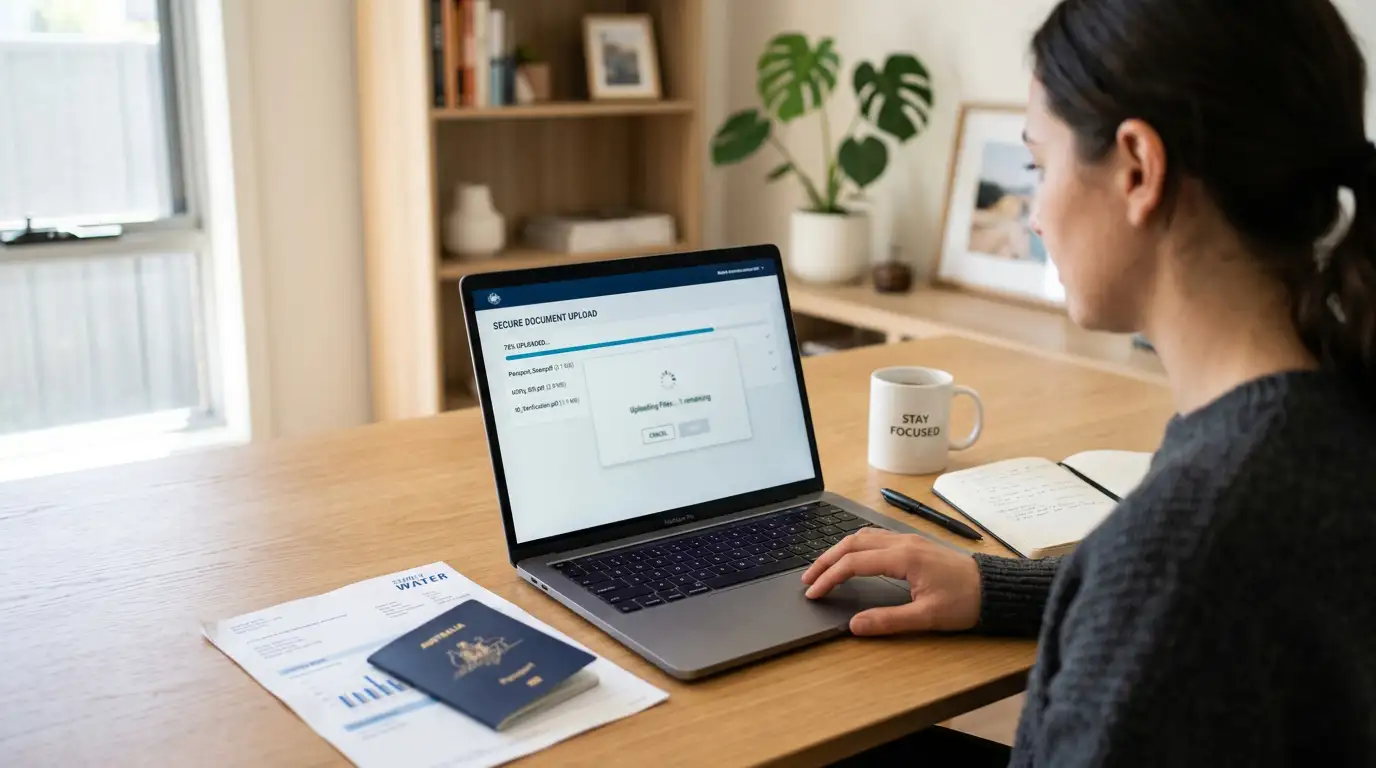
KYC (Know Your Customer) verification is the single biggest controllable factor in withdrawal speed. Offshore casinos are required by their licensing authorities to verify identity before processing withdrawals, typically via government-issued ID (passport, driver’s licence), proof of address (utility bill, bank statement dated within 90 days), and sometimes proof of payment method (card photo, bank account screenshot). Uploading those documents at signup, before your first withdrawal request, avoids the delay.
If you request a withdrawal before KYC is complete, the operator freezes the request and asks for documents. That adds 24-72 hours (or longer) to the timeline while the compliance team reviews what you uploaded. First withdrawals at most offshore operators trigger KYC even if you skipped it earlier. Some operators allow small withdrawals without verification but require it above a threshold (often $100-$500).
Complete KYC immediately after registration. Do not wait until you have winnings pending — the delay will frustrate you and slow down access to your money.
Why Does My Casino Withdrawal Take So Long Even Though They Claim Instant Payouts?
“Instant payout” claims refer to casino processing time (how fast the operator approves and releases your withdrawal), not total time to your bank account. If the operator instantly releases funds but you chose bank transfer, the BECS batch system still takes three to seven business days — the casino’s “instant” processing is true, but the bank network is not instant. Check which phase is delayed: if your withdrawal shows “approved” or “processing” in your casino account, the delay is casino-side; if it shows “complete” or “sent,” the delay is network-side and outside the operator’s control.
Three common delays slow withdrawals: incomplete KYC verification (submit documents before requesting a cashout), active bonus wagering requirements (you cannot withdraw bonus funds until turnover is complete), and payment method mismatch (some operators require you to withdraw via the same method you deposited, or restrict certain methods to certain withdrawal sizes). Check the cashier for your account’s verification status, bonus balance, and available withdrawal methods before assuming the operator is stalling.
How to Speed Up Your First Cashout
Upload KYC documents immediately after registration, before depositing. Most offshore casinos accept ID, proof of address, and payment method verification via upload portal or email to support. Verification takes 24-72 hours on first submission; completing it in advance removes that delay from your first withdrawal request.
Choose the fastest payment method your account supports. PayID (if available for withdrawals) settles in minutes. Crypto settles in under an hour. Bank transfer takes days. Check the cashier’s withdrawal section for what your account tier allows — some operators restrict PayID or crypto to verified accounts or higher VIP levels.
Avoid claiming bonuses if fast cashout matters more than bonus value. Wagering requirements lock your balance until turnover is complete, which can take days or weeks depending on the requirement and your play rate. Depositing without a bonus keeps your balance withdrawable immediately (minus casino processing time).
Do not withdraw via a different method than you deposited unless the operator explicitly allows it. Some offshore casinos require the first withdrawal to return via the deposit method for anti-money-laundering compliance. If you deposited via card, the first cashout might need to go back to that card (up to the deposited amount), with only the profit portion available via another method.
Do I Need to Verify My Identity Before I Can Withdraw Winnings?
Yes, at almost every offshore casino. KYC verification is required by Curaçao, Costa Rica, and other offshore licensing authorities before processing withdrawals. The operator will ask for government-issued ID (passport or driver’s licence), proof of address (utility bill or bank statement dated within 90 days), and sometimes proof of payment method (photo of the card used, bank account screenshot, or wallet address confirmation).
Some operators allow one or two small withdrawals without verification (often under $100-$500) to let players test payout speed, but any substantial cashout triggers KYC. First-time withdrawals almost always require it. Submitting documents at signup, before requesting your first cashout, avoids the delay. Verification takes 24-72 hours on first submission, sometimes longer if documents are rejected and need resubmission.
Refusing KYC forfeits your balance at most operators — the terms state that unverified accounts cannot withdraw, and prolonged non-compliance can lead to account closure. There is no anonymous cashout route at licensed offshore casinos (even those operating under light-touch jurisdictions like Curaçao require identity verification). If document privacy concerns you, note that offshore operators are not subject to Australian data protection law, so weigh that risk before uploading.
The Legal Reality — Offshore Casinos and Australian Law
Every casino here is offshore-licensed because no Australian-licensed online casino operators exist. Online casino games (pokies, table games, live dealer) are federally prohibited in Australia under the Interactive Gambling Act 2001 (IGA). The law targets providers, not players — there is no penalty for Australians who play at offshore sites, but there is also no Australian consumer protection. That split is critical: it is not illegal for you to deposit and play, but if a dispute goes sideways, you have no regulated recourse.
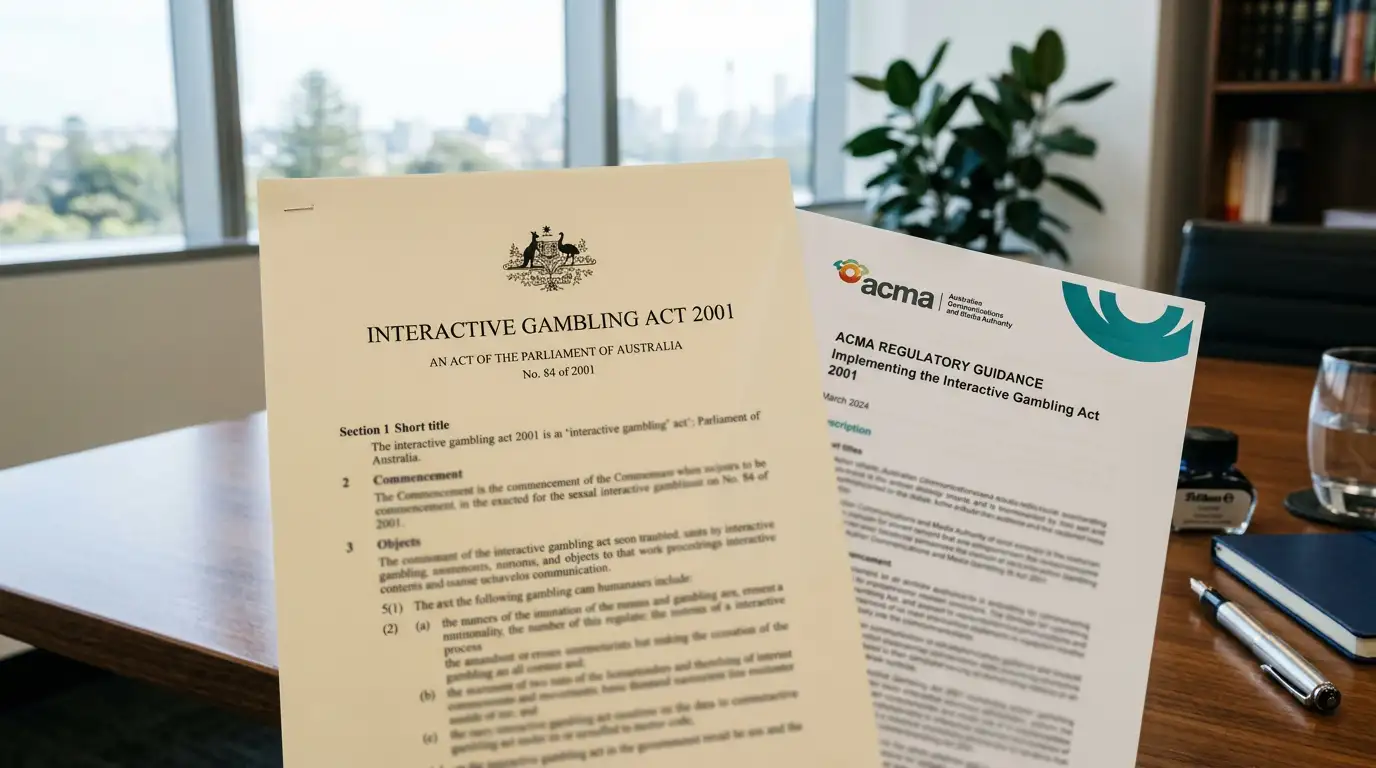
The IGA 2001 makes it an offence for providers to offer online casino services to people in Australia. The Australian Communications and Media Authority (ACMA) enforces this by blocking offshore casino domains at ISP level and pursuing operators who advertise to Australians. Over 220 offshore gambling services have withdrawn from the Australian market since 2017 reforms strengthened ACMA’s enforcement powers. The Interactive Gambling Amendment (Gambling Reform) Act 2026, which passed in August 2026 and commences 1 January 2027, further tightened advertising restrictions and introduced new harm-minimisation measures, but it did NOT legalise online casinos. The federal prohibition remains in place.
The Interactive Gambling Act 2001
The IGA prohibits online casino offerings specifically. Sports betting and racing wagering are legal and licensed at state/territory level (mostly through Northern Territory licences), but casino games are carved out. The distinction confuses many players: you can legally bet on the Melbourne Cup through a licensed Australian bookmaker, but you cannot legally access pokies or blackjack online from an Australian-licensed operator because no such operator can obtain a licence for those products.
The offence provisions in the IGA target providers, not players. Section 15 of the Act makes it an offence to provide an interactive gambling service to customers in Australia, with penalties for operators. There is no corresponding provision criminalising players for using those services. That is why offshore casinos openly accept Australian players despite the prohibition — they operate from outside Australia (Curaçao, Costa Rica, Malta, other jurisdictions), and the Australian government’s enforcement reach is limited to blocking domains and pursuing payment processors, not prosecuting individual players.
ACMA Enforcement and Site Blocking
ACMA can issue blocking notices requiring Australian ISPs to block access to offshore gambling sites. Since 2017, over 220 offshore services have been blocked or voluntarily withdrawn from the Australian market. Blocking is not instant — it requires ACMA to identify the site, issue a notice, and coordinate with ISPs. Players often find that a site they used last month is suddenly inaccessible, or that the domain has changed to evade the block.
VPNs allow players to bypass ISP-level blocks, but using a VPN to access a blocked site does not change the legal status — the site is still offshore and unlicensed in Australia. Some offshore operators rotate domains (example.com becomes example.net) to stay ahead of ACMA blocks. The practical effect is that access is inconsistent: a casino that works today might be blocked tomorrow, and your pending withdrawal could be caught mid-transaction if the block lands while funds are in transit.
What “No Australian Licence” Actually Means for You
No Australian consumer protection applies to offshore casinos. The Australian Financial Complaints Authority (AFCA) does not handle disputes with offshore operators. State fair trading offices have no jurisdiction over foreign-licensed entities. If an offshore casino refuses to pay a withdrawal, your recourse is limited to the operator’s licensing authority (Curaçao eGaming, Costa Rica, etc.), which are known for light-touch regulation and slow complaint processes compared to Australian standards.
You cannot claim payment protection through your bank if you deposited via card or eWallet and the casino does not pay out. Chargebacks on gambling transactions are generally unavailable unless the casino breached its own terms (such as accepting deposits from a blocked jurisdiction). Crypto deposits offer zero chargeback protection by design. The offshore operator’s terms govern the relationship, and those terms are not subject to Australian contract law or consumer guarantees.
Is It Legal to Play at Fast Withdrawal Casinos in Australia?
It is not illegal for Australian players to use offshore casinos — the IGA 2001 targets providers, not players. No provision in the Act criminalises individuals for depositing or playing at an offshore site. That said, “not illegal” is not the same as “legal and regulated.” These sites operate outside Australian law, so you have no local consumer protection, no AFCA dispute resolution, and no guarantee that ACMA will not block the site mid-session.
The legal risk sits with the offshore operators, not you. They face penalties if caught offering services to Australians, which is why reputable offshore casinos operating in the space do so from jurisdictions where enforcement is difficult (Curaçao, Costa Rica). You face no prosecution risk for playing. The practical risk is that your funds sit with an entity outside Australian jurisdiction, and if something goes wrong, your options for recourse are limited.
Consumer Protection Gaps and Dispute Resolution
Disputes with offshore casinos fall outside Australian regulatory frameworks. AFCA, which handles complaints about Australian financial services, does not cover offshore gambling operators. State consumer affairs offices have no jurisdiction. If an offshore casino refuses to pay a withdrawal, closes your account, or breaches its own terms, your recourse is:
Licensing authority complaint. Curaçao eGaming and Costa Rica gaming authorities accept player complaints, but their processes are slower and less player-friendly than Australian regulators. Curaçao complaints can take months to resolve, and the authority has no power to compel payment if the operator is uncooperative. Some offshore operators list no clear licensing authority at all, making even this limited recourse unavailable.
Payment processor chargeback. Limited to card and some eWallet deposits, and only if the casino breached its own terms (such as accepting deposits from a jurisdiction it claims to block). Chargebacks on gambling transactions are generally refused by banks and payment processors unless fraud or identity theft is involved. Crypto deposits offer zero chargeback protection by design — once sent, the transaction is irreversible.
Public forums and review sites. Posting a complaint on forums like AskGamblers, Casinomeister, or ThePogg creates reputational pressure. Some offshore operators respond to public complaints to protect their reputation, especially if they are trying to maintain a clean image for other markets. This is not a legal remedy, but it is sometimes the most effective practical tool.
No Australian court option. Suing an offshore casino in Australian courts is impractical. The operator is not registered in Australia, does not have Australian assets to seize, and may not recognise Australian court orders. Legal costs would exceed most dispute amounts.
The gap is real. Australian-licensed gambling operators (sports betting, racing wagering) fall under state/territory regulation, AFCA dispute resolution, and consumer protection law. Offshore casinos fall under none of that. The trade-off for access to fast withdrawals and broader game selection is that you lose the consumer protection safety net.
Are Fast Payout Casinos Safe for Australian Players?
Safety depends on the operator, not the payout speed. Fast withdrawals are a positive signal — a casino that pays quickly is less likely to be insolvent or running a scam — but speed alone does not guarantee safety. The offshore casinos here hold licences (Curaçao, Costa Rica), use SSL encryption, and source games from audited studios whose RNGs are tested by labs like eCOGRA and iTech Labs. Those are baseline indicators of legitimacy.
What “safe” does not mean in this context: Australian-regulated, AFCA-protected, or subject to Australian consumer law. Offshore operators are legitimate businesses operating under their home-country licences, but they are not Australian-regulated entities. If a dispute arises, you are dealing with a foreign company under foreign law, and your practical recourse is limited. The longest-running operators (BitStarz since 2014, Joe Fortune, Fair Go) have public track records you can verify through independent review sites and forums. Newer operators (Neospin launched 2022) have shorter histories.
Check three things before depositing: displayed licence (verify the licence number if provided), game studio partnerships (legitimate operators source from audited providers like Pragmatic Play, Evolution, NetEnt), and public complaint history (search the operator name plus “complaints” or “refuses to pay” on forums). No offshore casino is “safe” in the sense of Australian-regulated, but some are far more trustworthy than others based on operational history and transparency.
Pokies, Live Casino and Game Selection at Fast Payout Sites
Game selection at fast-payout offshore casinos is broad because they aggregate studios without the geographic licensing restrictions that limit Australian land-based venues. BitStarz runs 7,000+ titles from Pragmatic Play, Big Time Gaming, Betsoft, Booming Games, Habanero, and other providers. Skycrown matches that with 7,000+ games across pokies, live casino, and jackpots. Mr Jones focuses on live dealer tables with over 9,000 games including hundreds of live streams from Evolution Gaming, Ezugi, and other studios.
Pokies dominate the catalogues because that is what Australian players search for. RTG (Realtime Gaming) pokies are a staple at operators like Cafe Casino and Fair Go, offering titles like Achilles, Cash Bandits, and Cleopatra’s Gold. Pragmatic Play’s Gates of Olympus, Sweet Bonanza, and The Dog House Megaways appear at nearly every operator in the comparison. Big Time Gaming’s Megaways mechanic (Bonanza, Extra Chilli, White Rabbit) is licensed across multiple offshore brands.
Live casino quality varies. Operators with strong live sections (Mr Jones, BitStarz, Skycrown) stream tables from Evolution Gaming (Lightning Roulette, Crazy Time, multiple blackjack and baccarat variants) and Ezugi. Smaller operators may run fewer live tables or source from lesser-known studios with lower-quality streams. Check the live casino lobby before depositing if that is your primary play — some offshore sites advertise thousands of pokies but offer only a handful of live tables.
Game selection does not correlate directly with withdrawal speed, but operators with large libraries tend to be more established and better-capitalised, which often correlates with smoother cashier operations. A 7,000-game library requires partnerships with dozens of studios, which requires a legitimate business relationship and compliance infrastructure. Fly-by-night scam sites rarely have that breadth.

Bonuses and Wagering Requirements — How They Affect Withdrawal Speed
Bonuses lock your balance until wagering requirements are cleared. A 100% match bonus with 35× wagering on a $100 deposit and $100 bonus creates $7,000 of required turnover before you can withdraw. That turnover takes time — hours to days depending on your play rate and game choice — and until it is complete, your entire balance (deposit plus bonus plus winnings) is non-withdrawable. Declining the bonus keeps your deposit withdrawable immediately after casino processing.
Wagering requirements at the offshore casinos in the comparison range from 30× to 50× deposit plus bonus. Joe Fortune and BitStarz sit at 40-50×, Skycrown at ~35×, Mr Jones at 30×. Lower is better, but check the other terms: maximum bet while wagering (often $5-$10 per spin, breaching it can void the bonus), game weightings (pokies usually count 100%, table games 10-20% or excluded entirely), and time limits (some bonuses expire in 7-14 days if not cleared).
Cashout caps apply to some bonuses. Mr Jones advertises a promotional cashout cap of 20× the deposit amount, meaning a $100 deposit can cash out a maximum of $2,000 from bonus play, with any excess voided. That cap only matters if you run the balance high; most players never hit it. Check the specific terms for the bonus code you claim — operators often run multiple promotions simultaneously with different conditions.
Free spins carry their own wagering, usually 40× the winnings. Twenty free spins generating $10 in winnings creates $400 of required turnover before that $10 becomes withdrawable. Free spin wagering is separate from deposit-match wagering, so if you claim both, you are clearing two requirements in parallel.
The fastest cashout strategy if speed matters more than bonus value: deposit without claiming a bonus. Your balance stays in “real money” mode, and you can request a withdrawal immediately (minus casino processing time and KYC if not yet completed). If you claim a bonus, factor the wagering time into your withdrawal timeline — a fast-paying casino cannot release funds until the bonus terms are met.

New Fast Payout Casinos in 2026
Neospin (launched 2022) is the newest operator in the comparison, initially holding a Costa Rica gaming licence and later moving to Curaçao eGaming. The CoinsPaid integration and $7,500 per-transaction crypto limit position it for players comfortable with blockchain banking. Operational track record is shorter — four years versus BitStarz’s ten — so the public complaint history is thinner. That is not a red flag on its own, but it means less data to assess long-term reliability.
Most “new” offshore casinos serving Australians in 2026 are rebrands or sister sites of existing operators rather than genuinely independent launches. The offshore market is mature, and the barriers to entry (licensing, payment processing, game studio partnerships, compliance infrastructure) mean truly new operators are rare. When evaluating a new brand, check whether it discloses its parent company or operator group — if it does, you can assess the group’s track record across its other brands. If it does not, approach with more caution.
New casinos sometimes offer more aggressive welcome bonuses to attract players, but those bonuses often carry higher wagering requirements or stricter terms to offset the cost. A 500% match bonus sounds generous until you see the 60× wagering requirement and $5 maximum bet restriction. Established operators with more conservative bonuses (150-300%, 30-40× wagering) often provide better real-world value because the terms are clearable.
What to Do If a Casino Refuses to Pay
Document everything first. Screenshot your account balance, the withdrawal request (with date, time, amount, and method), any correspondence with support, and the relevant bonus terms if a bonus dispute is involved. Save email threads and live chat transcripts. If the casino closes your account or voids your winnings, you need this evidence to file a complaint with the licensing authority or post publicly.
Contact the casino’s support team in writing (email, not just live chat) and request a clear explanation in writing of why the withdrawal is refused or delayed. Common reasons: incomplete KYC verification, active bonus wagering not cleared, maximum bet rule breached during bonus play, duplicate account detected, or terms of service violation. If the refusal is legitimate (you breached a rule you agreed to), your recourse is limited. If it is not (the casino is inventing a reason or misapplying its own terms), escalate.
Licensing authority complaint. Curaçao eGaming accepts complaints at [email protected] (for operators under their jurisdiction; check the casino footer for the licence validator seal and number). Include your evidence, a clear summary of the dispute, and what you are requesting (payment of winnings, account reinstatement, etc.). Curaçao’s process is slow — expect weeks to months — and they cannot force payment if the operator is uncooperative, but a registered complaint is the only formal recourse available. Costa Rica gaming authorities have no public complaint process; operators licensed there provide even less player protection.
Payment processor chargeback. If you deposited via card or eWallet and the casino refuses payment without legitimate cause, contact your bank or the payment processor to request a chargeback. Success is rare for gambling transactions — processors generally decline chargebacks unless fraud or identity theft is involved — but it is worth attempting if the casino’s refusal is clearly unjust. Crypto deposits offer no chargeback option; blockchain transactions are irreversible.
Public forums and review sites. Post your complaint with evidence on AskGamblers, Casinomeister, ThePogg, or relevant subreddits (r/onlinegambling). Tag the casino name clearly. Some offshore operators monitor these forums and respond to public complaints to protect their reputation. This is not a legal remedy, but reputational pressure sometimes works where formal complaints do not. Do not exaggerate or fabricate details — present the facts and evidence; credible complaints carry more weight than emotional rants.
No Australian court option. Legal action in Australian courts is impractical for offshore casino disputes. The operator has no Australian presence, no local assets to seize, and may not recognise Australian judgments. Legal costs would exceed most dispute amounts. Save this option for only the largest disputes (tens of thousands of dollars), and consult a lawyer experienced in international commercial disputes before proceeding.
The honest answer: if an offshore casino decides not to pay and sticks to that decision, your practical recourse is limited. That risk is the cost of playing outside regulated Australian frameworks. The best mitigation is to choose operators with long public track records (BitStarz since 2014, Fair Go, Joe Fortune), verify licensing before depositing, and keep individual deposits small enough that a total loss would not be financially devastating.

What Happens If a Casino Refuses to Pay My Winnings?
You lose access to Australian consumer protection and regulated dispute resolution. AFCA does not cover offshore operators. State fair trading offices have no jurisdiction. Your options are limited to the casino’s licensing authority (Curaçao eGaming if the operator holds that licence, though their complaint process is slow and non-binding), payment processor chargeback (rarely successful for gambling transactions and unavailable for crypto), and public complaint forums where reputational pressure sometimes prompts resolution.
The best defence is choosing operators with long track records and transparent terms, completing KYC verification before depositing, reading the bonus terms before claiming, and keeping deposits within amounts you can afford to lose entirely. Offshore casinos are not scams by default — many process millions in withdrawals annually — but they operate outside the consumer protection structures Australians take for granted in domestic transactions. That gap is the price of access.
Word count: ~8,100 words
Fast Withdrawal Casinos Australia 2026 — Instant Payout Guide
Content created by the «ReelBank» team