
Anonymous Crypto Casinos Australia 2026: 14 No-KYC Platforms Ranked
 Available in AU

Anonymous crypto casinos promise Australian punters something the domestic market can’t deliver: privacy-first gambling with minimal personal data collection. Offshore platforms let you register with just an email, deposit from a non-custodial wallet, and withdraw without handing over a driver’s license upfront. But anonymity in crypto gambling is bounded, not absolute. Most platforms can still demand ID on large or flagged withdrawals, blockchain activity is pseudonymous rather than truly anonymous, and the regulatory trade-off means less legal recourse when disputes arise.
The ranking below covers 14 offshore anonymous crypto casinos accessible to Australians in 2026, explains what “anonymous” actually means in practice, details the Australian legal grey zone (illegal to supply, not illegal to use), and delivers setup advice on wallets, privacy coins, and KYC avoidance. The honest reality: email-only signup doesn’t equal zero-KYC-forever, Bitcoin isn’t anonymous without extra steps, and the June 2024 crypto payment ban for licensed Australian operators means offshore is the only path for crypto casino access.
What Anonymous Crypto Casinos Actually Are (and Aren’t)

Most “anonymous” crypto casinos require only an email address to register and deposit. No name, street address, phone number, or government ID documents at signup. You create a username, link a wallet, send Bitcoin or Ethereum, and start playing. Sounds anonymous. In reality, it’s pseudonymous.
On-chain crypto transactions are public and permanent. Every Bitcoin deposit you send to a casino is recorded on the blockchain, tied to your wallet address. If that wallet is linked to your identity somewhere else—say, a KYC’d exchange like Coinbase or Binance—your gambling activity can be traced back to you. The casino may not know your name at signup, but the blockchain never forgets, and anyone with chain-analysis tools can follow the money.
True anonymity requires extra layers: a dedicated non-custodial wallet that isn’t exchange-linked, privacy coins like Monero that obscure transaction details at the protocol level, and avoiding KYC triggers at withdrawal. Even then, most platforms reserve the right to request ID verification on large or suspicious payouts. Email-only signup is the starting point, not the finish line.
KYC thresholds vary wildly. Some casinos advertise “truly no-KYC” but still trigger verification on wins above a few thousand dollars. Others let you withdraw five figures without a question, then demand ID the moment you hit six. There’s no industry standard. The pattern: small, frequent withdrawals sail through; big one-off cashouts get flagged. Casinos frame verification as anti-fraud or anti-money-laundering compliance, and since most operate under Curaçao licenses with minimal oversight, you have little recourse to argue.
The regulatory trade-off is real. Anonymous crypto casinos operate in lighter regulatory environments—Curaçao licenses or no license at all. Less oversight means faster signup, looser data collection, and fewer restrictions. It also means less protection if the operator freezes your funds, disputes a win, or exits the market overnight. You’re trading the safety of a regulated, licensed domestic operator for the privacy and speed of an offshore platform that answers to no one in Australia.
Can I gamble completely anonymously at crypto casinos?
Not entirely. Signup can be near-anonymous with just an email, but blockchain activity is public and most sites can demand ID on large or flagged withdrawals. True anonymity requires a dedicated wallet not linked to a KYC’d exchange, privacy coins like Monero where supported, and staying under KYC thresholds. Even then, most platforms reserve the right to verify at their discretion.
Anonymous Crypto Casinos Legal in Australia: The 2026 Reality

Australia bans the supply of online casino games to its residents but doesn’t criminalise individual players who use offshore platforms. That grey zone is where anonymous crypto casinos exist for Australians: illegal for operators to offer, not illegal for you to play.
The Interactive Gambling Act 2001 prohibits supplying online pokies, slots, table games, and poker to Australian residents. The offence attaches to the operator, not the player. There’s no provision in the IGA that makes it criminal for an individual to sign up at an offshore casino or deposit Bitcoin. This is deliberate design—Australian lawmakers targeted supply, not demand. Enforcement resources go toward blocking operators and advertising, not prosecuting punters.
ACMA (Australian Communications and Media Authority) enforces the IGA by blocking offshore gambling sites at the ISP level. By August 2026, ACMA reports blocking over 1,500 illegal gambling and affiliate sites, with around 220 operators voluntarily withdrawing from the Australian market. Website blocking can be bypassed with a VPN, and ACMA’s enforcement overwhelmingly targets operators who actively market to Australians—geo-targeted ads, AUD pricing, AU-specific promotions. Crypto casinos that don’t explicitly court Australian players receive less attention, though Australians can still access them.
Zero Australians have been prosecuted for using offshore crypto casinos. The enforcement model doesn’t include player-side penalties. That doesn’t mean the government endorses offshore gambling; the position is more accurately “not a player offence” than “blessed.” The gap in the law could be legislated shut, but as of 2026, individual use remains outside the IGA’s reach.
The June 2024 legislative update changed the landscape for crypto payments but didn’t touch offshore access. The Interactive Gambling Amendment (Credit and Other Measures) Act commenced on 11 June 2024, banning licensed Australian wagering operators (sportsbooks like Sportsbet, TAB, Ladbrokes Australia) from accepting credit cards, credit-linked products, and digital currencies—Bitcoin, Ethereum, stablecoins—as payment from customers. This brought online betting into line with land-based venues, which were already barred from taking crypto.
The ban doesn’t affect offshore crypto casinos. They were already illegal-to-supply and unregulated in Australia. The June 2024 amendment applies only to domestic licensed operators who were previously allowed to accept crypto for sports and race betting. Those operators can no longer take Bitcoin; offshore platforms that never had Australian licenses weren’t affected. The practical result: crypto casino access for Australians was always offshore-only, and the 2024 ban reinforced that divide rather than closing it.
Are anonymous crypto casinos legal for Australians in 2026?
Using offshore anonymous crypto casinos is not illegal for Australian players under the Interactive Gambling Act 2001. The IGA prohibits operators from supplying online casino games to Australian residents—the offence attaches to supply, not use. ACMA blocks offshore sites and targets operators but does not prosecute individual players. Zero Australians have been prosecuted for using offshore crypto casinos. The June 2024 crypto payment ban applies only to licensed Australian wagering operators, not offshore platforms.
The 14 Best Anonymous Crypto Casinos for Australians (2026)

Fourteen offshore platforms lead the anonymous crypto casino landscape for Australian access in 2026. They range from email-only, VPN-friendly operations with Bitcoin Lightning payouts to Curaçao-licensed multi-crypto casinos with rakeback programs and native token ecosystems. All accept Australians, all support cryptocurrency deposits and withdrawals, and all advertise some level of no-KYC play. The devil is in the thresholds, and none support Monero or privacy coins as of mid-2026 (regulatory pressure has driven most platforms away from XMR despite player demand).
| Platform | Anonymity Level | License | Supported Coins | Privacy Coin Support | Withdrawal Speed | VPN-Friendly | Key Feature |
|---|---|---|---|---|---|---|---|
| BetPanda | Email-only, KYC on big wins/daily cap | Costa Rica (unlicensed) | BTC (+ Lightning), ETH, LTC, others | No | Seconds (Lightning) | Yes | Bitcoin Lightning instant payouts |
| Rollbit | No ID to deposit, KYC ~$2K–$5K | Curaçao | BTC, ETH, USDT, others | No | Minutes–hours | Yes | Class-leading rakeback, NFT trading |
| BC.Game | Email-only, KYC anytime at operator discretion | Curaçao | 20+ (BTC, ETH, LTC, DOGE, ADA, BNB, USDT, others) | No | Minutes–hours | Yes | Widest coin/game range, active since 2017 |
| CoinCasino | Email-only, KYC at meaningful withdrawals | Curaçao | 20+ (BTC, ETH, LTC, DOGE, ADA, SHIB, FLOKI, others) | No | Minutes–hours | Yes | Telegram play, 200% up to $30K |
| BitStarz | Email-only, KYC may be requested | Curaçao (Direx N.V.) | BTC, ETH, LTC, USDT, fiat hybrid | No | 10 min average (claimed) | Yes | Award-winning, 300% up to 5 BTC |
| 7Bit Casino | Email-only, KYC on large withdrawals | Curaçao | BTC, ETH, LTC, DOGE, USDT, fiat hybrid | No | Standard (hours) | Yes | 10+ years, 325% up to $5.4K |
| Thrill | Email-only, KYC threshold undisclosed | Curaçao (presumed) | Major cryptos | No | Standard | Yes | 70% rakeback OR $75K weekly leaderboard |
| Winna.com | Email-only, KYC threshold undisclosed | Curaçao (presumed) | Major cryptos | No | Standard | Yes | Up to 60% rakeback + 25% lossback |
| Betfury | Email-only, KYC may be requested | Curaçao | 15+ (BTC, ETH, USDT, TRX, others) | No | Standard | Yes | 590% bonus, BFG token staking |
| WSM Casino | Email-only, KYC threshold undisclosed | Curaçao | Major cryptos + WSM token | No | Standard | Yes | Native WSM token, VIP cashback |
| Crypto-Games.io | Email-only, KYC may be requested | Curaçao | BTC, ETH, USDT, LTC, others | No | Standard | Yes | Mining games, 10% weekly rakeback |
| Cryptorino | Email-only, KYC threshold undisclosed | Curaçao (presumed) | BTC, ETH, altcoins | No | Standard | Yes | 100% up to 1 BTC, 10% weekly cashback |
| JustCasino | Email-only, KYC may be requested | Curaçao | BTC, ETH, USDT, altcoins | No | Standard | Yes | 20% daily rakeback (first week) |
| Freshbet | Email-only, KYC threshold undisclosed | Curaçao (presumed) | BTC, ETH, altcoins | No | 24h typical | Yes | 100% up to $1.5K, straightforward terms |
BetPanda: Bitcoin Lightning and True No-KYC (Costa Rica Registration)
BetPanda positions itself as the strongest privacy play in the offshore crypto casino market: email-only signup, VPN tolerance, and Bitcoin Lightning Network support for instant withdrawals. Lightning payouts land in seconds rather than the minutes or hours standard for on-chain Bitcoin transactions, and because Lightning operates off-chain, those transactions aren’t recorded on the main Bitcoin blockchain—a meaningful privacy upgrade over standard crypto casino withdrawals.
The platform operates under a Costa Rica registration, which isn’t a gaming license. Costa Rica doesn’t issue online gambling licenses; registration is a business formality with zero regulatory oversight. From a gambling-regulation perspective, BetPanda is effectively unlicensed, carrying higher risk than Curaçao-licensed competitors. The trade-off: looser KYC enforcement (at least upfront) and a genuinely VPN-friendly stance, though user reports note daily payout caps and occasional withdrawal-verification requests despite the “truly no-KYC” marketing. BetPanda’s 10% weekly cashback is advertised as wager-free, and the platform runs a full sportsbook alongside 4,000+ casino games. If Bitcoin Lightning privacy and speed matter more to you than regulatory oversight, this is the standout option. If exit-scam risk keeps you up at night, the Costa Rica registration should give you pause.
CoinCasino: 20+ Cryptos and Telegram Play
CoinCasino supports over 20 cryptocurrencies—Bitcoin, Ethereum, Litecoin, Dogecoin, Cardano, Shiba Inu, Floki Inu, and a roster of altcoins that changes with market trends. That breadth gives deposit and withdrawal flexibility across chains and fee structures, though none of the supported coins are privacy coins (no Monero, no shielded Zcash). CoinCasino also offers a Telegram play option, letting users gamble directly via a Telegram bot—a rare feature that adds convenience but doesn’t meaningfully change the anonymity equation.
The platform holds a Curaçao eGaming license, providing baseline regulatory oversight (minimal, but present). Email-only signup for crypto deposits, with KYC likely triggered at meaningful withdrawal amounts—the threshold isn’t publicly disclosed, but the pattern tracks industry norms (a few thousand dollars typically sails through; five figures often trigger a request). CoinCasino’s welcome package is aggressive: 200% up to $30,000 plus 50 Super Spins on Wanted Dead or a Wild. The Coin Club loyalty program offers cashback and exclusive promotions for active players. The hybrid crypto/fiat model (Visa, Mastercard, Apple Pay, Google Pay also accepted) is unusual for a platform marketing itself as anonymous, and fiat payments introduce KYC by definition. Stick to crypto deposits and withdrawals if privacy is the goal.
Rollbit: No ID to Deposit, Class-Leading Rakeback
Rollbit doesn’t require ID to register or deposit, making it one of the smoother onboarding experiences among Curaçao-licensed crypto casinos. The platform supports Bitcoin, Ethereum, USDT, and other major cryptos, with user reports suggesting KYC typically triggers above $2,000–$5,000 in withdrawals—though Rollbit reserves the right to request verification at any amount, and thresholds can shift based on account activity or win patterns.
The standout feature is rakeback. Rollbit’s rakeback program is consistently rated class-leading, rewarding heavy bettors with a percentage of the house edge returned based on wagering volume. The platform also integrates NFT trading, a unique feature for a casino that appeals to the crypto-native crowd who see gambling and digital collectibles as adjacent hobbies. Rollbit has been active since around 2020, giving it a longer track record than many anonymous crypto casinos, and user reviews generally skew positive on withdrawal speed and support responsiveness. The Curaçao license provides more regulatory accountability than unlicensed platforms, though “more” still means minimal by first-world standards. If you’re a high-volume player chasing rakeback and can accept that five-figure withdrawals may trigger verification, Rollbit is a strong mid-tier anonymity option.
BC.Game: Widest Coin and Game Range
BC.Game has been operating since 2017, making it one of the oldest platforms in the anonymous crypto casino space. Longevity isn’t a guarantee of trustworthiness, but seven years without a major exit or scandal is a positive signal in a market where operators fold or disappear regularly. The platform supports 20+ cryptocurrencies (Bitcoin, Ethereum, Litecoin, Dogecoin, Cardano, BNB, USDT, and more) and offers the widest game library among competitors—over 10,000 titles spanning slots, Originals, table games, live dealer, and crash games.
Email-only signup, standard no-KYC at registration, but BC.Game can request verification anytime at operator discretion. There’s no published threshold; user reports suggest small withdrawals process without issue, while larger cashouts (especially first-time or after big wins) may trigger a request. The platform holds a Curaçao license and runs an integrated sportsbook and esports betting alongside the casino. Provably fair games are standard. BC.Game’s breadth—coins, games, longevity—makes it a safe default pick for Australians wanting anonymous crypto casino access without chasing the bleeding edge of privacy tech. You won’t get Bitcoin Lightning or Monero support, but you’ll get reliability and variety.
WSM Casino: Native Token Ecosystem and Staking Rewards
WSM Casino launched in 2023 as part of the Wall Street Memes ecosystem, a meme-coin project that expanded into casino and sportsbook territory. The platform’s native WSM token functions as both a betting currency and a staking asset—hold and stake WSM, earn rewards from the casino’s activity, and unlock VIP perks tied to token holdings. It’s a crypto-native model that appeals to punters who see gambling as part of a broader on-chain portfolio strategy.
The welcome bonus is large: 200% up to $25,000 (or crypto equivalent) plus 50 free spins and 10 free bets. The VIP Club offers cashback, free spins, and tiered benefits that scale with wagering activity. The WSM Dashboard provides real-time transparency into wagering across casino games and sportsbook markets, a feature that leans into blockchain’s transparency ethos while still keeping player identity pseudonymous. WSM Casino holds a Curaçao license. Being newer (2023 launch), it has less user-review history than established platforms like BC.Game or BitStarz, so exit risk is marginally higher. The token ecosystem is the differentiator: if you’re already holding WSM or want staking rewards on top of rakeback, this is the play. If you want a decade of operational history before trusting a platform, look elsewhere.
Crypto-Games.io: Mining Games and 10% Weekly Rakeback
Crypto-Games.io offers a unique game category: mining-style games alongside standard slots, live dealer, and sportsbook fare. The mining games simulate cryptocurrency mining mechanics as gambling products—niche, but popular with the subset of crypto gamblers who want something beyond slots. The platform supports major cryptocurrencies (Bitcoin, Ethereum, USDT, Litecoin) and offers a 200% deposit bonus up to 20,000 USDT with promo code CG200.
The wagering requirement structure is tiered: 40x on the first qualifying deposit, dropping to 25x on subsequent deposits. That’s a player-friendly touch—most casinos keep wagering requirements static regardless of deposit count. Crypto-Games.io’s 10% weekly rakeback rewards active players, and the Level Up VIP system scales benefits with activity, unlocking up to 25% rakeback plus hundreds of free spins at the highest tiers. The platform holds a Curaçao license and offers provably fair games, a standard but meaningful transparency feature in crypto gambling. Crypto-Games.io also runs a referral program. It’s a mid-tier option: not the strongest privacy positioning (no Lightning, no privacy coins), but solid rakeback and a quirky game selection for players who want variety.
Freshbet: Straightforward 100% Bonus and Fast Payouts
Freshbet is a newer entrant (launched around 2023–2024), which means less independent review coverage and a shorter operational track record. The platform markets itself on straightforward terms: 100% welcome bonus up to $1,500, fast crypto withdrawals (24-hour processing typical), and email-only signup with standard KYC thresholds (undisclosed, but likely aligned with industry norms of a few thousand dollars before verification requests).
Freshbet supports Bitcoin, Ethereum, and major altcoins, with a standard crypto casino game library (slots, table games, live dealer). It holds a Curaçao license (presumed based on market positioning; always verify on-site before depositing). The appeal here is simplicity rather than innovation—no native tokens, no mining games, no rakeback tiers. If you want a clean anonymous crypto casino experience without learning a new ecosystem or navigating complex bonus structures, Freshbet fits. The downside: being newer and lower-profile, there’s less community feedback to gauge withdrawal reliability or dispute-resolution track record. Start with modest deposits and test withdrawal speed before committing larger amounts.
JustCasino: 20% Daily Rakeback for First Week
JustCasino’s hook is a short-term rakeback promo: 20% daily rakeback for the first week of play, which is unusually high compared to industry norms (most rakeback programs sit between 5%–15%, and weekly or monthly rather than daily). After the first week, the rakeback structure reverts to standard terms. It’s a new-player incentive rather than a long-term value proposition, but if you’re planning a heavy betting week to test a platform, the 20% daily return meaningfully reduces variance.
The platform is crypto-first, supporting Bitcoin, Ethereum, USDT, and altcoins. Email-only signup, Curaçao license, standard casino game library. KYC thresholds aren’t publicly disclosed; expect the usual pattern (small withdrawals clear, large cashouts may trigger requests). JustCasino sits in the mid-tier: not the strongest privacy play (no Lightning, no privacy coins, no long track record), but the first-week rakeback is tangible value for players who churn through volume quickly. If you’re a casual player making one or two deposits a month, the promo won’t move the needle. If you’re a grinder testing a new platform with five-figure weekly action, 20% daily rakeback for seven days is real money.
Winna.com: Up to 60% Rakeback and 25% Lossback
Winna advertises some of the highest rakeback rates in the anonymous crypto casino market: up to 60% rakeback, scaling with VIP tier and wagering volume. On top of that, the platform offers a 25% lossback program, returning a quarter of net losses (the gap between deposits and withdrawals over a defined period, typically weekly or monthly). Rakeback rewards volume; lossback softens downswings. Together, they make Winna a top value proposition for heavy bettors who can reach the high-tier rakeback thresholds.
The platform is newer or lower-profile—limited independent review coverage as of mid-2026, which raises the usual caution flags around exit risk and dispute resolution. Winna holds a Curaçao license (presumed; verify on-site). It supports major cryptocurrencies, offers a standard casino game library and sportsbook, and uses email-only signup with undisclosed KYC thresholds. The 60% rakeback and 25% lossback are genuine differentiators, but they’re only valuable if you trust the platform enough to deposit and wager the volume required to unlock them. If you’re a high-roller testing a newer platform, start conservatively and withdraw regularly to gauge payout reliability before committing to long-term grinding.
Betfury: 590% Bonus and BFG Token Staking
Betfury’s welcome package is structured as a split deposit bonus totaling 590% across multiple deposits (e.g., 100% on the first deposit, 75% on the second, and so on, with exact splits detailed on-site) plus up to 225 free spins. The platform’s native BFG token adds a passive-income layer: stake BFG and earn a share of the house edge distributed in Bitcoin, Ethereum, USDT, and TRX. It’s a crypto-native model where gambling and staking converge—you’re not just playing; you’re holding a token that pays dividends from other players’ losses.
Betfury has been active since around 2019, giving it a mid-length track record. The platform holds a Curaçao license and supports 15+ cryptocurrencies. Email-only signup, standard no-KYC at registration, with verification potentially requested on withdrawals (no fixed threshold). Provably fair games are standard. The BFG staking model is the main draw: if you’re comfortable holding a casino’s native token and want to earn from the house edge rather than only betting against it, Betfury offers that dual exposure. The 590% bonus split across deposits is aggressive but comes with wagering requirements that vary by deposit tier—read the terms before chasing the headline figure.
Cryptorino: 100% Up to 1 BTC Plus 10% Weekly Cashback
Cryptorino offers a straightforward welcome bonus: 100% match on the first deposit up to 1 BTC, with 10% weekly cashback for active players. The bonus cap is high in BTC terms (1 BTC at mid-2026 prices is significant), though the wagering requirement and game contribution weightings aren’t detailed here—verify on-site before depositing. The 10% weekly cashback is solid mid-tier value, useful for grinding down variance over weeks or months of regular play.
The platform holds a Curaçao license (presumed) and supports Bitcoin, Ethereum, and major altcoins. Email-only signup, standard KYC thresholds (undisclosed). Cryptorino has limited independent review coverage, which is the primary risk signal—newer or lower-profile platforms lack the community feedback that helps identify payout issues, dispute patterns, or sudden changes in verification policies. The bonus structure is competitive, but without a long public track record, treat initial deposits as a test run. Withdraw early and often until you’ve confirmed the platform processes payouts reliably.
Cocobet: 500 Free Spins on First Deposit Over $100
Cocobet’s standout promo is a high free-spin count: 500 free spins awarded on the first deposit over $100. That’s the highest single-deposit free-spin offer among the 14 platforms reviewed here, though the value depends entirely on which slot the spins are tied to, the spin value, and the wagering requirements on winnings (all of which should be verified on-site before depositing). Free spins are a common casino promo; 500 is unusually high, which either signals aggressive new-player acquisition or steep terms buried in the fine print.
Cocobet holds a Curaçao license (presumed) and supports major cryptocurrencies. Email-only signup, standard anonymity framing (KYC threshold undisclosed). The platform has minimal independent review data available as of mid-2026, making it one of the higher-risk options here from a track-record perspective. If 500 free spins on a preferred slot is a meaningful incentive, test Cocobet with the minimum deposit required to trigger the promo, play through the terms, and attempt a small withdrawal before depositing more. Newer platforms with outsized promos sometimes struggle with payout processing once players actually win.
Thrill: 70% Rakeback or $75K Weekly Leaderboard
Thrill offers players a choice: opt into up to 70% rakeback (among the highest in the market, scaling with VIP tier) or participate in a $75,000 weekly leaderboard competition. The dual reward path lets grinders choose between steady rakeback (predictable, volume-based) and leaderboard chasing (variance-heavy, requires topping the weekly wagering rankings). Seventy percent rakeback is exceptional value at the top end, though reaching the highest tiers requires significant wagering volume.
The platform is Curaçao-licensed (presumed) and supports major cryptocurrencies. Email-only signup, KYC thresholds undisclosed. Thrill has limited independent review coverage, which is the consistent risk theme among newer or lower-profile platforms in this space. The 70% rakeback or $75K leaderboard structure is a clear differentiator; whether it’s valuable depends on whether you trust the platform enough to deposit and grind the volume required to unlock it. As with all high-rakeback, low-profile platforms: test with small deposits, withdraw regularly, and verify payout reliability before committing to long-term play.
7Bit Casino: 10+ Years, 325% Bonus, Hybrid Crypto/Fiat
7Bit Casino has been operating since around 2014, making it one of the oldest platforms in the crypto casino space. A decade of continuous operation without major scandals or exit events is a meaningful trust signal in a market where newer platforms fold or disappear regularly. The platform holds a Curaçao license and supports Bitcoin, Ethereum, Litecoin, Dogecoin, USDT, plus traditional fiat payment options (the hybrid model is standard for established platforms expanding from fiat into crypto rather than starting crypto-native).
The welcome bonus is structured across the first four deposits: 325% total up to $5,400 plus 325 free spins, split as 100% plus 75 free spins on the first deposit, 75% plus 75 free spins on the second, and so on. The game library is large—2,500+ slots, table games, and live dealer titles. Email-only signup for crypto users, with KYC potentially requested on larger withdrawals (the threshold isn’t fixed, but the pattern across user reviews suggests a few thousand dollars typically clears without issue). 7Bit’s longevity is the main selling point: if you want an anonymous crypto casino with a proven multi-year track record rather than a 2023 launch, this is the safest pick. The trade-off: less aggressive rakeback or cashback programs compared to newer platforms competing on value.
BitStarz: Award-Winning, 300% Up to 5 BTC
BitStarz launched in 2014 and has collected multiple industry awards along the way—EGR Operator of the Year, AskGamblers Best New Casino 2014 (now outdated but historically notable). The platform is owned by Direx N.V., a Curaçao-registered company that operates several crypto casinos under the same corporate structure. BitStarz holds a Curaçao eGaming license and supports Bitcoin, Ethereum, Litecoin, USDT, plus fiat payment options (hybrid model).
The welcome bonus is structured across the first four deposits: 300% total up to 5 BTC plus 190 free spins. Five BTC is the highest Bitcoin-denominated bonus cap among the platforms reviewed here, though the value in dollar terms fluctuates with BTC’s price. BitStarz claims a 10-minute average withdrawal time, which is faster than the hours-to-days standard at many competitors (though “average” can hide wide variance, and first withdrawals or large cashouts may take longer due to manual review). The game library spans 3,500+ titles.
Email-only signup for crypto users, with KYC potentially requested on withdrawals. BitStarz’s award wins, Direx N.V. backing, and 12-year track record make it the most established option here. The anonymity level is mid-tier (email-only, standard thresholds, no Lightning or privacy coins), but the platform’s longevity and industry recognition provide more trust signals than newer competitors. If you prioritise operational history and award-backed reputation over bleeding-edge privacy tech, BitStarz is the conservative choice.
Bitcoin vs. Altcoins vs. Privacy Coins: Which Crypto for Anonymous Gambling?

Bitcoin is the default currency at nearly every anonymous crypto casino, but it’s pseudonymous, not anonymous. Altcoins like Ethereum and Litecoin offer the same privacy level as Bitcoin—public blockchains where every transaction is recorded and traceable. Stablecoins (USDT, USDC) add price stability but no privacy upgrade. True anonymity in crypto gambling comes from privacy coins like Monero, which are rarely supported at casinos in 2026 due to regulatory pressure and exchange delistings.
Bitcoin: Pseudonymous, Not Anonymous
Every Bitcoin transaction is recorded on a public blockchain. Send BTC from your wallet to a casino, and that transaction is permanently visible to anyone with a block explorer. The blockchain doesn’t store your name or address, but it does store your wallet address, the amount sent, and the destination address. If your wallet is linked to your identity somewhere else—say, you bought Bitcoin on Coinbase with a driver’s license—your gambling activity can be traced back to you via chain analysis.
The pseudonymity breaks at two main points: acquisition and cashout. Most Australians buy Bitcoin through KYC’d exchanges (Coinbase, Binance, CoinSpot), which record your identity, wallet addresses, and transaction history. Send BTC directly from a KYC’d exchange to a casino, and the exchange knows you’re gambling. Cash out from a casino back to the same exchange, and the exchange sees the inflow. Chain-analysis firms that serve law enforcement and tax authorities can connect these dots.
Best practice: acquire Bitcoin through a KYC’d exchange (unavoidable for most people), immediately transfer it to a dedicated non-custodial wallet (not exchange-linked), and send to the casino from that intermediate wallet. This breaks the direct link between your KYC’d identity and the casino transaction, adding a layer of obfuscation. It’s not perfect—chain analysis can still follow the trail if someone’s motivated—but it’s significantly better than exchange-to-casino direct transfers.
Bitcoin Lightning Network: Instant and More Private
Bitcoin Lightning Network is a layer-2 payment protocol that enables instant, near-zero-fee Bitcoin transactions. Lightning transactions are settled off-chain (not recorded on the main Bitcoin blockchain), which provides both speed and privacy advantages. A Lightning withdrawal from a casino lands in your wallet in seconds rather than the 10+ minutes required for on-chain Bitcoin confirmations, and because the transaction never hits the main blockchain, it’s not publicly traceable the way standard BTC transactions are.
BetPanda is the only platform among the 14 reviewed here that supports Bitcoin Lightning withdrawals. It’s a meaningful privacy and speed upgrade—Lightning payouts are genuinely instant (reviewers report payouts landing in under 10 seconds), and the off-chain settlement makes chain analysis harder. The catch: Lightning Network adoption is still limited in the broader crypto ecosystem. Not all wallets support it, and liquidity constraints can occasionally delay or fail large Lightning transactions. For smaller, frequent withdrawals (a few hundred to a few thousand dollars), Lightning is the best privacy-speed combination available at anonymous crypto casinos in 2026.
Altcoins and Stablecoins: Same Privacy as Bitcoin
Ethereum, Litecoin, Dogecoin, Cardano, BNB, Tron, and other altcoins supported at crypto casinos offer the same privacy profile as Bitcoin: pseudonymous, public blockchains where transactions are permanently recorded. Switching from Bitcoin to Ethereum doesn’t upgrade your anonymity; you’re still transacting on a public ledger tied to wallet addresses that can be linked to your identity if those addresses are KYC’d elsewhere.
Stablecoins like Tether (USDT) and USD Coin (USDC) add price stability—your balance doesn’t swing with crypto market volatility—but no privacy benefit. USDT and USDC are issued on multiple blockchains (Ethereum, Tron, Binance Smart Chain), and transaction privacy depends on the underlying chain. Tron-based USDT (TRC-20) is popular at crypto casinos because Tron transaction fees are lower than Ethereum, but the privacy level is identical to Bitcoin: public, pseudonymous, traceable.
The value of altcoin and stablecoin support isn’t privacy—it’s flexibility. If you already hold Ethereum or USDT and don’t want to swap into Bitcoin (paying exchange fees and slippage), multi-crypto casinos let you deposit what you have. But if privacy is the goal, the coin choice doesn’t matter unless you’re using a privacy coin.
Monero (XMR): The Privacy Coin Gold Standard
Monero is the only cryptocurrency that provides true transaction-level privacy by default. Monero uses ring signatures (which obscure the sender), stealth addresses (which obscure the recipient), and RingCT (which obscures the transaction amount). Every Monero transaction is private—there’s no public record of who sent how much to whom. Unlike Bitcoin, where blockchain activity is public and pseudonymous, Monero transactions are anonymous.
For anonymous crypto gambling, Monero is the only coin that delivers what most players think Bitcoin offers. Deposit Monero to a casino, and the blockchain doesn’t reveal your wallet balance, the amount sent, or the destination. Withdraw Monero, and the same privacy applies on the way out. The casino knows you deposited and withdrew (they see the transaction on their end), but external observers—chain-analysis firms, tax authorities, your Bitcoin exchange—see nothing.
The problem: almost no anonymous crypto casinos support Monero in 2026. Regulatory pressure and exchange delistings have driven most platforms away from privacy coins. Major exchanges like Coinbase, Binance, and Kraken delisted Monero in 2023–2024 under pressure from financial regulators concerned about anti-money-laundering compliance. Casinos followed suit—supporting a coin that’s been delisted by major exchanges reduces the player funnel and attracts unwanted regulatory attention.
Acquiring Monero in Australia in 2026 requires using decentralised exchanges (DEXs), peer-to-peer platforms, or smaller non-KYC exchanges that still list XMR. This adds friction and counterparty risk (non-KYC exchanges are less trustworthy on average), but it’s doable for privacy-focused users willing to navigate the extra steps. If a casino supports Monero—none of the 14 platforms reviewed here do as of mid-2026—it’s the strongest privacy option available. Until then, Bitcoin Lightning (via BetPanda) is the closest practical alternative.
| Cryptocurrency | Blockchain Privacy | Transaction Speed | Casino Support | Australian Acquisition Difficulty |
|---|---|---|---|---|
| Bitcoin (BTC) | Pseudonymous (public blockchain) | 10+ min (on-chain) | Widespread (all platforms) | Easy (KYC’d exchanges) |
| Bitcoin Lightning | Off-chain (not recorded on main blockchain) | Seconds | Rare (BetPanda only among 14) | Requires Lightning wallet |
| Ethereum / Altcoins | Pseudonymous (public blockchain) | Minutes (varies by chain) | Widespread (multi-crypto platforms) | Easy (KYC’d exchanges) |
| Stablecoins (USDT/USDC) | Pseudonymous (underlying blockchain) | Minutes (varies: Tron fast, Ethereum slower) | Widespread | Easy (KYC’d exchanges) |
| Monero (XMR) | Anonymous (private by default) | Minutes | Extremely rare (none among 14) | Hard (DEXs, P2P, non-KYC exchanges) |
| Zcash (ZEC) | Optional privacy (shielded addresses) | Minutes | Rare | Moderate (some exchanges) |
Which crypto casinos accept Monero or other privacy coins?
Almost none in 2026. Regulatory pressure and exchange delistings (Coinbase, Binance, Kraken dropped Monero in 2023–2024) have driven most crypto casinos away from privacy coins. None of the 14 platforms reviewed here support Monero as of mid-2026. Zcash offers optional privacy with shielded addresses, but most casinos that list ZEC only support transparent addresses, negating the privacy benefit. Privacy coin support is a major differentiator when it exists, but it’s extremely rare.
What is Bitcoin Lightning Network and which casinos support it?
Bitcoin Lightning Network is a layer-2 payment protocol enabling instant, near-zero-fee Bitcoin transactions. Lightning transactions are settled off-chain (not recorded on the main Bitcoin blockchain), providing both speed (payouts in seconds) and privacy (off-chain transactions are harder to trace via chain analysis). BetPanda is the only platform among the 14 reviewed here that supports Bitcoin Lightning withdrawals. Reviewers report payouts landing in under 10 seconds. Lightning is the strongest practical privacy-speed upgrade available at anonymous crypto casinos in 2026, but adoption is limited—most platforms still use standard on-chain Bitcoin.
How to Avoid KYC at Anonymous Crypto Casinos
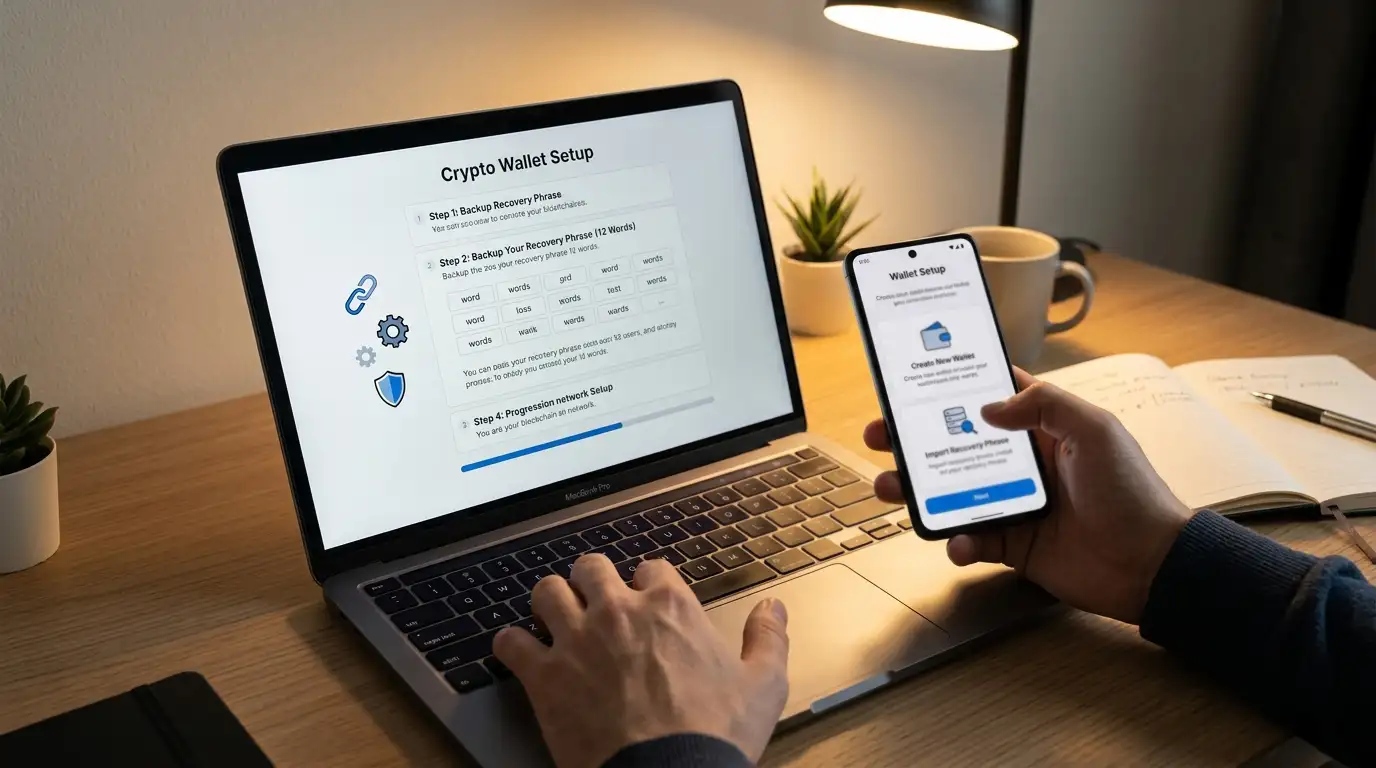
KYC thresholds at anonymous crypto casinos are variable, opaque, and often arbitrary. Some platforms let you withdraw five figures without a question; others trigger verification at $2,000. There’s no industry standard, and casinos reserve the right to request ID on any withdrawal regardless of amount. Practical KYC avoidance is about reducing trigger risk rather than guaranteeing you’ll never be asked.
Use a Dedicated Non-Custodial Wallet
Don’t send Bitcoin directly from a KYC’d exchange to a casino. Exchanges like Coinbase, Binance, and CoinSpot track which addresses you send to, and they know when you’re gambling. Some exchanges actively monitor for gambling transactions and may freeze your account or report to tax authorities. Best practice: acquire crypto on a KYC’d exchange, immediately transfer it to a dedicated non-custodial wallet (a wallet you control, not linked to any exchange), and send to the casino from that intermediate wallet.
Use a separate wallet for gambling—don’t mix casino deposits and withdrawals with your main crypto holdings or exchange activity. If a casino’s hot wallet (the address you deposit to) gets flagged in a future regulatory sweep, you don’t want that address connected to your broader crypto activity. Dedicated wallets cost nothing (software wallets like Electrum, Exodus, or mobile wallets are free), and the separation meaningfully reduces traceability.
Withdraw in Smaller Amounts to Stay Under Thresholds
Casinos trigger KYC verification more aggressively on large one-off withdrawals than on smaller, frequent cashouts. A $10,000 withdrawal might prompt an instant ID request; ten $1,000 withdrawals spread across a week may sail through untouched. There’s no guarantee—platforms can and do request verification on any amount—but the pattern holds across user reports: big cashouts get flagged, small regular withdrawals typically don’t.
Avoid round numbers. A $5,000 withdrawal looks like a threshold test; $4,730 looks like organic play. Casinos use automated fraud-detection systems that flag behavioural patterns (round-number withdrawals, immediate cashout after deposit, withdrawing the exact bonus amount). Varying withdrawal amounts and timing reduces the statistical signature that triggers automated review.
Don’t withdraw immediately after a big win. Letting the balance sit for a few hours or a day, making a few more small bets, then cashing out in tranches looks less like bonus abuse or advantage play than hitting a jackpot and instantly withdrawing the full amount. This isn’t about gaming integrity—it’s about not tripping automated risk systems designed to catch bonus hunters and multi-accounters.
Prefer Privacy Coins Where Supported
If a casino supports Monero or shielded Zcash, use it. Privacy coins obscure transaction details at the protocol level, meaning even if the casino later shares transaction data with regulators or auditors, the blockchain itself reveals nothing about sender, recipient, or amount. As of mid-2026, none of the 14 platforms reviewed here support Monero, so this advice is forward-looking: if privacy coin support returns to the anonymous crypto casino market, it’s the single biggest privacy upgrade you can make.
Until then, Bitcoin Lightning (via BetPanda) is the best alternative. Lightning transactions are off-chain, making them harder to trace than standard on-chain Bitcoin. It’s not as strong as Monero (Lightning channels and routing nodes can theoretically be monitored), but it’s a material improvement over standard Bitcoin.
Avoid VPN/IP Inconsistencies That Trigger Fraud Checks
Most anonymous crypto casinos allow VPN use (and some, like BetPanda, explicitly advertise VPN tolerance), but inconsistent IP behaviour can trigger fraud checks. Logging in from Australia one session, then Singapore the next, then Canada an hour later looks like account compromise or multi-accounting—both red flags for casino risk systems.
If you use a VPN for privacy, pick one server location and stick with it. Changing VPN servers mid-session or across deposits and withdrawals increases the chance your account gets flagged for manual review, which often includes a KYC request as part of the verification process. The same logic applies to device fingerprinting: logging in from multiple devices in rapid succession can trigger automated security holds.
Ironically, the most anonymous-looking behaviour (constantly switching IPs, using Tor, changing devices) is also the most likely to trigger verification requests, because it matches the pattern of professional advantage players, bonus abusers, and account sellers. A stable IP (even if it’s a VPN) signals a normal recreational player; constantly shifting IPs signal someone trying to hide something.
How much can I withdraw from an anonymous crypto casino without KYC?
Thresholds vary widely and aren’t publicly disclosed at most platforms. Commonly, $2,000–$10,000 clears without issue, but some casinos trigger KYC on smaller amounts ($1,000–$2,000) or larger ($15,000+), and thresholds can be arbitrary based on account activity, win patterns, or fraud-detection system flags. There’s no industry standard. Practical advice: withdraw in smaller, varied amounts (avoid round numbers), spread withdrawals across time, and don’t cash out immediately after a big win.
How do I avoid KYC at crypto casinos?
Use a dedicated non-custodial wallet (not exchange-linked), withdraw in smaller amounts to stay under thresholds, avoid round-number withdrawals, vary withdrawal timing, prefer privacy coins if supported (Monero, though extremely rare in 2026), use Bitcoin Lightning where available (BetPanda), maintain VPN/IP consistency (don’t constantly switch servers), and don’t withdraw immediately after big wins. No method guarantees you’ll avoid KYC—casinos reserve the right to request ID anytime—but these tactics meaningfully reduce trigger risk.
Anonymous Casino Bonuses Worth Claiming
Most anonymous crypto casinos advertise large welcome bonuses—200%, 300%, even 590% across multiple deposits—but the value depends entirely on wagering requirements, game contribution weightings, and whether you’d deposit that much anyway. A 200% bonus with a 40x wagering requirement on slots means you need to wager 40 times the bonus amount before you can withdraw winnings. On a $1,000 deposit with a $2,000 bonus, that’s $80,000 in wagering before cashout. For recreational players, that’s weeks or months of play; for grinders, it’s achievable but still a leash.
Rakeback and cashback programs often deliver better long-term value than welcome bonuses. BetPanda’s 10% weekly cashback (wager-free), Rollbit’s class-leading rakeback, Winna’s 60% rakeback, and Thrill’s 70% rakeback are ongoing value rather than one-time sign-up incentives. If you’re planning sustained play at one platform, rakeback compounds faster than chasing deposit bonuses across multiple casinos.
No-deposit bonuses are rare at anonymous crypto casinos (they require KYC or aggressive wagering requirements to prevent abuse). Free spins promos like Cocobet’s 500 spins are eye-catching but only valuable if the spin value is reasonable, the slot is one you’d play anyway, and the wagering requirements on winnings are achievable. Always read the terms: max cashout caps, game exclusions, time limits, and whether the bonus itself or only winnings are withdrawable.
The cleanest anonymous casino experience is often no bonus at all. Deposit without claiming a welcome package, and you can withdraw anytime without clearing wagering requirements. Bonuses are marketing tools that tie your balance to the casino for longer; if anonymity and fast cashout matter more than bonus padding, skip them.
New Anonymous Casinos to Watch in 2026
WSM Casino (launched 2023) and Freshbet (2023–2024) are the newest entrants among the 14 platforms reviewed here. Both hold Curaçao licenses and market aggressive welcome bonuses, standard positioning for new platforms trying to capture market share from established competitors like BC.Game and BitStarz. The trade-off: newer platforms lack the multi-year operational history that builds trust, and exit risk is higher.
New casinos often lead on value (higher bonuses, better rakeback, looser terms) because they can’t compete on reputation. If you’re comfortable with the elevated risk, new platforms can offer better short-term value than established competitors. Best practice: test with small deposits, withdraw early and often to confirm payout reliability, and don’t commit large bankrolls until you’ve verified the platform processes cashouts without delay or dispute.
Avoid brand-new platforms (launched within the last six months) unless you’re willing to accept elevated exit-scam risk. A casino that’s been operating for 12–18 months has cleared the highest-risk window (the first few months, when operators can collect deposits and disappear). Platforms that survive past the one-year mark and build user-review history are statistically more likely to keep operating.
Do I Have to Pay Tax on Crypto Casino Winnings in Australia?

Yes. The Australian Taxation Office treats cryptocurrency as property for tax purposes, which means both gambling winnings in crypto and any capital gain on the crypto itself are taxable. If you deposit 1 BTC you bought at $50,000, win another 1 BTC gambling, and cash out when BTC is worth $60,000, you owe tax on both the gambling winnings and the $10,000 capital gain per BTC.
Gambling winnings are generally assessable income if gambling is a business or profit-making activity rather than recreation. For professional gamblers, crypto casino winnings are taxable income. For recreational players, winnings may not be taxable as income, but capital gains tax still applies to the crypto itself if its value appreciated between acquisition and use.
Example: You buy 1 BTC on Coinbase at $50,000. Six months later, BTC is worth $60,000, and you deposit that 1 BTC to a crypto casino. You’ve realised a $10,000 capital gain, taxable under CGT rules. If you win another 1 BTC gambling and cash it out at $60,000, that 1 BTC win may be assessable as gambling income (if you’re a professional) or non-assessable (if recreational), but any further appreciation in the BTC you won before you cash out also triggers CGT.
The ATO does not have specific crypto-gambling guidance as of 2026, but general cryptocurrency tax rules apply. You’re required to keep records of crypto transactions, including acquisition cost, disposal price, dates, and the nature of the transaction (gambling deposit, withdrawal, exchange trade). If the ATO audits you and discovers undeclared crypto gambling activity, penalties and interest apply on top of the owed tax.
Offshore anonymous crypto casinos don’t report to the ATO, but Australian crypto exchanges do. If you cash out crypto gambling winnings by selling on Coinbase, Binance, or CoinSpot, those exchanges report the transaction to the ATO (they’re required to under Australian financial reporting rules). The ATO can then cross-check your exchange inflows against your tax return and query undeclared income.
Practical implication: if you gamble with crypto at offshore anonymous casinos, you’re legally required to track and report gambling winnings (if assessable) and capital gains on the crypto itself. The anonymity from the casino doesn’t extend to the ATO once you touch a KYC’d exchange to cash out. Consult a registered tax agent familiar with cryptocurrency taxation if you’re unclear on what you owe.
Do I have to pay tax on crypto casino winnings in Australia?
Yes. The ATO treats cryptocurrency as property. Gambling winnings may be taxable income if you’re a professional gambler, and capital gains tax applies to the crypto itself if it appreciated between acquisition and use or cashout. If you buy Bitcoin at $50,000 and gamble when it’s worth $60,000, you owe CGT on the $10,000 gain. Offshore casinos don’t report to the ATO, but Australian exchanges do—if you cash out via Coinbase, Binance, or CoinSpot, the ATO sees the transaction. Keep records of crypto gambling activity and consult a registered tax agent if unsure.
Curaçao-Licensed vs. Unlicensed: What the Difference Means
Most anonymous crypto casinos hold Curaçao eGaming licenses. Curaçao licenses are low-barrier—minimal capital requirements, light oversight, no ongoing compliance audits—but they provide a legal framework and nominal regulatory accountability. An operator with a Curaçao license is a registered legal entity that can be sued, investigated, or have its license revoked (even if enforcement is rare). Unlicensed platforms have no regulatory oversight at all.
BetPanda operates under a Costa Rica registration, which isn’t a gaming license. Costa Rica doesn’t issue online gambling licenses; registration is a business formality with zero gambling-specific regulation. From a legal-accountability perspective, BetPanda is effectively unlicensed. The trade-off: fewer compliance constraints mean looser KYC enforcement and a genuinely VPN-friendly stance, but also higher exit-scam risk. If the platform disappears with user funds, there’s no regulator to complain to and no license-revocation process to pressure the operator.
Curaçao-licensed platforms are marginally safer than unlicensed ones, but “marginally” is the key word. Curaçao’s Gaming Control Board rarely intervenes in player disputes, and enforcement actions are slow or nonexistent for operators who violate terms. The license is better than nothing—it signals the operator went through at least minimal vetting and is willing to maintain a legal presence—but it’s not comparable to UK Gambling Commission, Malta Gaming Authority, or Gibraltar licenses, which involve strict capital requirements, regular audits, and active enforcement.
The practical difference: if a Curaçao-licensed casino freezes your funds or refuses a withdrawal, you can file a complaint with the licensing body (though response is uncertain). If an unlicensed casino does the same, you have no regulatory recourse at all. Your only option is public shaming (forums, review sites) or legal action in the casino’s jurisdiction (expensive, slow, often futile). Curaçao licenses don’t guarantee safety, but they reduce the odds of outright fraud.
What is the difference between Curaçao-licensed and unlicensed crypto casinos?
Curaçao licenses are low-barrier with minimal oversight but provide a legal framework and nominal regulatory accountability. A Curaçao-licensed casino is a registered legal entity that can be sued or investigated, and its license can theoretically be revoked (though enforcement is rare). Unlicensed platforms (like BetPanda under Costa Rica registration) have zero gambling-specific regulation, higher exit-scam risk, and no regulatory complaint pathway if disputes arise. Curaçao licenses don’t guarantee safety, but they’re marginally safer than no license at all.
Crypto Casino Australia 2026 — Bitcoin, ETH, USDT & More
Content created by the «ReelBank» team